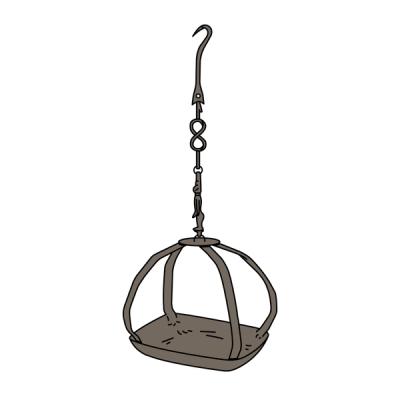
Urhukpa-Ẹvbi
Urhukpa-Ẹvbi (lamps) means ‘oil lamps’, and they are used to illuminate the house after dusk. Most lamps were made to have a curved plate-like bottom in which the oil would be poured and lit, and they are hung from chains attached on three or four sides. The Urukpa-Ẹvbi would be made with iron by the Igun-Ugboha, who are part of the Igun-Ematon and are responsible for producing household items.
Although some Urukpa-Ẹvbi may have been used in palaces, the presence of them within institution holdings today indicates the wide range of objects the British looted in 1897, beyond those objects which were clearly considered valuable in the late nineteenth century, such as ivories. It is likely that a number were used in palaces and compounds in Benin City, but more detailed information on how they were placed and used is no longer available.
Educational Material
Digital Benin collates digital material from institutions, and some of this material is inherently colonial and contains words, terms and phrases that are inaccurate, derogatory and harmful towards African and African diasporic communities. Catalogue transcriptions, book titles, exhibition titles and museum titles may contain harmful terms. We recognise the potential for the material to cause physical and mental distress as well as evoke strong emotions. Owing to the scale of the collection’s data, a process to implement sensitive-content warnings in the displayed data is still incomplete. The material within the catalogue does not represent Digital Benin’s views. Digital Benin maintains a strong anti-colonial, anti-racist position and affirms its support for centring the humanity of historically marginalised and disenfranchised communities. Read more about the background of this statement here