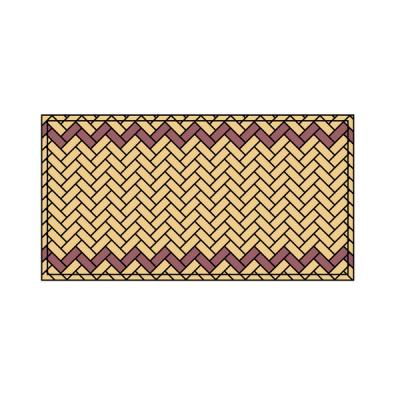
Aghẹn
Aghẹn (mats) in this grouping are made from raffia, a fibre that comes from the raffia palm. These are usually spread over a raised mud platform and used as a bed for sleeping or by children to sit on during moonlight tales.
In addition to these domestic purposes, Aghẹn made of raffia palm leaves may have had ceremonial functions. For example, the innate properties of the leaves meant they held an important ritual place in Edo thought and kept the shrines ‘free from defilement’ (Ben-Amos, 1978, p.52 ).
Raffia palm weaving has been in practice for a long time in Benin Kingdom. Archaeological excavations led by Graham Connah (1975 ) also revealed evidence of woven raffia palm dating to the mid-thirteenth century. Furthermore, although the Owina produce Aghẹn, according to Ben-Amos (1978, p.52 ) raffia palm weaving predates the formalisation by the Owina.
Educational Material
Digital Benin collates digital material from institutions, and some of this material is inherently colonial and contains words, terms and phrases that are inaccurate, derogatory and harmful towards African and African diasporic communities. Catalogue transcriptions, book titles, exhibition titles and museum titles may contain harmful terms. We recognise the potential for the material to cause physical and mental distress as well as evoke strong emotions. Owing to the scale of the collection’s data, a process to implement sensitive-content warnings in the displayed data is still incomplete. The material within the catalogue does not represent Digital Benin’s views. Digital Benin maintains a strong anti-colonial, anti-racist position and affirms its support for centring the humanity of historically marginalised and disenfranchised communities. Read more about the background of this statement here