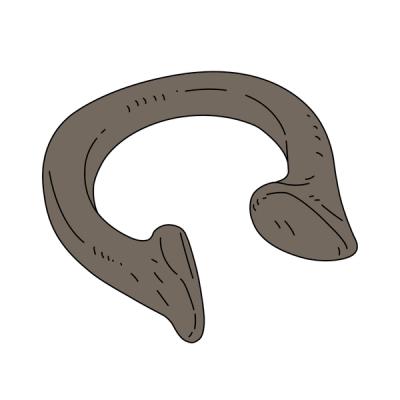
Ugiaranran
Ugianran (Manillas) were used as a medium of exchange for barter in southern Nigeria during the Ọba dynasty, particularly between the Edo and European merchants at Ughoton (Ọbazee 2025, p. 523). The British attempted to end the use of Ugianran with the Native Currency Proclamation of 1902, which prohibited their import with the aim of encouraging the use of coined money. However, Ugianran continued to be used, and in 1948 the British undertook a major recall, dubbed "Operation Manilla", to replace them with British West African currency. In contemporary Nigeria, images of Ugianran can be seen on the 100-naira banknote, illustrating their continued importance as symbols of money and wealth.
Ugianran vary in size and weight, but they are typically horseshoe- or semi-circular in shape, with flattened terminals. In the pre-colonial period, copper and its alloys (brass and bronze) were highly valued in the Kingdom of Benin and across much of West Africa, and these metals were perceived as the "red gold of Africa" ( ). The word manilla has Portuguese, or perhaps Latin, origins; however, the origin of the objects themselves is less clear ( ). Although produced extensively by European powers such as the Portuguese and British from the sixteenth to the nineteenth centuries, these forms are thought to have been based on earlier armlets and neck rings made in West Africa. Edo oral tradition states that fishermen along the coast caught Ugianran in their fishing nets from the wrecks of European ships. Meanwhile, others say that Ugianran were made from other copper objects recovered from shipwrecks along the Bight of Benin.
For the Kingdom of Benin, Ugianran are highly important objects. In addition to serving as a form of currency, they are depicted in artworks such as plaques and are associated with the deity Olokun. Furthermore, it is believed that these manillas served as the raw material for many of the "Benin Bronzes", transforming currency into objects that reflected and re-enacted the Ọba's wealth and divine right to rule.
Educational Material
Digital Benin collates digital material from institutions, and some of this material is inherently colonial and contains words, terms and phrases that are inaccurate, derogatory and harmful towards African and African diasporic communities. Catalogue transcriptions, book titles, exhibition titles and museum titles may contain harmful terms. We recognise the potential for the material to cause physical and mental distress as well as evoke strong emotions. Owing to the scale of the collection’s data, a process to implement sensitive-content warnings in the displayed data is still incomplete. The material within the catalogue does not represent Digital Benin’s views. Digital Benin maintains a strong anti-colonial, anti-racist position and affirms its support for centring the humanity of historically marginalised and disenfranchised communities. Read more about the background of this statement here