Loading...
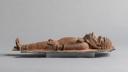
Relief Plaque
Relief Plaque
Relief Plaque
Relief Plaque
ObjectNumber_Original
VO_64715
Institution
Weltmuseum Wien
Edo designations
English designations
Categories
Institution Location
Heldenplatz, 1010 Wien, Austria
ObjectNumber_Original
VO_64715
Institution
Weltmuseum Wien
Edo designations
English designations
Relief Plaque
Categories
Palace Architecture & Ornamentation
Institution Location
Heldenplatz, 1010 Wien, Austria

Iconographies

6 annotations

Rosette - 'The Sun Never Misses a Day'
Owẹn iba ẹdẹ ku
Rosette - 'The Sun Never Misses a Day'

This rosette design, usually found in the corners of Ama-Ẹrọnmwọn (bronze relief plaques), is one of two motifs representing the sun and one of a number of motifs in Edo art that are also connected with Olokun. The association between the sun and Olokun refers to the way in which the sun descends into the sea each day—hence the proverb ‘the sun never misses a day’—and the sea is where the deity Olokun lives.

1 annotation
Owẹn iba ẹdẹ ku
Stacked beaded anklet
Iviawẹ
Stacked Beaded Anklet

Ọba gha ye Ivie gie ọwan, ẹ ghi tama rẹn ehe nọ gha bae yi (When the Ọba gifts you a bead, he doesn’t tell you how to wear it) (Daniel Inneh, pers. comm., 27 September 2025).

Iviawẹ (also spelled ĺvîowẹ) are coral-beaded anklets, often worn stacked together. Many of the figures depicted on the Emwin Arre (royal treasures) in brass, bronze, ivory, and wood are shown wearing these. According to Daniel Inneh (pers. comm., 27 September 2025), beads were sent to people whom the Ọba wished to honour, although there was no directive on how to wear them.

Mostly, people who wear Iviawẹ are identified as palace chiefs or priests and priestesses. However, today anyone can wear them as cultural identifiers or fashion pieces.

1 annotation
Iviawẹ
Colar Bead
Odigba
Coral beaded collar

Odigba (beaded collar) is a rigid neck collar made of beads, worn as part of ceremonial attire only by senior princes who have been made Enigie. Although Ibafe (2007, p. 43) argued that the Odigba was introduced during the Ogiso period (c. 900–c. 1170 AD) by Ogiso Ere, along with other symbolically important Emwin Arre, such as the Ada (ceremonial sword) and the Ebẹn (ceremonial sword). The Odigba was initially made of beads, while coral was incorporated only later, following its introduction through trade with Portuguese merchants in the late fifteenth century.

1 annotation
Odigba
Forehead markings
Ikharo
Forehead markings

Ikharo are linear keloid markings depicted on the forehead of Uhunmwu-Elao (commemorative heads) in groups of three or four above each eye. The exact meaning of Ikharo is debated; some have argued that they relate to the gender or tribal identification of the person on whom they are depicted. For example, Gabriel Ọbazee has argued that they were worn only by men; however, their use in depictions is not consistent with this, and the Iy’Ọba are also shown wearing them. Flora Kaplan argued that they are instead a stylistic feature employed by artists that varied over time.

The naming of these markings differs between publications. For example, Ekhaguosa Aisien and Joseph Nevadomsky describe these markings as “agbaguda n'ehae”, which they write translates literally as “blades of the forehead”. However, Aisien later went on to call these “ikharo”, as used here. Kate Ezra referred to these forehead markings as ikharo, meaning “tribal mark [of eye]”.

1 annotation
Ikharo
tribal marks
Iwu
Facial and Body Markings

Iwu are facial and body markings (scarifications) that were historically worn by Edo men and women. However, since the 1960s, the practice has been nearly extinct. ). In the past, Iwu were used as a way of proving that one was an Edo citizen, and the ceremony of having Iwu completed was an important rite of passage for men and women. The Osiwu, who also practised circumcision and other surgical procedures, would carry out the procedure of adding Iwu. There are different types of Iwu: ‘blades’ worn on the torso (Iwu-eko), and those worn on the face, such as Ikharo (three or four markings above the eyebrows), Irho (two narrow ‘blades’ worn on each cheek), Ovbihue (nasal ‘blades’), Ovbi-agbanmwen (chin ‘blade’), and Igho-okpa/Ukpgho (three forehead ‘blades’).

The number of Iwu also varied depending on the identity of the person wearing them. For example, royal men would wear six ‘blades’ on their torso, whilst men who were not royal would wear seven ‘blades’. Meanwhile, the Ọba’s female children would wear fifteen ‘blades’, and all other women would wear sixteen.

1 annotation
Iwu
hairstyles
Eto
hairstyles

Hairstyles are used to determine a person's status in the society, as chiefs, common folks, chief's wives and the wives of the Ọba all wear different hairstyles. We have Okuku, Ikpe~okhokho, Idu~akpata

1 annotation
Eto

Provenance

5 events
Production
1504 (approximate) to 1550 (approximate)
Production of the Ama-Ẹrọnmwọn by the Igun-Ẹrọnmwọn guild in Benin City
Loot
February 19, 1897 (day approximate) to June 1899 (month approximate)
Looting of the Emwin Arre - Inalienable Cultural Artefacts - during the Invasion of the Benin Kingdom in February 1897 and until the end of overt military activity in June 1899
Unknown
February 22, 1897 (day approximate) to 1899
The object is known to have come into contact with William Downing Webster.
Purchase
1899
The object was purchased by Georg Haas from William Downing Webster.
Purchase
1899
haas

Related archival documents

2 documents
See all
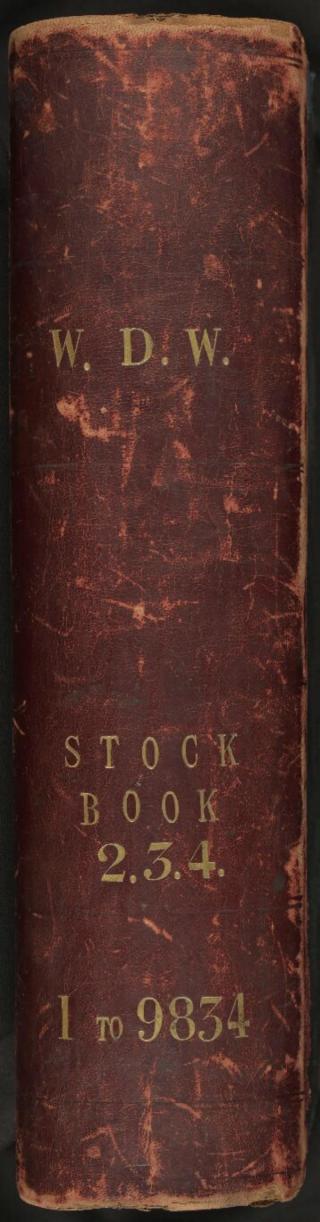
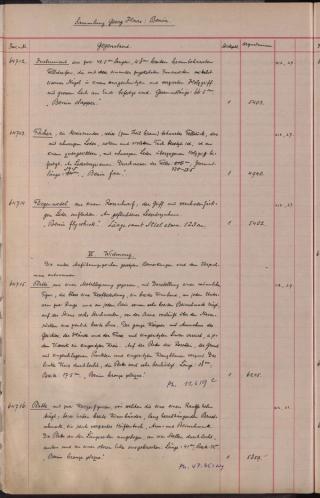
An archival document representing a Inventories of 404 page(s)
Inventory
Museum of New Zealand Te Papa Tongarewa
Stock books
Date
January 18, 1897 to March 26, 1900
An archival document representing a Inventories of 1 page(s)
InventoryAccession Record
Weltmuseum Wien
Inventory book - objects

Institution data

Weltmuseum Wien
The data was transferred directly by the institution.
Last updated: 2022-05-24
Languages: german, english
Institution fieldValue
ObjectNumber_Original
object id
VO_64715
NativeTitle
edo designation
TextEntry
description
Diese Reliefplatte: Nackter Knabe ist Teil der historischen Sammlungen aus dem Königreich Benin im heutigen Nigeria. 1897 wurde das Königreich erobert und dessen Oba (König) Ovonramwen ins Exil verbannt. Die aus dem Königspalast geraubten Kunstschätze wur
Medium
material
Gelbguss
Medium_en
material
Brass
ObjectName
object type
Reliefplatte: Nackter Knabe
ObjectName_en
object type
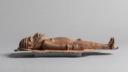
Relief Plaque: Naked Youth
DateBegin
date made
1500
DateEnd
date made
1700
Dated
date made
16./17. Jahrhundert
Dated_en
date made
16th/17th century
Period
date made
Term
production place
Afrika südlich der Sahara
Term2
production place
West-Afrika
Term3
production place
Nigeria
Term4
production place
Benin
Thesaurus
production place
Afrika südlich der Sahara/West-Afrika/Nigeria/Benin
Provenance
provenance
W.D. Webster, Nr. 6245
Role_person
provenance
Sammlung-Collection-William Downing Webster|Zugang über-Accession via-Georg Haas|
Culture
ethnic attribution
Edo, Benin Königreich
Culture_en
ethnic attribution
Edo, Benin Kingdom
CreditLine
department and institution
Weltmuseum Wien
Department
department and institution
MVK Objekte - Afrika südlich der Sahara
Zugangsdatum
accession date
1899
LocationString
display status
Raum Me.40
FileName
images
VO_64715.jpg|
PrimaryImage
images
VO_64715.jpg
Classification
||
DepartmentID
35
Department_cut
department and institution
Afrika südlich der Sahara
DisplayOrder
|
Last_Modified
2021-12-06 08:15:34
LocationID
75091
ObjectID
object id
440997
ObjectNumber
object id
64715
PublicAccess
1
SortNumber
VO 64715
TextDate_en
|
TextEntryHTML
description
Diese Reliefplatte: Nackter Knabe ist Teil der historischen Sammlungen aus dem Königreich Benin im heutigen Nigeria. 1897 wurde das Königreich erobert und dessen Oba (König) Ovonramwen ins Exil verbannt. Die aus dem Königspalast geraubten Kunstschätze wur
TextEntryHTML_en
description
This Relief Plaque: Naked Youth is part of the historical collections from the Benin Kingdom, in present-day Nigeria. In 1897, the kingdom was conquered and Oba (king) Ovonramwen banned into exile. The loot from the royal palace was then sold through the
TextEntry_en
description
This Relief Plaque: Naked Youth is part of the historical collections from the Benin Kingdom, in present-day Nigeria. In 1897, the kingdom was conquered and Oba (king) Ovonramwen banned into exile. The loot from the royal palace was then sold through the
cxrDisplayOrder
1|
Sensitive content

Sensitive Content Digital Benin includes colonial material that may contain inaccurate, derogatory or harmful language relating to African and African diasporic communities. Such language may appear in catalogue records, transcriptions, and book, exhibition or museum titles. We recognize that this material may cause distress. Sensitive-content warnings are being implemented across the collection, but this process is ongoing. The language does not reflect Digital Benin’s views; we take an anti-colonial and anti-racist position and are committed to centring the humanity of historically marginalised communities.

Read more about our approach