Loading...
Inventarisnummer
TM-3323-99
Institution
Wereldmuseum Edo designations

English designations
Categories
Institution Location
Willemskade 25, 3016 DM Rotterdam, Netherlands
Inventarisnummer
TM-3323-99
Institution
Wereldmuseum Edo designations
English designations
Commemorative Head
Categories
Altar & Shrine Objects
Heads
Institution Location
Willemskade 25, 3016 DM Rotterdam, Netherlands
Iconographies
4
annotations
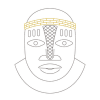
Udahae
Beaded forehead band
1 annotation

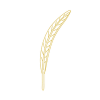
Igan
Feather
1 annotation

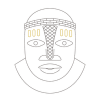
Ikharo
Forehead markings
1 annotation


Odigba
Coral beaded collar
1 annotation

Provenance
3
events
Institution data
Wereldmuseum
The data was transferred directly by the institution.
Last updated: 2022-07-19
Language: dutch
| Institution field | Value |
|---|---|
Inventarisnummer object id | TM-3323-99 |
Objectnaam designation object type | Beeld / hoofd |
Titel designation object type | Gedenkhoofd met koperbeslag |
Associatie/beschrijving (online getoond) description | Dit gedenkhoofd werd geplaatst op een voorouderaltaar. |
Materiaal en techniek (NB: ook thesaurustermen aanpassen!) material | |
Afmetingenlabel (H x B x D) dimensions | 58 × 29 × 23cm |
Datering date made | voor 1963 |
Verzamelgeschiedenis (toelichting) provenance | Zoals de documentatie in de bijlagen van TM-3323-1 aangeeft, is een deel van de serie gekocht door de Nederlandse ambassadeur voor Nigeria, Louis Noë (1898-1977), voor het Tropenmuseum in 1962-1963. Hij bood dit aan in een brief van 3 november 1962 en na een positief antwoord benaderde Noë de conservator van het Museum of Antiquities in Lagos, John Picton, voor advies over de samen te stellen collectie. Echter, uit correspondentie is gebleken dat Noë twee verschillende collecties aan het museum heeft geschonken. De ene collectie kwam direct uit Nigeria maar de andere collectie was zijn privécollectie die stond opgeslagen in Den Haag en die hij heeft aangeboden voor 500 GBP, wat het museum accepteerde. De verwervingsdata voor deze objecten worden niet genoemd maar de suggestie wordt gewekt dat de de privécollectie al een aantal jaar in dozen ingepakt stond. (NL-HaNA-KIT-4418_188 and NL-HaNA-KIT-7501_77). Noë werkte vanaf 1958 in West Afrika, waar hij mogelijkheid zijn collectie vergaarde. (RSH, 12-11-2020). |
Cultuur (NB: ook thesaurusterm aanpassen!) ethnic attribution | Bini |
Deelcollectie department and institution | Materiële cultuurcollectie |
Verwervingsdatum accession date | 1963-01-01 |
Wijze van verwerving accession method | Aankoop |
Literatuur bibliography | |
Publicaties over het object bibliography | For more information about the provenance, see <a href="https://issuu.com/tropenmuseum/docs/2021_provenance_2__benin__e-book" target="_blank"> Provenance #2 – the Benin collections at the National Museum of World Cultures </a> (NB: Issuu uses cookies). |
Objectstatus legal status | Eigendom |
Met dank aan (online getoond) | |
Periode (NB: ook thesaurusterm aanpassen!) | |
Verkorte naam | AFRIK |
Sections
About
Other
Sensitive content
Sensitive Content Digital Benin includes colonial material that may contain inaccurate, derogatory or harmful language relating to African and African diasporic communities. Such language may appear in catalogue records, transcriptions, and book, exhibition or museum titles. We recognize that this material may cause distress. Sensitive-content warnings are being implemented across the collection, but this process is ongoing. The language does not reflect Digital Benin’s views; we take an anti-colonial and anti-racist position and are committed to centring the humanity of historically marginalised communities.