Loading...
Object Number
M.74.90
Institution
LACMA The Los Angeles County Museum of Art Edo designations

English designations
Categories
Institution Location
5905 Wilshire Blvd, Los Angeles, CA 90036, United States
Object Number
M.74.90
Institution
LACMA The Los Angeles County Museum of Art Edo designations
English designations
Relief Plaque
Categories
Palace Architecture & Ornamentation
Institution Location
5905 Wilshire Blvd, Los Angeles, CA 90036, United States
Iconographies
3
annotations
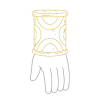
Ikoro
Armcuff
1 annotation


Ẹkpoki
Cylindrical Boxes
1 annotation


Ebe Amẹ
Water Fern
1 annotation

Provenance
5
events
Institution data
LACMA The Los Angeles County Museum of Art
The data was transferred directly by the institution.
Last updated: 2021-06-16
Language: english
| Institution field | Value |
|---|---|
Object Number object id | M.74.90 |
Title designation | Plaque |
Medium material | Copper alloy |
Dimensions dimensions | 19 x 7 1/4 x 3 1/2 in. (48.26 x 18.42 x 8.89 cm) irregular |
Classification object type | Sculpture |
Date date made | 17th century |
Maker producer | Unknown |
Place Made production place | Africa, Nigeria |
Credit Line prior source | Gift of Anna Bing Arnold |
Culture ethnic attribution | Benin Kingdom |
Department department and institution | African Art |
Exhibition History exhibition history | LACMA Permanent Collection Galleries (Ahmanson Gallery); Los Angeles County Museum of Art, Los Angeles, California, United States (February 16, 2001 - March 1, 2006) AFRICA, the Art of a Continent; Royal Academy of Arts, London, England, United Kingdom (October 4, 1995 - January 21, 1996) Presence and Power: Images of the Sublime from Africa, North America and the Pacific; Santa Ana College Art Gallery, Santa Ana, California, United States (August 30, 1985 - October 3, 1985) �Armand Hammer Award Luncheon�; Cultural Commission, Los Angeles County, Los Angeles, California, United States (October 24, 1984) Benin Art; UCLA Fowler Museum, Los Angeles, California, United States (February 22, 1983 - April 24, 1983) LACMA Permanent Collection Galleries (Atrium Level); Los Angeles County Museum of Art, Los Angeles, California, United States (1979 - 1982?) LACMA Tenth Anniversary Exhibition; Los Angeles County Museum of Art, Los Angeles, California, United States (May 7, 1975 - June 29, 1975) Unknown Exhibition; Phoenix Art Museum, Phoenix, Arizona, United States (November 26, 1974 � April 28, 1975) |
Publication History bibliography | D'Andrea, Jeanne and Stephen West, ed. Los Angeles County Museum of Art Bulletin: Three Decades of Collecting: Gifts of Anna Bing Arnold. Los Angeles: Los Angeles County Museum of Art, 1980. Donahue, Kenneth. Los Angeles County Museum of Art Handbook. Los Angeles: Los Angeles County Museum of Art, 1977. Los Angeles County Museum of Art Report July 1, 1973 - June 30, 1975. Los Angeles: Los Angeles County Museum of Art, 1976. Los Angeles County Museum of Art Bulletin, vol. 26. Los Angeles: Los Angeles County Museum of Art, 1980. Ben-Amos, Paula and Arnold Rubin, ed. The Art of Power: The Power of Art, Studies in Benin Iconography. Los Angeles County Museum of Art, Los Angeles, 1983. Donahue, Kenneth. X, a Decade of Collecting: 1965-1975. Los Angeles: Los Angeles County Museum of Art, 1975. |
LACMA The Los Angeles County Museum of Art
The data was retrieved from the institution’s website.
Last updated: 2026-02-09
Language: english
| Institution field | Value |
|---|---|
object id | M.74.90 |
designation | Ama (Plaque) |
producer | Ígùn Érònwwòn (Royal Bronze-casting Guild) |
date made | Africa, Republic of Mali, Court of Benin, 16th to 17th century |
object type | Sculpture |
material | Copper alloy |
dimensions | 19 x 7 1/4 x 3 1/2 in. (48.26 x 18.42 x 8.89 cm) irregular |
accession method | Gift of Anna Bing Arnold (M.74.90) |
department and institution | African Art |
display status | Not currently on public view |
Provenance provenance | "Kenneth John Hewett (1919-1994) London. [Eugene Victor Thaw (1927-2018), New York, sold 1974 to [1]; LACMA. [1] Anna H. Bing Arnold (née Kostant) (1901-2003), Los Angeles, donated the funds to purchase the Plaque" |
Sections
About
Other
Sensitive content
Sensitive Content Digital Benin includes colonial material that may contain inaccurate, derogatory or harmful language relating to African and African diasporic communities. Such language may appear in catalogue records, transcriptions, and book, exhibition or museum titles. We recognize that this material may cause distress. Sensitive-content warnings are being implemented across the collection, but this process is ongoing. The language does not reflect Digital Benin’s views; we take an anti-colonial and anti-racist position and are committed to centring the humanity of historically marginalised communities.