Loading...


Inventory number
LG1953.22.16
Institution
Omo n'Oba n'Edo Uku Akpolokpolo, Ọba of Benin & National Commission for Museums and Monuments, Nigeria Edo designations

English designations
Categories
Institution Location
1 Adesogbe (Plymouth) Road, P.M.B. 1115, Benin City , Edo State
Inventory number
LG1953.22.16
Institution
Omo n'Oba n'Edo Uku Akpolokpolo, Ọba of Benin & National Commission for Museums and Monuments, Nigeria Edo designations
English designations
Rooster Figure
Categories
Figures
Altar & Shrine Objects
Institution Location
1 Adesogbe (Plymouth) Road, P.M.B. 1115, Benin City , Edo State
Iconographies
1
annotations

Ubanu'hi
Inifinity Symbol
1 annotation

Provenance
5
events
Institution data
Omo n'Oba n'Edo Uku Akpolokpolo, Ọba of Benin & National Commission for Museums and Monuments, Nigeria
The data was transferred directly by the institution and digitized by Digital Benin in collaboration with the NCMM
Last updated: 2023-11-30
Languages: english, bini; edo
| Institution field | Value |
|---|---|
Inventory number object id | LG1953.22.16 |
URL weblink | https://digitalbenin.org/catalogue/37_LG19532216 |
Object Description description | Bronze cock which did not come into existence until after the introduction of the Iy’ọba title by Ọba Esigie. The first Iy’Ọba was Idia, and the Iy’ọba title is considered to be the greatest achievement of a Benin woman. It has spiritual significance and is placed at the altar of the Iy’ọba after her death. The Iy’ọba is referred to Ọkpa n’ Uselu (Ọkpa being a shortened version of Ọkporhu). |
Diameter dimensions | |
Dimension L (cm) dimensions | 48.0 |
Dimension W (cm) dimensions | 51.2 |
Dimension H (cm) dimensions | 23.1 |
Brief Object Description designation | |
Material material | |
Object Count object count | 1 |
Date Made date made | |
Associated Guild producer | Igun Ẹrọnmwọn |
Production Technique production technique | Casting |
Production Place production place | Benin City |
Inscriptions inscriptions | |
Note notes | |
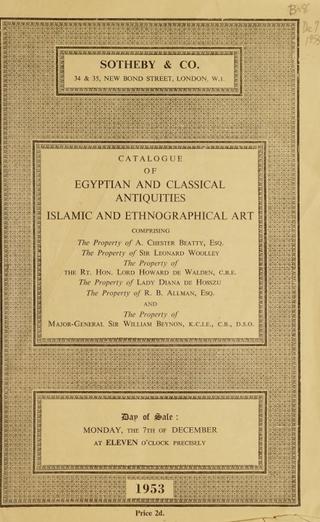
Inventory Book Description | Bronze cock from Benin. No. 188 in the sale catalogue where it is described as follows: "A VERY FINE BENIN BRONZE FIGURE OF A COCK standing with well-serrated comb and wattles, the neck, saddle and tail hackles unusually depicted and engraved as also are the wing, bays and sickle tail feathers. The bird is well spurred and stands on a typical rectangular base engraved and bordered with strap-work. 20". Ladislas Segy in African Sculpture Speaks, illustrates a very similar cock, fig.94. See also the Pitt-Rivers Catalogue, op.cit., pl. XXIV, fig. 144, and a similar figure in the British Museum." Purchases by the Nigerian Government at a sale by Messrs. Sotheby & Co. Bond Street, London on December 7th, 1953: Mr. W. B. Fagg assistant keeper, British Museum acted for the Nigerian Government at the sale. |
fileNames images | LG19532216_3.jpg, LG19532216_5.jpg, LG19532216_1.jpg, LG19532216_4.jpg, LG19532216_2.jpg |
Omo n'Oba n'Edo Uku Akpolokpolo, Ọba of Benin & National Commission for Museums and Monuments, Nigeria
The data was transferred directly from the institution and transcribed by the Digital Benin from Inventory book.
Last updated: 2021-02-19
Language: english
| Institution field | Value |
|---|---|
Inventory No object id | LG 1953. 22. 16 |
Department of Antiquities Nigerian Museum Catalogue provenance | Purchases by the Nigerian Government at the Sale by Messrs. Sotheby & Co. Bond Street, London on December 7th, 1953: Mr. W. B. Fagg assistant keeper, British Museum acted for the Nigerian Government at the Sale. Bronze cock from Benin. £1400 |
Object Name (as specified in the 2019 Lagos National Museum store/gallery inventory) designation | Bronze cock from Benin. |
Sections
About
Other
Sensitive content
Sensitive Content Digital Benin includes colonial material that may contain inaccurate, derogatory or harmful language relating to African and African diasporic communities. Such language may appear in catalogue records, transcriptions, and book, exhibition or museum titles. We recognize that this material may cause distress. Sensitive-content warnings are being implemented across the collection, but this process is ongoing. The language does not reflect Digital Benin’s views; we take an anti-colonial and anti-racist position and are committed to centring the humanity of historically marginalised communities.