Loading...


GenstandsNr
G.1529
Institution
Nationalmuseet, National Museum of Denmark Edo designations

English designations
Categories
Institution Location
Prince's Mansion, Ny Vestergade 10, 1471 København K, Denmark
GenstandsNr
G.1529
Institution
Nationalmuseet, National Museum of Denmark Edo designations
English designations
Attendant Figure
Categories
Figures
Institution Location
Prince's Mansion, Ny Vestergade 10, 1471 København K, Denmark
Iconographies
5
annotations

Ẹbẹn
Ceremonial Sword
1 annotation

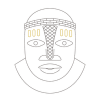
Ikharo
Forehead markings
1 annotation


Odigba
Coral beaded collar
1 annotation

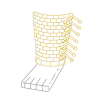
Iviawẹ
Stacked Beaded Anklet
1 annotation

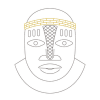
Udahae
Beaded forehead band
1 annotation

Provenance
4
events
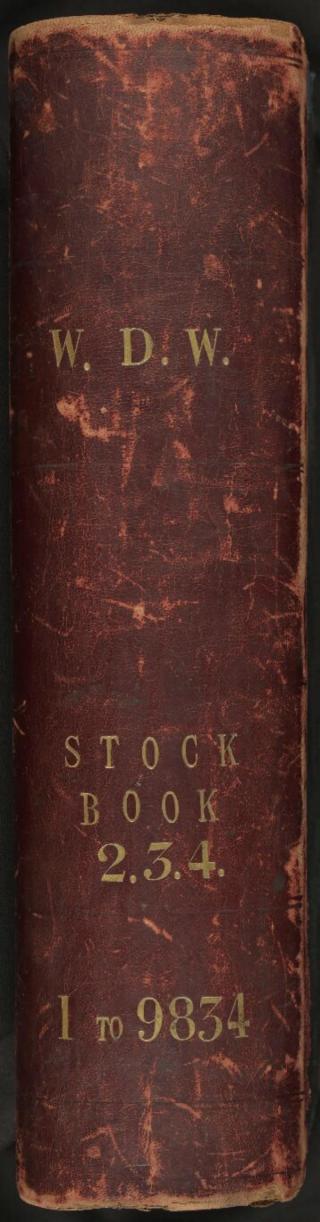
Institution data
Nationalmuseet, National Museum of Denmark
The data was transferred directly by the institution.
Last updated: 2021-02-09
Language: danish
| Institution field | Value |
|---|---|
Accession (Køb)/Gammelt nummer object id | 6687 |
GenstandsNr object id | G.1529 |
ArbejdsBetegnelse designation | figur |
Fremstilling (Primær fremstilling)/ArtsKode description | ArtsKode: 632 Tre-dimensionelle kunstgenstande |
Accession (Køb)/Materiale material | metaller |
Accession (Køb)/measurements/Bredde dimensions | 14 cm |
Accession (Køb)/measurements/Dybde dimensions | |
Accession (Køb)/measurements/Højde dimensions | 50.59999847 cm |
Accession (Køb)/Oprindelige felt ID.KARAKTERISTIK object type | figur af metal, fremstillende nøgen sværdbærer; Websters katalog nr. 18, 1899, fig. 71 |
Accession (Køb)/MaterialeFarve colour | brun |
Accession (Køb)/Motiv iconography | mand |
Ordning (Opret genstande)/år_Slut date made | 19-03-1988 |
Ordning (Opret genstande)/år_Start date made | 19-03-1988 |
Fremstilling (Primær fremstilling)/StamSted1 production place | Andet geografisk navn: Benin City |
Fund/Indsamling (Indsamling)/StamSted12 production place | Andet geografisk navn: Benin City |
Accession (Køb)/Sælger provenance | W.D. Webster |
Fund/Indsamling (Indsamling)/år_Slut2 date collected | 31-12-1899 |
Accession (Køb)/år_Slut accession date | 31-12-1899 |
Accession (Køb)/år_Start accession date | 01-01-1899 |
Notes notes | Translation (from Danish) of The National Museum of Denmark’s archival record on the objects and their context from 1899. File no. 194/99 Africa. Please be aware, that this historical record contains racialized terminology, that is not endorsed by The National Museum of Denmark. Objects of Bronze, from Benin in West Africa. Under the British Conquest of the Capitol in the redacted Kingdom of Benin in 1897, a substantial Number of Bronze objects was taken as Booty, among which were these exhibited objects. They consist of a natural size Representation of a redacted Head, a Statuette of a redacted and two Reliefs, One with the Representation of a redacted Warrior, the Other with the Representation of three sacrificing (?) redacted es. All of the Benin Bronzes are cast by the Cire perdue technique, also known from the Nordic Bronze Age, and by which a new Model is formed for each Piece, that shall be cast. The Objects can with Certainty be determined to be between 200 and 300 Years old, as there on some of them are found Representations of Europeans, whose Weapons and Dress refers to the 16th and 17th Century. What the big Head was used for, is unknown. It shows a young, yet beardless Mans features; on the Forehead the conspicuous Scars from the Incisions in the Flesh, which by numerous West African People substitutes Tattoos, are seen. The Head Ornament is decorated with a Net of Bead Strings, the Neck and the lower Part of the Face is totally hidden by close Strings of Beads. The Statuette was probably used as an Ornament on a Wall. Sword of the same strange Form, as that which is represented by the Warrior, is still to be found in West Africa and is used e.g. to draw the string back on the very tight Bow. About the Reliefs is known, that they were meant to be put as an ornament on the Wooden Columns, that was taken from the Palace of the Benin King. |
photos/FotoNr images | 4008937 |
photos/FotoType images | Individ |
photos/OpretDato images | 11/9/88 |
photos/OpretPers images | ES-PM |
Fremstilling (Primær fremstilling)/OCMKode | OCMKode: 769 Cult of the Dead |
Fremstilling (Primær fremstilling)/StedOWCKode; StedOWCNavn | FF21; Edo |
Fremstilling (Primær fremstilling)/StedOWCKode; StedOWCNavn2 | AFVENA; Nigeria |
Fund/Indsamling (Indsamling)/StedOWCKode; StedOWCNavn3 | AFVENA; Nigeria |
Fund/Indsamling (Indsamling)/StedOWCKode; StedOWCNavn4 | FF21; Edo |
Sections
About
Other
Sensitive content
Sensitive Content Digital Benin includes colonial material that may contain inaccurate, derogatory or harmful language relating to African and African diasporic communities. Such language may appear in catalogue records, transcriptions, and book, exhibition or museum titles. We recognize that this material may cause distress. Sensitive-content warnings are being implemented across the collection, but this process is ongoing. The language does not reflect Digital Benin’s views; we take an anti-colonial and anti-racist position and are committed to centring the humanity of historically marginalised communities.