Loading...


Object Number
Ea7821
Institution
Bristol Museum & Art Gallery Edo designations

English designations
Categories
Institution Location
Bristol Museum & Art Gallery, Queens Rd, Bristol BS8 1RL, United Kingdom
Object Number
Ea7821
Institution
Bristol Museum & Art Gallery Edo designations
English designations
Commemorative Head
Categories
Altar & Shrine Objects
Heads
Institution Location
Bristol Museum & Art Gallery, Queens Rd, Bristol BS8 1RL, United Kingdom
Iconographies
4
annotations

Odigba
Coral beaded collar
1 annotation

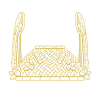
Ẹde
Beaded Crown
1 annotation

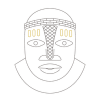
Ikharo
Forehead markings
1 annotation


Ititi ako
Star beads
1 annotation

Provenance
4
events
Institution data
Bristol Museum & Art Gallery
The data was transferred directly by the institution.
Last updated: 2022-01-18
Language: english
| Institution field | Value |
|---|---|
Object Number object id | Ea7821 |
Object Name designation object type | sculpture |
Description description | Cast ceremonial head of an Oba, from Benin City (Nigeria). Tusk holder. This head is hollow inside and was made using the 'lost-wax' process and would have been placed on an altar to an Oba. The head is shown wearing a coral head piece and beads around the collar. Coral was highly valued by the Edo people and was only worn by royalty. The heads would serve as mediums through which descendants could ask the spirits of their ancestors for the health and prosperity of the kingdom. Rites in honour of the past Oba were directed by special priests. The ancestral shrines were and still are situated in the king's Palace in Benin City (in current Nigeria). The metal of brass was highly valued by the Edo people, as it was rare and expensive. When new, it would have been red and shiny, symbolising royalty and beauty, but the metal also does not corrode or rust with time, signifying the continuity of the kingship. From the eigtheenth-nineteenth centuries, tusks were often placed on the ceremonial heads. This head probably dates from 1600-1800 AD. This object was given in exchange by Cranmore Ethnographical Museum, in Kent for a Raratongan head dress, from the Cook Islands, of which Bristol had two. This head may have arrived in Europe as a result of the British 'Punitive Expedition ', in 1897, when the British destroyed the Oba's palace and looted a large amount of Beninese art and took it to Britain. Much of the material ended up on the European art market and in European museum collections. |
Associated Date date made | 1897 |
Date of Production date made | 1701-1900 |
Locality production place | Benin City, Nigeria, West Africa, Africa |
Associated Event provenance event | Punitive Expedition to Benin |
Cultural Group ethnic attribution | Edo |
Reference bibliography | [Citation] Bristol & Transatlantic Slavery. 63. |
Associated Place | Benin City, Nigeria, West Africa, Africa |
Collection | Ethnography |
Current Location display status | On Display at Bristol Museum & Art Gallery, Curiosity |
Sections
About
Other
Sensitive content
Sensitive Content Digital Benin includes colonial material that may contain inaccurate, derogatory or harmful language relating to African and African diasporic communities. Such language may appear in catalogue records, transcriptions, and book, exhibition or museum titles. We recognize that this material may cause distress. Sensitive-content warnings are being implemented across the collection, but this process is ongoing. The language does not reflect Digital Benin’s views; we take an anti-colonial and anti-racist position and are committed to centring the humanity of historically marginalised communities.