


OBJEKTE_ID
1709502
Edo designations
English designations
Stool
Categories
Ceremonial Objects
Location
Johannispl. 5-11, 04103 Leipzig, Germany
Loading...
Stool
Stool

Iconographies

10 annotations
Ubanu'hi / Obanu'hi
Ubanu'hi / Obanu'hi
Inifinity Symbol

The Ubanu'hi (infinity symbol) is a kind of guilloche or interlaced strapwork motif that can be angular or rounded. It was used by Edo artists in the decoration of many Emwin Arhe (royal treasures) and is ubiquitous in Benin royal arts. Ubanu'hi is a shortened form of “uba no Ọba ya de agbon ke ehimwin yi”, which means “the rope with which the Ọba ties the heaven and earth together” (pers. comm. Chief John Igbineweka Inneh n’Igbesawman, 2022). Similarly, Paula Ben-Amos Girshick (in Plankensteiner 2007, pp. 339, 341) described this as “Ọba n’iri agbon”, or the “rope of the world” pattern.

According to Ọbabanmu Ineh (in Blackmun 1984, p. 51), the use of this motif indicates that objects were carved by members of the Igbesanmwan. However, the motif is found on all types of Emwin Arhe (royal treasures), not only those made of ivory or wood. On the flanges of the Ama (relief plaques) alone, Kathryn Gunsch (2018, pp. 75–77) identified three different versions of the Ubanu'hi and, through her analysis of over 850 plaques, found that these different Ubanu'hi forms align with other characteristics, such as dimensions, the prevalence of ornamental motifs, and stylistic qualities. Together, these provide evidence, she argues, of different production groups among the plaque makers .

Kate Ezra (1992, pp. 209, 264) went on to argue that the use of these motifs indicates that certain objects were used in a “royal context” and were associated with “royal patronage”.

2 annotations
Ubanu'hi / Obanu'hi
Ubanu'hi / Obanu'hi
Colar Bead
Odigba
Coral beaded collar

Odigba (coral-beaded collar) is a rigid neck collar made of coral beads, worn as part of ceremonial attire only by senior princes who have been made Enigie (Inneh 2007, p. 107). Although Ibafe (2007, p. 43) argued that the Odigba was introduced during the Ogiso period (c. 900–c. 1170 AD) by Ogiso Ere, along with other symbolically important Emwin Arhe, such as the Ada (ceremonial sword) and the Ẹbẹn (ceremonial sword), this seems unlikely, as coral was only introduced in the late 15th century through trade with Portuguese merchants.

1 annotation
Odigba
Ẹbẹn
Ceremonial Sword

Ẹbẹn are a type of ceremonial sword of significant importance in the Benin Kingdom. During ceremonies, titled chiefs would hold them or toss them during dances, thereby paying homage to the Ọba at these public events, particularly when a chief receives a certain status. It is forbidden for Ẹbẹn to touch the ground, so the chief must take extra precautions to avoid dropping the Ẹbẹn during the dance. Therefore, the Okae-Odionmwan (head of executioners) dances with the Umozo (warfare or executioner’s sword) behind the dancing chief.

There are two central ceremonial swords used in the royal court of the Benin Kingdom, one of which is the Ẹbẹn, along with the Ada (ceremonial swords). They are distinguished by their blades: the Ẹbẹn blade reflects the shape of a leaf or an oar. Sometimes, it is decorated with openwork designs and/or brass inlays, most commonly shaped as small Ẹbẹn and Ẹkpẹn (leopards). The handle of the Ẹbẹn also has an unusual ring-shaped form, which further differentiates it from the Ada.

1 annotation
Ẹbẹn
Ẹkpẹn
Leopard

The Ẹkpẹn (leopard) is an animal that appears most often among the motifs decorating the Emwin Arhe (royal treasures). The Ẹkpẹn symbolises the valour and strength of the Ọba, as well as his political authority. The Benin people eulogise the Ọba as the ‘ẹkpẹn n'owa’ (leopard of the home).

When a hunter kills a leopard, he must say “ẹkpẹn n'oha” (I killed a bush leopard), as it is taboo to say that a hunter killed a leopard without specifying that it is a bush leopard, as otherwise this would “be tantamount to symbolically killing the king” (Nevadomsky 1988, p. 81). For this reason, leopards of the bush are called Atalakpa to distinguish them from those that represent the Ọba.

1 annotation
Ẹkpẹn
Ukpan obọ eva
Crossed Beaded Baldrics

The Ukpan obọ eva (coral-bead crossed baldrics) were worn as part of the ehaingbehia, the full ceremonial regalia, by only high-ranking members of the palace, including the Ọba himself, the Iy’Ọba, the Edaiken, and the Ezọmọ (Ben-Amos 1999, pp. 68, 141; Osadolor in Plankensteiner 2007, cat. no. 70, pp. 322–323).

1 annotation
Ukpan obọ eva
snake
Ẹyẹn
Snake

Ẹyẹn (snakes) are among the most common animals depicted by Edo artists on the Emwin Arhe (royal treasures). The varied depictions of these reptiles suggest different snake species, including the Ikpin (python), Arhunmoto (puff adder), and Olose (red-black striped snake); therefore, here we use the generic term for snake: Ẹyẹn.

The identification of snake motifs and depictions as Ikpin, as well as the importance accorded to this species, is a subject of scholarly debate. Paula Ben-Amos (1976, p. 247) argued that the Edo admired the “stature, colouration and crushing power” of the python, which was in turn associated with Olokun. She went on to identify the brass figures of snakes that formerly adorned the roof of the palace, as well as several other snakes, as pythons. Joseph Nevadomsky (1988, p. 77) argued instead that the importance of the Ikpin had been overstated.

Some of these snake representations may in fact be the Arhunmwoto (puff adder). The first to suggest this was the German curator Felix von Luschan (1919) in his early research into the Benin royal treasures. Nevadomsky (1988, pp. 79–80) suggested that the large head, narrow neck, and rough scales are indicative of either the puff adder, a symbol of “material wealth, tribute, and gifts,” or the Gaboon viper.

Another kind of snake that may be depicted is the Olose (red-black striped snake). It has the praise name “king of the snakes” in Edo. Olose is also closely connected to the deity Olokun, both because of its attractiveness and because it inhabits wet environments such as forest streams, which in turn flow into rivers and the sea, where Olokun lives (Nevadomsky 1988, pp. 76–77). Although the exact meanings of these different snakes vary, they share the characteristic of being spiritually powerful creatures.

1 annotation
Ẹyẹn
Ikharo
Forehead markings

Ikharo are linear keloid markings depicted on the forehead of Uhunmwu-Elao (commemorative heads) in groups of three or four above each eye. The exact meaning of Ikharo is debated; some have argued that they relate to the gender or tribal identification of the person on whom they are depicted. For example, has argued that they were worn only by men; however, their use in depictions is not consistent with this, and the Iy’Ọba are also shown wearing them. argued that they are instead a stylistic feature employed by artists that varied over time.

The naming of these markings differs between publications. For example, describe these markings as “agbaguda n'ehae”, which they write translates literally as “blades of the forehead”. However, later went on to call these “ikharo”, as used here. referred to these forehead markings as ikharo, meaning “tribal mark [of eye]”.

1 annotation
Ikharo
Ewi
Mudfish

Depictions of Ewi (mudfish) are among the most frequent motifs in the Emwin Arhe (royal treasures). Mudfish hold an important place in Edo belief, both as representations of the god Olokun and as symbols of royalty (Plankensteiner 2007, p. 410), as well as of “prosperity, peace, well-being and fertility” (Ben-Amos 1976, p. 245). Mudfish are also particularly common animals for sacrifice, and mudfish-shaped Orhiẹvbẹ (kola-nut boxes) were used to make offerings or store kola nuts.

Yet, the appearance of Ewi across the Emwin Arhe is not consistent, and it has been argued that different species of mudfish were depicted by Edo artists, each with different qualities and capabilities. For example, the electric shock of Malapterurus electricus resembles the fierceness of the Ọba, while the liminal qualities of the Synodontis clarias mudfish, which lives both on land and in water, similarly reflect the Ọba’s rule over land and sea (Gallagher 1983, p. 93). With these different qualities in mind, the mudfish is an important symbol of Benin kingship and royalty.

Sometimes the Ọba was depicted by artists with mudfish rather than legs (see Ọba with Mudfish Legs).

1 annotation
Ewi
Ukhurhẹ
Ancestral Staff

Representations of figures, often the Ọba, with an Ukhurhẹ (Ancestral Staff) in their right hand recur in a number of Emwin Arre (royal treasures), particularly those carved in wood as Agba (royal stools), cast in brass as part of Osogan (Osun staffs) and Ikẹgobọ (altars to the hand), and carved in ivory as Aken'ni Elao (carved tusks).

Ukhurhẹ are rattle staffs, usually made from wood, although brass examples are believed to have been owned by the Ọba. Ukhurhẹ were, and continue to be, commissioned when the paternal head of a family passes away as a way of commemorating them ( ). Following a ceremony in which they are installed on the family’s ancestral altar, Ukhurhẹ are typically lined up against the back of the altar and are used to communicate with ancestors and the spirit world. When depicted on the Emwin Arhe, Ukhurhẹ are usually held in the right hand of the Ọba, while an Ughavan (celts) is carried in his left hand.

1 annotation
Ukhurhẹ

Related archival documents

2 documents
See all
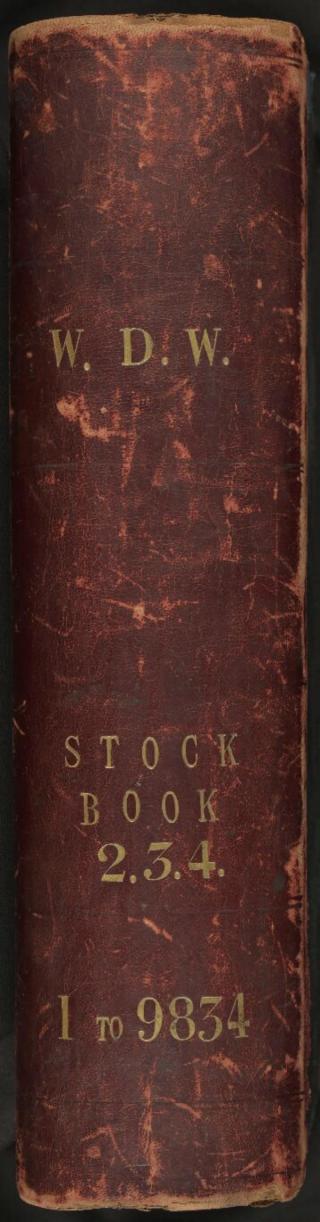
An archival document representing a Inventories of 404 page(s)
Inventory
Museum of New Zealand Te Papa Tongarewa
Stock books
Date
January 18, 1897 to March 26, 1900
An archival document representing a Sales Catalogs of 34 page(s)
Sales Catalogue
Wellcome Collection
Catalogue of ethnological specimens : European and Eastern arms & armour, Prehistoric and other curiosities / W.D. Webster, Oxford House, Bicester, Oxon., England.
Date
January 1, 1899 to December 31, 1899

Institution data

Staatliche Ethnographische Sammlungen Sachsen und Staatliche Kunstsammlungen Dresden
The data was transferred directly by the institution.
Last updated: 2021-09-28
Language: german
Institution fieldValue
INV_NR
object id
16117
OBJEKTE_ID
object id
1709502
KURZTITEL
designation
Zeremonialstuhl agba
Object-name-and-materials
designation
material
Zeremonialstuhl (agba) Holz, beschnitzt
TITEL
designation
Zeremonialstuhl (agba);hölzerner Tisch
INTERNETKOMMENTAR
description
notes
Der Legende nach eine der ältesten Thronformen des Benin-Reiches. Die für Afrika unübliche technische Fertigung als ein zusammengesetztes Werkstück lässt eher einen frühen europäischen Einfluss vermuten. Der Stuhl verlor offensichtlich seine zeremonielle Bedeutung, behielt jedoch eine repräsentative Aussage durch eine komplexe und symbolvolle Bildgestaltung, die sowohl politische und militärische als auch magische und religiöse Größe und Macht des Herrschers widerspiegelt. (MVD, S. D.)
KATALOGTEXT
description
MATERIAL
material
Holz
MASSEBEMERKUNG
dimensions
36,5 x 33 x 50 cm
MASSETABANGABE
dimensions
Gesamt
MASSETABBEMERKUNG
dimensions
MASSETABBREITE
dimensions
33
MASSETABDURCHMESSER
dimensions
MASSETABEINHEITLAENGE
dimensions
cm
MASSETABEINHEITLAENGE_IDS
dimensions
1
MASSETABHOEHE
dimensions
36,5
MASSETABTIEFE
dimensions
50
Dimensions_weight
weight
H: 36,5 cm W: 33 cm X: 50 cm
MASSETABEINHEITGEWICHT
weight
MASSETABEINHEITGEWICHT_ID
weight
MASSETABGEWICHT
weight
OBJEKTBEZ
object type
Möbel
KONVOLUT
provenance
object count
Sammlung Arthur Baessler; SES Benin-Objekte; William D. Webster, London; SES Dossier Benin-Objekte, Überlieferung an die Kontaktstelle für Sammlungsgut aus kolonialen Kontexten
ORT_DATUM_BIS
date made
1897;1899
ORT_DATUM_KONKRET
date made
';'
ORT_DATUM_VON
date made
;
MATTECHBEMERKUNG
production technique
Holz, beschnitzt
TECHNIK
production technique
beschnitzt
ORTE
production place
Federal Republic of Nigeria;Benin City
ORTZEITBEMERKUNG
production place
Königreich Benin, vor 1897
Ort_Zeit-Bemerkung
production place
Königreich Benin, vor 1897
REGIONEN
production place
Benin
Collector/Previous-owner
prior source
Arthur Baessler, Berlin, purchased from William D. Webster, London, in 1899
ERWERBUNG
prior source
Schenkung 1899 von Arthur Baessler, Berlin
PERSON
prior source
unbekannt;Baessler, Arthur;Webster, William Downing
Acquisition-Details
provenance
Donated by Arthur Baessler, Berlin
EIGENTUEMER
provenance
SES/Freistaat Sachsen
PROVENIENZ
provenance
William D. Webster, London (bis 1899); Arthur Baessler, Berlin (erworben 1899 von William D. Webster, bis 1899)
PROVENIENZSTATUS
provenance
SKD-Eigentum
EREIGNISSE
event
Herstellung;Provenienz;Provenienz
ETHNIEN
ethnic attribution
Institution
department and institution
Staatliche Ethnographische Sammlungen Sachsen - Museum für Völkerkunde Dresden
MUSEUM
department and institution
MVD
Institutional-acquisition-date
accession date
1899
Comments
notes
Arthur Baessler, 1857-1907, German Ethnologist and Athropologist; William Downing Webster, 1868-1913, English Dealer and Collector of Ethnographica
PRAESENZ
display status
nicht ausgestellt
BIBLIOGRAPHIE
bibliography
Silvia Dolz: Schätze aus Afrika: Benin. Die Schenkung Baessler [Ausst.Kat.]. Dresden, 2006
ERWAEHNTIN
bibliography
MVD, S. 28 u. Abb. 93 u. 94
LITERATUR
bibliography
LIT_LITERATUR
bibliography
Deimel 2006 [Schätze aus Afrika, ...];Deimel 2006 [Schätze aus Afrika, ...]
BILDUNTERSCHRIFT
images
Übernahme Altdaten|Region original: Großregion => Westafrika; Land => Nigeria; Gebiet => Benin|Ethnie original: kein Eintrag|Region bei Datenübergabe: Afrika>Westafrika>Nigeria>Benin
ALTINVENTARE
AUTHENTIZITAETSZUSATZ
;;
AUTHZUSAETZE_IDS
;;
Additional-IDs
6709 (original number)
Dokumentname
16117_2; 16117_3
EREIGNISSE_IDS
12;15;15
ETHNIEN_IDS
ETH_AUTHZUSAETZE
ETH_AUTHZUSAETZE_IDS
ETH_EREIGNISSE
ETH_EREIGNIS_IDS
FERTIG
1
FLAG
EXP
FOTOFELD
Neg. Nr. 2129
FUNKTION
Hersteller;Schenker;Händler
GEAENDERT_AM
14.06.2021
GLEICHRANGIG
GND_ID_OBEZ
21067
GND_ID_SCHLAGWORT
18315;21067;21067;22165;35149;35706;153039
GRUNDDATEN
1
INTERNETFREIGABE
1
INVENTURDATUM
INVNR_MERKMALE_IDS
581
KONVOLUTE_IDS
582;959;1409;1191
KOORDINATEN
(10 8);(6,33504 5,62749)
LEIHVERKEHR
LIT_ABBILDUNG
93;94
LIT_BAND_SEITE
Seite 60;Seite 60
LIT_BEMERKUNG
farbig;farbig
LIT_LITERATUR_IDS
821;821
LIT_NUMMERE
;
LIT_STA_INETFREIGABE
1;1
MAND_ID
1
MATERIALIEN_IDS
1230
MERKMAL
Originalnummer
MUSEEN_ID
35
ORTE_IDS
2328926;2347283
ORT_AUTHZUSAETZE
;
ORT_AUTHZUSAETZE_IDS
;
ORT_BEZUG
;
ORT_EREIGNISSE
Herstellung;Erwerbung
ORT_EREIGNISSE_IDS
12;9
PND_BEZUG
;;
PND_FUNKTIONEN_IDS
-2;133;645
PND_INETFREIGABE
1;0;1
PND_PERSONEN_IDS
12797488;12106249;12821279
PRAESENZEN_WERT_ID
-67
PROVSTATUS_WERT_ID
-43
REGIONEN_IDS
612
REG_EREIGNISSE
Erwerbung
REG_EREIGNIS_IDS
9
SAMMLUNG
Afrika
SAMMLUNGEN_ID
535
SCHLAGWORT
König;Mobiliar;Möbel;Ornament;Stuhl;Thron;Zeremonie
TECHNIKEN_IDS
2655
UNTERGEORDNET
VORLAGEN
WEITERE_NUMMERN
6709
WISSENSCHAFT
1
XRAY
###
Sensitive Content

Digital Benin collates digital material from institutions, and some of this material is inherently colonial and contains words, terms and phrases that are inaccurate, derogatory and harmful towards African and African diasporic communities. Catalogue transcriptions, book titles, exhibition titles and museum titles may contain harmful terms. We recognise the potential for the material to cause physical and mental distress as well as evoke strong emotions. Owing to the scale of the collection’s data, a process to implement sensitive-content warnings in the displayed data is still incomplete. The material within the catalogue does not represent Digital Benin’s views. Digital Benin maintains a strong anti-colonial, anti-racist position and affirms its support for centring the humanity of historically marginalised and disenfranchised communities. Read more about the background of this statement here