Loading...



Identifikationsnummer
C 4042
Institution
Omo n'Oba n'Edo Uku Akpolokpolo, Ọba of Benin & National Commission for Museums and Monuments, Nigeria Restituted
Previously owned by MARKK Museum am Rothenbaum Kulturen und Künste der Welt
Edo designations

English designations
Categories
Institution Location
1 Adesogbe (Plymouth) Road, P.M.B. 1115, Benin City , Edo State
Identifikationsnummer
C 4042
Institution
Omo n'Oba n'Edo Uku Akpolokpolo, Ọba of Benin & National Commission for Museums and Monuments, Nigeria Restituted
Previously owned by MARKK Museum am Rothenbaum Kulturen und Künste der Welt
Edo designations
English designations
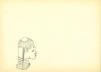
Udo-Style Head
Categories
Altar & Shrine Objects
Heads
Institution Location
1 Adesogbe (Plymouth) Road, P.M.B. 1115, Benin City , Edo State
Provenance
6
events
Institution data
MARKK Museum am Rothenbaum Kulturen und Künste der Welt
The data was transferred directly by the institution.
Last updated: 2022-06-10
Languages: german, english
| Institution field | Value |
|---|---|
Identifikationsnummer object id | C 4042 |
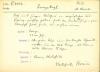
Titel designation | Gedenkkopf in Udo-Stil, Bronze |
Materialien material | ANORGANISCH/Metall/Gelbguß |
Heutiges Staatsgebiet des Herstellungsortes production place | Afrika/Westafrika/Nigeria/Benin-Reich |
Provenienz/Name prior source provenance | Heemke |
Provenienz Objektitinerar Akteure Orte Daten provenance | Adolf Heemke |
Provenienz/Affiliation provenance | H. Bey & Co., Bey & Zimmer |
Provenienz/Country provenance | Germany |
Provenienz/Date of Birth provenance | 8.10.1874 |
Provenienz/Date of Death provenance | unknown |
Provenienz/First Name provenance | Adolf |
Provenienz/No provenance | 15 |
Provenienz/Place of Birth provenance | Geestemüde/Bremerhaven |
Provenienz/Place of Death provenance | unknown |
Provenienz/Profession provenance | Merchant |
Provenienz/Role-Function/0 provenance | Consignor |
Provenienz/Role-Function/1 provenance | |
Provenienz/Sex provenance | male |
Provenienz/Short Biography provenance | Adolf Heemke (1874-?)was an overseas merchant and active as an agent for the trading company Bey & Zimmer in Nigeria. Today, works of art Heemke brought from Benin to Europe are still in collections in Stuttgart and Freiburg. In 1904, he sold ten Benin objects to the MARKK. |
Provenienz/Street provenance | Große Bäckerstraße 24 |
Provenienz/Town provenance | Hamburg |
Hersteller kulturhist. Herkunftsgesellschaft ethnic attribution | --/Edo |
Heutiger Aufbewahrungsort Sammlung department and institution | Museum am Rothenbaum. Kulturen und Künste der Welt (MARKK) |
Akquisitionsdatum accession date | 1904 |
Alte Inventarnummer object id | |
Inventurdatum | 28.07.2009 |
Label Text (deu) description | Gedenkkopf im Udo-Stil Unbekannte Bronzegießerwerkstatt Udo, Königreich Benin (?), Nigeria, 16. Jh. / Gelbguss / Ankauf von Adolf Heemke, 1904, Inv. Nr. C 4042 Köpfe dieses Stils wurden nach ihrer Ankunft in europäischen Museen fälschlicherweise als Darstellung eines Mädchens oder Kindes interpretiert, stellen aber wohl Würdenträger dar. Sie stammen aus Udo, zwanzig Meilen nordwestlich von Benin City. Dort soll zur Zeit der „Benin-Expedition “ 1897 der Stadtoberste Bronze-Werke besessen haben, die zu einem großen Teil Plünderungen zum Opfer fielen. Von insgesamt 14 Udo Gedenkköpfen, die nach heutigem Wissenstand erhalten blieben, befinden sich zwei in nigerianischen Museumssammlungen wie auch einige Bronzefiguren in diesem Stil. Der Überlieferung zufolge gab es nach dem Tod von Oba Ozolua Nachfolgekämpfe zwischen seinen Söhnen Esigie und Arhuaran, welcher Fürst in Udo war. Im Zuge des Konfliktes ließ letzterer Bronzegießer nach Udo entführen, wo sie Werke für ihn schufen, bis sein Bruder Oba Esigie den Konflikt schließlich gewann. |
Label Text (eng) description | Commemorative Head in Udo-Style Unidentified brass casting workshop Udo, Benin Kingdom (?), Nigeria, 16th century / Brass / Acquired from Adolf Heemke, 1904, Inv. no. C 4042 Although misinterpreted as depicting a girl or child after their arrival in European museums, heads of this style most likely represent dignitaries. They originate from Udo, twenty miles northwest of Benin City. There, at the time of the “Benin Expedition ” in 1897, the ruler of the city is said to have owned bronze works, many of which fell victim to looting. Of the currently identified 14 remaining Udo commemorative heads, two are located in Nigerian museum collections along with bronze figures in this same style. According to oral tradition, after the death of Oba Ozolua, succession struggles ensued between his sons Esigie and Arhuaran, who was prince in Udo. During the conflict, the latter had bronze casters kidnapped to Udo, where they created works for him until his brother Oba Esigie finally achieved victory. |
Maße dimensions | Höhe: 22,50 cm; Breite: 14,60 cm |
Sections
About
Other
Sensitive content
Sensitive Content Digital Benin includes colonial material that may contain inaccurate, derogatory or harmful language relating to African and African diasporic communities. Such language may appear in catalogue records, transcriptions, and book, exhibition or museum titles. We recognize that this material may cause distress. Sensitive-content warnings are being implemented across the collection, but this process is ongoing. The language does not reflect Digital Benin’s views; we take an anti-colonial and anti-racist position and are committed to centring the humanity of historically marginalised communities.