Loading...




Identifikationsnummer
C 3983
Institution
Omo n'Oba n'Edo Uku Akpolokpolo, Ọba of Benin & National Commission for Museums and Monuments, Nigeria Restituted
Previously owned by MARKK Museum am Rothenbaum Kulturen und Künste der Welt


English designations
Categories
Institution Location
1 Adesogbe (Plymouth) Road, P.M.B. 1115, Benin City , Edo State
Identifikationsnummer
C 3983
Institution
Omo n'Oba n'Edo Uku Akpolokpolo, Ọba of Benin & National Commission for Museums and Monuments, Nigeria Restituted
Previously owned by MARKK Museum am Rothenbaum Kulturen und Künste der Welt
English designations
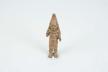
Fragment
Altar Tableau
Queen Mother Figure
Categories
Figures
Institution Location
1 Adesogbe (Plymouth) Road, P.M.B. 1115, Benin City , Edo State
Iconographies
7
annotations

Ikharo
Forehead markings
2 annotations


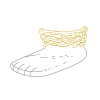
Ẹguẹn
Anklet
2 annotations



Odigba
Coral beaded collar
1 annotation


Ukpan obọ eva
Crossed Beaded Baldrics
1 annotation

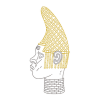
Ukpẹ ọkhọkhọ
Curved conical hairstyle worn by Iy'Ọba
1 annotation

Provenance
5
events
Institution data
MARKK Museum am Rothenbaum Kulturen und Künste der Welt
The data was transferred directly by the institution.
Last updated: 2022-06-10
Languages: german, english
| Institution field | Value |
|---|---|
Identifikationsnummer object id | C 3983 |
Titel designation | Figürchen einer Königinmutter aus Bronze |
Materialien material | ANORGANISCH/Metall/Gelbguß |
Heutiges Staatsgebiet des Herstellungsortes production place | Afrika/Westafrika/Nigeria/Benin-Reich |
Provenienz/Name prior source provenance | Engelhardt |
Provenienz Objektitinerar Akteure Orte Daten provenance | Albert Engelhardt |
Provenienz/Affiliation provenance | |
Provenienz/Country provenance | Germany |
Provenienz/Date of Birth provenance | unknown |
Provenienz/Date of Death provenance | unknown |
Provenienz/First Name provenance | Albert |
Provenienz/No provenance | 9 |
Provenienz/Place of Birth provenance | unknown |
Provenienz/Place of Death provenance | unknown |
Provenienz/Profession provenance | presumably Merchant |
Provenienz/Role-Function/0 provenance | Consignor |
Provenienz/Role-Function/1 provenance | |
Provenienz/Sex provenance | male |
Provenienz/Short Biography provenance | Albert Engelhardt was presumably a merchant and offered exactly one object from the Benin Kingdom and nothing else for sale to the Museum für Völkerkunde (today MARKK) in 1904. Beyond that, this person does not appear in any othr documentation. |
Provenienz/Street provenance | |
Provenienz/Town provenance | Hamburg |
Hersteller kulturhist. Herkunftsgesellschaft ethnic attribution | --/Edo |
Heutiger Aufbewahrungsort Sammlung department and institution | Museum am Rothenbaum. Kulturen und Künste der Welt (MARKK) |
Akquisitionsdatum accession date | 1904 |
Alte Inventarnummer object id | |
Inventurdatum | 23.07.2009 |
Label Text (deu) description | Figur einer Königinmutter Unbekannte Werkstatt der Bronzegießergilde Igun Eronmwon / Königreich Benin, Nigeria, 18. Jh. / Gelbguss / Ankauf von Albert Engelhardt, 1904, Inv. Nr. C 3983 Charakteristisch für Darstellungen der Königinmutter ist die hohe, leicht nach vorne gebogene und mit einem Korallennetz überzogene Frisur. Die Iyoba trägt Insignien aus Korallenperlen wie hochrangige männliche Würdenträger, denen sie gleichgestellt ist. Das Amt der Königinmutter wurde im frühen 16. Jh. durch Oba Esigie zum Dank für die Unterstützung seiner Mutter Idia eingeführt, die ihm durch Geistesschärfe und spirituelle Kraft bei Feldzügen zur Seite gestanden hatte. |
Label Text (eng) description | Figure of a Queen Mother Unidentified workshop of the Bronze Casters Guild Igun Eronmwon / Benin Kingdom, Nigeria, 18th century / Brass / Acquired from Albert Engelhardt, 1904, Inv. no. C 3983 Characteristic of representations of the queen mother is the tall hairstyle, slightly bent forward and covered with a coral net. The Iyoba wears insignia of coral beads like high-ranking male dignitaries, which denotes her as equal to them. The office of queen mother was instituted in the early 16th century by Oba Esigie in gratitude for the support of his mother Idia, who had assisted him in military campaigns through sharpness of mind and spiritual strength. |
Maße dimensions | Höhe: 19,50 cm |
Sections
About
Other
Sensitive content
Sensitive Content Digital Benin includes colonial material that may contain inaccurate, derogatory or harmful language relating to African and African diasporic communities. Such language may appear in catalogue records, transcriptions, and book, exhibition or museum titles. We recognize that this material may cause distress. Sensitive-content warnings are being implemented across the collection, but this process is ongoing. The language does not reflect Digital Benin’s views; we take an anti-colonial and anti-racist position and are committed to centring the humanity of historically marginalised communities.