Loading...


Identifikationsnummer
C 3692
Institution
Omo n'Oba n'Edo Uku Akpolokpolo, Ọba of Benin & National Commission for Museums and Monuments, Nigeria Restituted
Previously owned by MARKK Museum am Rothenbaum Kulturen und Künste der Welt
Edo designations

English designations
Categories
Institution Location
1 Adesogbe (Plymouth) Road, P.M.B. 1115, Benin City , Edo State
Identifikationsnummer
C 3692
Institution
Omo n'Oba n'Edo Uku Akpolokpolo, Ọba of Benin & National Commission for Museums and Monuments, Nigeria Restituted
Previously owned by MARKK Museum am Rothenbaum Kulturen und Künste der Welt
Edo designations
English designations
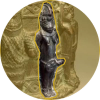
Ofoe Figure
Categories
Altar & Shrine Objects
Heads
Institution Location
1 Adesogbe (Plymouth) Road, P.M.B. 1115, Benin City , Edo State
Iconographies
1
annotations
Ibierugha
Attendant
1 annotation

Provenance
6
events
Institution data
MARKK Museum am Rothenbaum Kulturen und Künste der Welt
The data was transferred directly by the institution.
Last updated: 2022-06-10
Languages: german, english
| Institution field | Value |
|---|---|
Identifikationsnummer object id | C 3692 |
Titel designation | Köpfchen aus Bronze mit 3 Füßen |
Materialien material | ANORGANISCH/Metall/Gelbguß |
Heutiges Staatsgebiet des Herstellungsortes production place | Afrika/Westafrika/Nigeria/Benin-Reich |
Provenienz/Name prior source provenance | Frisch |
Provenienz Objektitinerar Akteure Orte Daten provenance | John Paul Frisch |
Provenienz/Affiliation provenance | H. Bey & Co., Bey & Zimmer |
Provenienz/Country provenance | Germany |
Provenienz/Date of Birth provenance | 23.07.1875 |
Provenienz/Date of Death provenance | 25.07.1934 |
Provenienz/First Name provenance | John Paul |
Provenienz/No provenance | 11 |
Provenienz/Place of Birth provenance | Hamburg |
Provenienz/Place of Death provenance | Hamburg |
Provenienz/Profession provenance | Merchant |
Provenienz/Role-Function/0 provenance | Consignor |
Provenienz/Role-Function/1 provenance | |
Provenienz/Sex provenance | male |
Provenienz/Short Biography provenance | John Paul Frisch (1875-1934) was a Hamburg merchant residing in the Sternschanze district. Frisch worked as an agent for the company Bey & Zimmer in West Africa. He has been recorded on several passenger documents travelling to southern Nigeria with Woermann ships. In 1903, Frisch sold four objects from the Kingdom of Benin to the museum. |
Provenienz/Street provenance | Rosenhofstraße 18 |
Provenienz/Town provenance | Hamburg |
Hersteller kulturhist. Herkunftsgesellschaft ethnic attribution | --/Edo |
Heutiger Aufbewahrungsort Sammlung department and institution | Museum am Rothenbaum. Kulturen und Künste der Welt (MARKK) |
Akquisitionsdatum accession date | 1903 |
Alte Inventarnummer object id | |
Inventurdatum | 23.07.2009 |
Label Text (deu) description | Köpfchen mit drei Füßen Unbekannte Werkstatt der Bronzegießergilde Igun Eronmwon / Königreich Benin, Nigeria, 16./17. Jh. / Gelbguss / Ankauf von John Paul Frisch, 1903, Inv. Nr. C 3692 Dieser Behälter diente wahrscheinlich zur Aufbewahrung ritueller Medizin und stand wohl auf einem Altar. Die Beine verweisen auf Ofoe, den Boten des Todesgottes Ogiuwu. Die Edo stellen sich Ofoe als körperlos vor, seine Gliedmaßen treten direkt aus dem Kopf hervor. |
Label Text (eng) description | Small Head with three Feet Unidentified workshop of the Bronze Casters Guild Igun Eronmwon / Benin Kingdom, Nigeria, 16th/17th century / Brass / Acquired from John Paul Frisch, 1903, Inv. no. C 3692 This container probably served to store ritual medicine and most likely stood on an altar. The legs refer to Ofoe, the messenger of the death god Ogiuwu. The Edo people imagine Ofoe as disembodied with his limbs protruding directly from his head. |
Maße dimensions | Höhe: 16,90 cm; Breite: 8,70 cm |
Sections
About
Other
Sensitive content
Sensitive Content Digital Benin includes colonial material that may contain inaccurate, derogatory or harmful language relating to African and African diasporic communities. Such language may appear in catalogue records, transcriptions, and book, exhibition or museum titles. We recognize that this material may cause distress. Sensitive-content warnings are being implemented across the collection, but this process is ongoing. The language does not reflect Digital Benin’s views; we take an anti-colonial and anti-racist position and are committed to centring the humanity of historically marginalised communities.