Loading...


Identifikationsnummer
C 2946
Institution
Omo n'Oba n'Edo Uku Akpolokpolo, Ọba of Benin & National Commission for Museums and Monuments, Nigeria Restituted
Previously owned by MARKK Museum am Rothenbaum Kulturen und Künste der Welt
Edo designations

English designations
Categories
Institution Location
1 Adesogbe (Plymouth) Road, P.M.B. 1115, Benin City , Edo State
Identifikationsnummer
C 2946
Institution
Omo n'Oba n'Edo Uku Akpolokpolo, Ọba of Benin & National Commission for Museums and Monuments, Nigeria Restituted
Previously owned by MARKK Museum am Rothenbaum Kulturen und Künste der Welt
Edo designations
English designations
Relief Plaque
Categories
Palace Architecture & Ornamentation
Institution Location
1 Adesogbe (Plymouth) Road, P.M.B. 1115, Benin City , Edo State
Iconographies
3
annotations

Agbada
Sword
1 annotation


Owẹn iba ẹdẹ ku
Rosette - 'The Sun Never Misses a Day'
1 annotation


Ebe Amẹ
Water Fern
1 annotation

Provenance
5
events
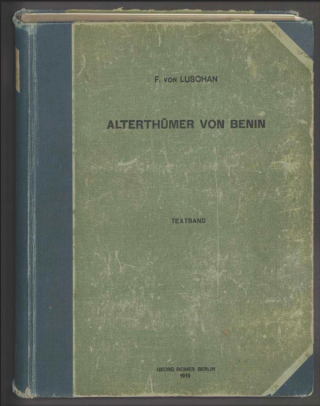
Institution data
MARKK Museum am Rothenbaum Kulturen und Künste der Welt
The data was transferred directly by the institution.
Last updated: 2022-06-10
Languages: german, english
| Institution field | Value |
|---|---|
Identifikationsnummer object id | C 2946 |
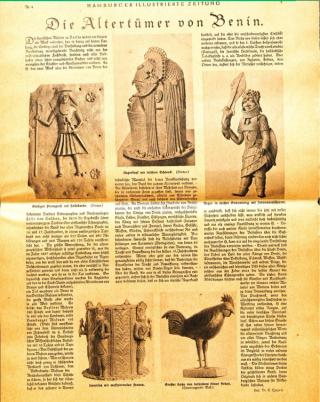
Titel designation | Reliefplatte, Portugiese mit Luntenspieß und Schwert |
Materialien material | ANORGANISCH/Metall/Gelbguß |
Heutiges Staatsgebiet des Herstellungsortes production place | Afrika/Westafrika/Nigeria/Benin-Reich |
Provenienz/Name prior source provenance | Block |
Provenienz Objektitinerar Akteure Orte Daten provenance | Adolf Block |
Provenienz/Affiliation provenance | |
Provenienz/Country provenance | Germany |
Provenienz/Date of Birth provenance | unknown |
Provenienz/Date of Death provenance | unknown |
Provenienz/First Name provenance | Adolf |
Provenienz/No provenance | 4 |
Provenienz/Place of Birth provenance | unknown |
Provenienz/Place of Death provenance | unknown |
Provenienz/Profession provenance | unknown |
Provenienz/Role-Function/0 provenance | Consignor |
Provenienz/Role-Function/1 provenance | |
Provenienz/Sex provenance | male |
Provenienz/Short Biography provenance | Adolf Block sold two relief placques from the Kingdom of Benin to the museum in 1901. Who Block was and how he acquired these pieces before they were consigned has not been reconstructed yet. |
Provenienz/Street provenance | |
Provenienz/Town provenance | Hamburg |
Hersteller kulturhist. Herkunftsgesellschaft ethnic attribution | --/Edo |
Heutiger Aufbewahrungsort Sammlung department and institution | Museum am Rothenbaum. Kulturen und Künste der Welt (MARKK) |
Akquisitionsdatum accession date | 1901 |
Alte Inventarnummer object id | |
Inventurdatum | 23.07.2015 |
Label Text (deu) description | Reliefplatte: Portugiese mit Luntenspieß und Schwert Unbekannte Werkstatt der Bronzegießergilde Igun Eronmwon / Königreich Benin, Nigeria, 16./17. Jh. / Gelbguss / Ankauf von Adolf Block, 1901, Inv. Nr. C 2946 Der Luntenspieß in der Hand des Portugiesen weist diesen als Kanonier aus, der möglicher- weise dem König von Benin gedient hat. Portugiesendarstellungen gehören zu einem Komplex von Symbolen, die Olokun, dem Gott des Meeres, der Fruchtbarkeit und des Reichtums zugeordnet werden. Sie sind häufig begleitet von Darstellungen von Tieren, die mit dem Reich von Olokun in Verbindung stehen: Welsen, Krokodilen oder Schlangen. |
Label Text (eng) description | Relief Plaque: Portuguese with Match Pike and Sword Unidentified workshop of the Bronze Casters Guild Igun Eronmwon / Benin Kingdom, Nigeria, 16th/17th century / Brass / Acquired from Adolf Block, 1901, Inv. no. C 2946 The match pike held by the Portuguese identifies him as a cannoneer, who may have served the king of Benin. Representations of the Portuguese belong to a complex of symbols associated with Olokun, the god of the sea, fertility and wealth. They are often accompanied by representations associated with the realm of Olokun, such as mudfish, crocodiles or snakes. |
Maße dimensions | Höhe: 42,80 cm; Breite: 29,00 cm |
Sections
About
Other
Sensitive content
Sensitive Content Digital Benin includes colonial material that may contain inaccurate, derogatory or harmful language relating to African and African diasporic communities. Such language may appear in catalogue records, transcriptions, and book, exhibition or museum titles. We recognize that this material may cause distress. Sensitive-content warnings are being implemented across the collection, but this process is ongoing. The language does not reflect Digital Benin’s views; we take an anti-colonial and anti-racist position and are committed to centring the humanity of historically marginalised communities.