Loading...
Objektnummer
B06710
English designations
Categories
Institution Location
Bahnhofspl. 13, 28195 Bremen, Germany
Objektnummer
B06710
English designations
Fragment
Pendant Plaque
Categories
Ceremonial Regalia
Institution Location
Bahnhofspl. 13, 28195 Bremen, Germany

Iconographies

3 annotations

Iconography image
Udahae
Beaded forehead band

The Udahae is a forehead band made from coral beads and worn by chiefs. Sometimes a white Igan (feather) from the Oɛɣohɔ (vulturine fish eagle) is tucked into the left side of the Udahae. According to Benin oral tradition, the Udahae was introduced by Ọba Ezoti, the first son of Ọba Ewuare I. During his coronation, Ezoti was shot in the forehead with a poisoned arrow. To stop the bleeding, a band of red beads was wrapped around his forehead while he made public appearances. Fourteen days later, he died from his wound. Since then, Benin chiefs have worn the red-beaded Udahae around their foreheads to commemorate the cap used by Ezoti to stop the bleeding (Egharevba 1968, p. 21).

1 annotation
Udahae
Headdress/crown with single projection
Oro
Headdress/crown with single projection

Figures wearing a headdress with a single protrusion from the crown of the head, known as the Oro, are found only among the Ọba and a select category of palace dignitaries whose ancestors originated in ancient Ile Ife. Only the Osa and Osuan, custodians of the Uwen and Ora deities, as well as members of the Emuru, who are responsible for the care of Iru vessels, may wear a headdress with the Oro. The identification of different figures is therefore interpreted based on the combination of the Oro with other items of regalia. Artists in the Igun-Ẹrọnmwọn and Igbesamwan depicted figures with the Oro on Ama-Ẹrọnmwọn (bronze relief plaques) and Aken'ni Elao (carved tusks), respectively. The Oro would either be made of coral beads as part of the crown or headdress, or be woven from itoto fibre.

1 annotation
Oro
Colar Bead
Odigba
Coral beaded collar

Odigba (beaded collar) is a rigid neck collar made of beads, worn as part of ceremonial attire only by senior princes who have been made Enigie. Although Ibafe (2007, p. 43) argued that the Odigba was introduced during the Ogiso period (c. 900–c. 1170 AD) by Ogiso Ere, along with other symbolically important Emwin Arre, such as the Ada (ceremonial sword) and the Ebẹn (ceremonial sword). The Odigba was initially made of beads, while coral was incorporated only later, following its introduction through trade with Portuguese merchants in the late fifteenth century.

1 annotation
Odigba

Provenance

4 events
Production
unknown to February 22, 1897 (day approximate)
The object was produced by Unknown member(s) of the Igun-Ẹrọnmwọn guild.
Loot
February 19, 1897 (day approximate) to June 1899 (month approximate)
Looting of the Emwin Arre - Inalienable Cultural Artefacts - during the Invasion of the Benin Kingdom in February 1897 and until the end of overt military activity in June 1899
Unknown
February 22, 1897 (day approximate) to March 30, 1908
The object is known to have come into contact with Carl Heinrich Becker.
Purchase
March 8, 1908
Objects purchased from C. H. Becker by the Städtische Sammlungen für Naturgeschichte und Ethnographie

Related archival documents

1 documents
See all
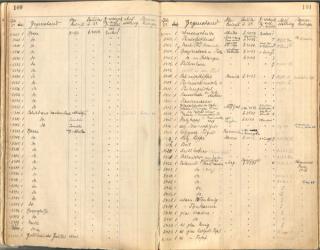
An archival document representing a Inventories of 50 page(s)
InventoryAccession Record
Übersee-Museum Bremen
Inventory (Africa collection)

Institution data

Übersee-Museum Bremen
The data was transferred directly by the institution.
Last updated: 2021-06-01
Language: german
Institution fieldValue
Objektnummer
object id
B06710
Objektname
designation
object type
Anhänger Figur männlich Fragment
Beschreibung
description
Dreidimensionale Figur, nur Oberkörper und Kopf vorhanden, Beine vermutlich abgebrochen. Kopfbedeckung mit phallusartigem Aufsatz, Hals überdeckt, ein Arm ist abgewinkelt und scheint etwas zu halten.
Material
material
Messing
Maße
dimensions
Allgemein: 3,5 × 4,5 × 11 cm
Datierung
date made
before 1908
Ort
production place
Staat
production place
Nigeria
Geber
prior source
provenance
Carl Heinr. Becker
Sammler
prior source
provenance
Vorbesitzer
prior source
provenance
Kultur/Ethnie
ethnic attribution
Benin
Sammlung
department and institution
E00776
Erwerbsdatum
accession date
1908-03-30
Erwerbsart
accession method
Kauf
Sensitive content

Sensitive Content Digital Benin includes colonial material that may contain inaccurate, derogatory or harmful language relating to African and African diasporic communities. Such language may appear in catalogue records, transcriptions, and book, exhibition or museum titles. We recognize that this material may cause distress. Sensitive-content warnings are being implemented across the collection, but this process is ongoing. The language does not reflect Digital Benin’s views; we take an anti-colonial and anti-racist position and are committed to centring the humanity of historically marginalised communities.

Read more about our approach