Loading...
Relief Plaque
Relief Plaque
Relief Plaque
Relief Plaque
Registration number
Af1898,0115.50
Institution
British Museum
Edo designations
English designations
Categories
Institution Location
Great Russell St, Bloomsbury, London WC1B 3DG, United Kingdom
Registration number
Af1898,0115.50
Institution
British Museum
Edo designations
English designations
Relief Plaque
Categories
Palace Architecture & Ornamentation
Institution Location
Great Russell St, Bloomsbury, London WC1B 3DG, United Kingdom

Iconographies

13 annotations
Shield
Asa
Shield

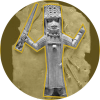
Asa (shields) are a crucial attribute of warriors and warrior chiefs, forming part of their ceremonial and battle attire as represented on the Emwin Arre (royal treasures). Asa were usually made from elephant or crocodile skin and used by warriors for protection during hand-to-hand combat. Interestingly, the form of Asa depicted on historic royal artefacts differs from those found in museum collections today, reflecting changes in shield shapes and designs over time.

1 annotation
Asa
Horn/Flute
Oko/Akohẹn
Horn/Flute

Akohẹn, or ivory horns, are played by members of the Ikpakoen (guild of ivory hornblowers), while Oko, or flutes, are played by members of the Ikpeziken (guild of royal flute players). Among the Emwin Arhe (royal treasures), Oko and Akohẹn are usually depicted being played by brass-cast figures representing members of these guilds, and also appear on Ama-Ẹrọnmwọn (bronze relief plaques), Aken'ni Elao (carved altar tusks), and Urhotọ (altar tableau).

Today in Benin City, when a public procession leaves the palace, a court official may sound side-blown horns made from ivory. Historically, these instruments were also used during warfare, where they were played alongside Ema (drums) and Ẹroro (bells), producing a “cacophony of sound” whose “[t]he psychological effect of the barrage of noise magnified the size of Benin’s forces”.

Some Oko/Akohẹn were also cast in brass by members of the Igun-Ẹrọnmwọn. However, these brass examples are understood not to have been functional instruments and could not have been blown like their ivory counterparts.

1 annotation
Oko/Akohẹn
Spears
Asoro
Spears

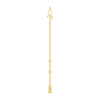
Asoro (spears) were used as weapons in battle and for hunting. According to Osadolor, there were two types: long and short. Figures holding Asoro are often depicted on Ama-Ẹrọnmwọn (bronze relief plaques), sometimes in battle scenes and at ceremonies and festivals.

1 annotation
Asoro
snake
Ẹyẹn
Snake

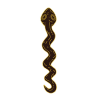
Ẹyẹn (snakes) are among the most common animals depicted by Edo artists on the Emwin Arre (royal treasures). The varied depictions of these reptiles suggest different snake species, including the Ikpin (python), Arhunmoto (puff adder), and Olose (red-black striped snake); therefore, here we use the generic term for snake: Ẹyẹn.

The identification of snake motifs and depictions as Ikpin, as well as the importance accorded to this species, is a subject of scholarly debate. Paula Ben-Amos argued that the Edo admired the “stature, colouration and crushing power” of the python, which was in turn associated with Olokun. She went on to identify the brass figures of snakes that formerly adorned the roof of the palace, as well as several other snakes, as pythons. Joseph Nevadomsky argued instead that the importance of the Ikpin had been overstated.

Some of these snake representations may in fact be the Arhunmwoto (puff adder). The first to suggest this was the German curator Felix von Luschan in his early research into the Benin royal treasures. Nevadomsky suggested that the large head, narrow neck, and rough scales are indicative of either the puff adder, a symbol of “material wealth, tribute, and gifts,” or the Gaboon viper.

Another kind of snake that may be depicted is the Olose (red-black striped snake). It has the praise name “king of the snakes” in Edo. Olose is also closely connected to the deity Olokun, both because of its attractiveness and because it inhabits wet environments such as forest streams, which in turn flow into rivers and the sea, where Olokun lives. Although the exact meanings of these different snakes vary, they share the characteristic of being spiritually powerful creatures.

1 annotation
Ẹyẹn
Water fern
Ebe Amẹ
Water Fern

Ebe Amẹ refers to a wide variety of plants, particularly the leaves of the water fern or river leaf, found in riverine areas of southern Nigeria. Artists from the Igun-Ẹrọnmwọn used these as a decorative motif in the background of most Ama-Ẹrọnmwọn (bronze relief plaques). The petals of the Ebe Amẹ, like the points of the ἀghàdàgháda (crossroads), represent the four cardinal directions: north, east, south, and west. The number four plays a foundational role in the Edo calendar, which is structured around four market days.

1 annotation
Ebe Amẹ
leopard teeth
Akọn Ẹkpen
Leopard Teeth Neck Ornament

Akọn Ẹkpẹn are necklaces or neck ornaments made of strung leopard’s teeth. They are worn by figures to signify their high rank and military prowess, as well as by their leaders, the Ezọmọ or Iyasẹ. They are often worn alongside quadrangular Ẹroro (bells) and Ohian Ẹkpẹn (leopard tunics).

The Akọn Ẹkpẹn is clearly and profoundly related to the symbolism of the Ẹkpẹn (leopard) and its association with the Ọba (king), who is metaphorically referred to as ‘ẹkpẹn ne owa’, the ‘leopard of the home’. On the other hand, the Ẹkpẹn is often referred to as the ‘king of the bush’, embodying ferocity, aggression, strength, and leadership—qualities attributed to the Ọba. This intricate link between the leopard, the monarch, and his military leaders reinforces the complex hierarchy and spiritual authority central to Benin’s courtly art.

2 annotations
Akọn Ẹkpen
Akọn Ẹkpen
Iconography image
Ẹbẹn
Ceremonial Sword

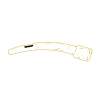
Ẹbẹn are a type of ceremonial sword of significant importance in the Benin Kingdom. During ceremonies, titled chiefs would hold them or toss them during dances, thereby paying homage to the Ọba at these public events, particularly when a chief receives a certain status. It is forbidden for Ẹbẹn to touch the ground, so the chief must take extra precautions to avoid dropping the Ẹbẹn during the dance. Therefore, the Okae-Odionmwan (head of executioners) dances with the Umozo (warfare or executioner’s sword) behind the dancing chief.

There are two central ceremonial swords used in the royal court of the Benin Kingdom, one of which is the Ẹbẹn, along with the Ada (ceremonial swords). They are distinguished by their blades: the Ẹbẹn blade reflects the shape of a leaf or an oar. Sometimes, it is decorated with openwork designs and/or brass inlays, most commonly shaped as small Ẹbẹn and Ẹkpẹn (leopards). The handle of the Ẹbẹn also has an unusual ring-shaped form, which further differentiates it from the Ada.

1 annotation
Ẹbẹn
Colar Bead
Odigba
Coral beaded collar

Odigba (beaded collar) is a rigid neck collar made of beads, worn as part of ceremonial attire only by senior princes who have been made Enigie. Although Ibafe (2007, p. 43) argued that the Odigba was introduced during the Ogiso period (c. 900–c. 1170 AD) by Ogiso Ere, along with other symbolically important Emwin Arre, such as the Ada (ceremonial sword) and the Ebẹn (ceremonial sword). The Odigba was initially made of beads, while coral was incorporated only later, following its introduction through trade with Portuguese merchants in the late fifteenth century.

1 annotation
Odigba
Fortified chest band
Uko ugbo-ohamwen
Fortified chest band

Uko ugbo-ohamwen is a chest band often worn around the chests of warriors depicted on the Ama-Ẹrọnmwọn (relief plaques) and is fortified with charms. The band was worn to increase the strength and endurance of warriors. This fortified chest band has also been referred to as ukugba olila.Ine n’Igun in Bradbury 1959, B.S. 245

1 annotation
Uko ugbo-ohamwen
Bell
Ẹroro
Bell

Ẹroro (bells) frequently appear as ornaments worn by figures depicted on the Emwin Arre, particularly on Ama-Ẹrọnmwọn (bronze relief plaques) and Aken’ni Elao (carved tusks). These Ẹroro are most commonly quadrangular in form or, less commonly, cylindrical with rounded tops. Quadrangular Ẹroro worn around the neck are often part of the attire that indicates that figures can be interpreted as warriors, alongside the Akọn Ẹkpẹn (leopard tooth neck ornament) and the Ohian Ẹkpẹn (leopard tunics).

2 annotations
Ẹroro
Ẹroro
King Ọzọlua
Ọba Ọzọlua
King Ọzọlua

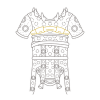
Ọba Ọzọlua (reigned c. 1483–1504) was the son of Ọba Ẹwuare I and, like his father, was renowned for his military achievements and the expansion of the kingdom’s territory. His conquests extended the reach of the Benin Kingdom considerably, earning him the epithet ‘Ọzọlua the Conqueror’. Ọzọlua has been identified in ivories carved by the Igbesamwan, bronzes cast by members of the Igun-Ẹrọnmwọn, and wooden carvings produced by the Emada. He is distinguished by a long robe or garment, which is understood to represent the full-length iron-mesh armour he wore in battle and thus to emphasise his strength and success as a warrior and leader.

Although Ọzọlua’s son, Ọba Ẹsigie, is more commonly associated with Portuguese contact, it was during Ọzọlua’s reign that the Portuguese first arrived in the Benin Kingdom. Portuguese figures therefore also appear alongside representations of Ọzọlua, reflecting the early stages of this relationship.

1 annotation
Ọba Ọzọlua

Provenance

6 events
Production
1504 (approximate) to 1550 (approximate)
Production of the Ama-Ẹrọnmwọn by the Igun-Ẹrọnmwọn guild in Benin City
Loot
February 19, 1897 (day approximate) to June 1899 (month approximate)
Looting of the Emwin Arre - Inalienable Cultural Artefacts - during the Invasion of the Benin Kingdom in February 1897 and until the end of overt military activity in June 1899
Transfer
March 19, 1897 (day approximate)
Transfer of the Ama-Ẹrọnmwọn prize group to the British Foreign Office by Consul General Ralph Moor
Loan
September 7, 1897 to January 1898 (month approximate)
Loan and exhibition of the Foreign Office Ama-Ẹrọnmwọn group to the British Museum, September 1897
Donation
January 15, 1898
Donation of part of the British Foreign Office Ama-Ẹrọnmwọn group to the British Museum, January 15th, 1898
Exhibition
1970 to 1973
'Divine Kingship in Africa', 1970-1973, Museum of Mankind, London.

Related archival documents

2 documents
See all
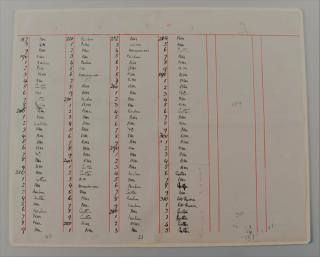
An archival document representing a Research notes of 1 page(s)
Research notes
British Museum
Fate of the Benin bronze plaques
Date
some day in March 1897 to sometime in 1899
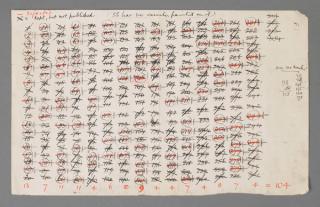
An archival document representing a Research notes of 1 page(s)
Research notes
British Museum
Foreign Office plaques retained and dispersed
Date
January 1, 1899

Institution data

British Museum
The data was transferred directly by the institution.
Last updated: 2025-06-10
Language: english
Institution fieldValue
Registration number
object id
Af1898,0115.50
Additional IDs
object id
269 (Foreign Office number)
PRN
object id
EAF26504
Object Type
designation
plaque
Description
description
Relief plaque, lost-wax cast in brass. Wide plaque, rectangular in form with side flanges. Background surface decorated with river leaf patterns and stippling. One nail hole and one partial hole at top, one hole at bottom. Iron nail still in position at top left. Depicts central high-ranking figure (often identified as Oba Ozolua), facing front, with two flanking warriors and two attendants. Central figure wears rectangular beaded headgear with long streamers at either side, deep beaded collar, leopard's tooth necklace, quadrangular bell on chest, bracelets and beaded anklets. Figure wears short-sleeved textured tunic decorated with snakes. Holds eben sword aloft in right hand and spear in left hand. Two flanking warriors wear high headgear, leopard's tooth necklaces, quadrangular bells on chest, leopard-designed body armour, patterned wrap-around skirts. Warrior on left holds shield in left and holds same spear as central figure in right. Warrior on right holds shield in left hand and spear in right hand. Smaller scale figures to left and right of central figure wear patterned domed helmets, quadrangular bells on chest, patterned wrap-around skirts. Figure on right holds pair of gongs (one broken off) and figure on left blows horn.
Ethnic name (made by)
ethnic attribution
Edo
Date
date made
16thC-17thC
Production place
production place
Made in: Benin City
Findspot
place collected
Found/Acquired: Benin City
Materials
material
brass ~iron
Technique
production technique
lost-wax cast
Dimensions
dimensions
Height: 44.00 cm~Width: 40.00 cm~Depth: 8.00 cm
Curator’s comments
provenance
The relief brass plaques that used to decorate the Oba's (king's) palace are among the most well-known of all the royal arts of Benin. Although frequently described as 'Benin Bronzes' most plaques are made of leaded brass in various compositions. It is widely accepted that they date to the 16th-17th centuries. In the years prior to the British royal influence in Benin was increasingly under threat from rival powers, both internal and external, with a focus on economic power and control of the important trading monopolies. However, the court and palace remained the political and spiritual centre of the Benin Kingdom. Earlier accounts written by Europeans visiting the city describe its size and scale. The palace complex was set up around atrium courtyards; some had galleries with wooden pillars supporting the roof. Brass plaques, probably made in matching pairs, were fixed to these pillars. The Benin brass plaques represent a distinct and unique corpus of work, unparalleled elsewhere on the continent. They are cast using the cire perdue (lost wax) technique and show significant variation in the depth of the relief. Some of the plaques portray historical events or commemorate successful wars, while others are a vivid depiction of Benin court life and ritual. Several groups of plaques show clear stylistic similarities. William B. Fagg suggested that these plaques represent the work of master brass casters. Fagg, William, 1973, 'Nigerian Images', London: Lund Humphries Gunsch, Kathryn, 2018, 'Benin plaques: a 16th century imperial monument', London: Routledge, Taylor and Francis Group ; Part of Processional Pillar Set 4. Row 3C. Central high-ranking figure with warriors and entourage (Gunsch, 2018). ; Read & Dalton 1899: This panel bears a close resemblance to Af1898,0115.51, the attitude and relative position of composition of which both beads and feathers appear to enter, and from the foremost corners of which long feather tassels depend. His long garment is similar to that of the persons in the last figure, but has shorter sleeves and an extended end, as in the following figure and passim. His anklets appear to be made of metal chain-work.
Bibliographic references
bibliography
Gunsch 2018: p.160 (3C); p.161, fig.6.58~Read & Dalton 1899: pl XXII3
Exhibition history
exhibition history
Exhibited: 1970-1973, London, Museum of Mankind, Divine Kingship in Africa
Condition
condition
Fair; top right and left corners missing. Entire bottom edge missing. Small chip from top centre edge.
Subjects
iconography
ruler (?)~musician ~palace/mansion
Associated events
event
Associated Event: British to Benin City - Feb 1897
Acquisition name (acquisition)
provenance
Secretary of State for Foreign Affairs
Acquisition date
accession date
1898
Acquisition notes (excavation)
provenance
This plaque was looted during the British to Benin City in 1897.
Sensitive content

Sensitive Content Digital Benin includes colonial material that may contain inaccurate, derogatory or harmful language relating to African and African diasporic communities. Such language may appear in catalogue records, transcriptions, and book, exhibition or museum titles. We recognize that this material may cause distress. Sensitive-content warnings are being implemented across the collection, but this process is ongoing. The language does not reflect Digital Benin’s views; we take an anti-colonial and anti-racist position and are committed to centring the humanity of historically marginalised communities.

Read more about our approach