Loading...




Information from catalogue/Number
ABDUA:64906
Institution
Omo n'Oba n'Edo Uku Akpolokpolo, Ọba of Benin & National Commission for Museums and Monuments, Nigeria Restituted
Previously owned by University Collections, University of Aberdeen
Edo designations

English designations
Categories
Institution Location
1 Adesogbe (Plymouth) Road, P.M.B. 1115, Benin City , Edo State
Information from catalogue/Number
ABDUA:64906
Institution
Omo n'Oba n'Edo Uku Akpolokpolo, Ọba of Benin & National Commission for Museums and Monuments, Nigeria Restituted
Previously owned by University Collections, University of Aberdeen
Edo designations
English designations
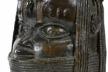
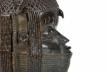
Commemorative Head
Categories
Altar & Shrine Objects
Heads
Institution Location
1 Adesogbe (Plymouth) Road, P.M.B. 1115, Benin City , Edo State
Iconographies
6
annotations

Ititi ako
Star beads
1 annotation

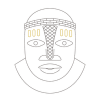
Ikharo
Forehead markings
1 annotation


Odigba
Coral beaded collar
1 annotation

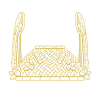
Ẹde
Beaded Crown
1 annotation

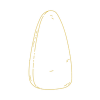
Ughavan
Celts
1 annotation


Ẹmila
Cattle (dwarf mutu cow)
1 annotation

Provenance
6
events
Institution data
Omo n'Oba n'Edo Uku Akpolokpolo, Ọba of Benin & National Commission for Museums and Monuments, Nigeria
The data was transferred directly from Museums and Special Collections, University of Aberdeen and given to the NCMM without restrictions. The NCMM gave permission to Digital Benin to display this data.
Last updated: 2022-02-07
Language: english
| Institution field | Value |
|---|---|
Archival documentation ID object id | ABDUA:64906 |
Exceptional commemorative head of a king description | Edo, Kingdom of Benin, Nigeria, late 18th century Cast bronze, the base with interlaced ornament and a series of animal figures in high relief, a high cylinder of bead necklaces enveloping the neck and chin, the face with full lips and angular nose, recessed pupils to the large eyes, three keloids in relief above each hatched brow, adorned with a pearl punctuating the middle of the forehead, the latticework beaded headdress with four attached clusters of five beads and two diagonal beads to the front, beaded tassels cast in relief before and behind the ears and joining the base, a large aperture at the top of the head for the insertion of ivory tusks, dark patina |
Provenance: provenance | British Benin Punitive Expedition 1897 Mr. Sidney Burney 1878 - 1951 Mr. H.B. Bell-Syer Sotheby’s, London, 18th March 1957, lot 196 Aberdeen University, acquired at the above |
Note: notes | The present piece is a superb example of Benin Late Period Art. The cylindrical shape, extended beaded collar covering the chin, addition of bead clusters to the crown and wide flange at the base all suggest a late eighteenth-century date. The form is that of uhunmwun-elao, representing an oba. He is identified by the royal crown (ede), the frontal band (udahae) adorned with a pearl punctuating the middle of the forehead and a multi-row necklace (odigba), all composed of coral beads. The beautiful tension of the face projected forward is accentuated by the large eyes staring intently onwards. There is exceptional quality of casting, with fine detailing and modelling throughout. |
For a similar example please see: bibliography | Segy, L. African Sculpture Speaks. Fig. 103 |
fileNames images | abdua-64906.jpg, abdua-64906_1.jpg, abdua-64906_2.jpg, abdua-64906_3.jpg, abdua-64906_4.jpg, abdua-64906_5.jpg, abdua-64906_6.jpg, abdua-64906_7.jpg, abdua-64906_8.jpg, abdua-64906_9.jpg, abdua-64906_10.jpg, abdua-64906_11.jpg, abdua-64906_12.jpg, abdua-64906_13.jpg, abdua-64906_14.jpg, abdua-64906_15.jpg |
Omo n'Oba n'Edo Uku Akpolokpolo, Ọba of Benin & National Commission for Museums and Monuments, Nigeria
The data was transferred directly from Museums and Special Collections, University of Aberdeen and given to the NCMM without restrictions. The NCMM gave permission to Digital Benin to display this data.
Last updated: 2022-03-11
Language: english
| Institution field | Value |
|---|---|
Information from catalogue/Number object id | ABDUA:64906 |
Information from catalogue/Name designation | Oba king of Benin |
Information from catalogue/Description, material. description | Bronze bust, for the altar of a deceased Oba (or King of Benin) Flange at base, deep high collar, plain crown |
Dimensions/Height dimensions | 280 mm |
Dimensions/Width dimensions | 175 mm |
Provenance provenance | See "Internal Data III" for historical provenance. Transfer from the University of Aberdeen to the National Commission for Museums and Monuments on 28 October 2021, handed by NCMM to HRM the Oba of Benin on 19 February 2022. |
Sections
About
Other
Sensitive content
Sensitive Content Digital Benin includes colonial material that may contain inaccurate, derogatory or harmful language relating to African and African diasporic communities. Such language may appear in catalogue records, transcriptions, and book, exhibition or museum titles. We recognize that this material may cause distress. Sensitive-content warnings are being implemented across the collection, but this process is ongoing. The language does not reflect Digital Benin’s views; we take an anti-colonial and anti-racist position and are committed to centring the humanity of historically marginalised communities.