Loading...
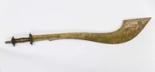


Eingangsnummer
64031
Institution
Reiss-Engelhorn-Museen, Museum Weltkulturen Edo designations

English designations
Categories
Institution Location
Reiss-Engelhorn-Museen, Museum Weltkulturen D5, 68159 Mannheim, Germany
Eingangsnummer
64031
Institution
Reiss-Engelhorn-Museen, Museum Weltkulturen Edo designations
English designations
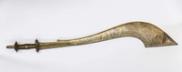
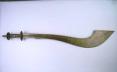
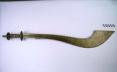
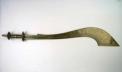
Ceremonial Sword
Categories
Ceremonial Objects
Institution Location
Reiss-Engelhorn-Museen, Museum Weltkulturen D5, 68159 Mannheim, Germany
Iconographies
1
annotations

Ubanu'hi
Inifinity Symbol
1 annotation

Provenance
4
events
Institution data
Reiss-Engelhorn-Museen, Museum Weltkulturen
The data was transferred directly by the institution.
Last updated: 2021-09-23
Language: german
| Institution field | Value |
|---|---|
Alte Inventarnummer object id | |
Alte Nummer object id | |
Eingangsnummer object id | 64031 |
Inventarnummer object id | IV Af 3102 |
Titel (Museumsobjekt) designation | Zierschwert |
Material material | Kupferlegierung, Kupfer |
Maße zum Objekt dimensions | Länge: 92,00 cm; Breite: 14,00 cm; Höhe: 6,00 cm |
Objektbezeichnung object type | Schwert |
Fundort/Herkunft production place | Benin-Reich <hist.> Benin |
Voreigentümer/in prior source provenance | Meyer, Hans, Dr. |
Ethnie/Sprachgruppe ethnic attribution | |
Sammlung department and institution | VK IV Afrika |
Eingangsjahr accession date | 1925 |
Eingangsart accession method | Kauf |
Bild images | rem/Maria Schumann |
Sections
About
Other
Sensitive content
Sensitive Content Digital Benin includes colonial material that may contain inaccurate, derogatory or harmful language relating to African and African diasporic communities. Such language may appear in catalogue records, transcriptions, and book, exhibition or museum titles. We recognize that this material may cause distress. Sensitive-content warnings are being implemented across the collection, but this process is ongoing. The language does not reflect Digital Benin’s views; we take an anti-colonial and anti-racist position and are committed to centring the humanity of historically marginalised communities.