Loading...
Accession number
62.89
Institution
Sidney and Lois Eskenazi Museum of Art Edo designations

English designations
Categories
Institution Location
Eskenazi Museum of Art, 1133 E 7th St, Bloomington, IN 47405, United States
Accession number
62.89
Institution
Sidney and Lois Eskenazi Museum of Art Edo designations
English designations
Commemorative Head
Categories
Altar & Shrine Objects
Heads
Institution Location
Eskenazi Museum of Art, 1133 E 7th St, Bloomington, IN 47405, United States
Iconographies
4
annotations
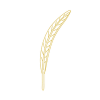
Igan
Feather
1 annotation

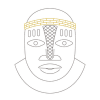
Udahae
Beaded forehead band
1 annotation

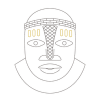
Ikharo
Forehead markings
1 annotation


Odigba
Coral beaded collar
1 annotation

Provenance
5
events
Institution data
Sidney and Lois Eskenazi Museum of Art
The data was transferred directly by the institution.
Last updated: 2022-02-01
Language: english
| Institution field | Value |
|---|---|
Accession number object id | 62.89 |
Artwork title designation | Uhunmwum-elao, Ancestral Head, Chief’s Altarpiece |
Materials material | Wood and metal |
Dimensions dimensions | 22 1/8 x 11 x 10 in. (56.2 x 27.9 x 25.4 cm) |
Date date made | Date unidentified |
Kingdom name production place | Benin Kingdom |
Nation production place | Nigeria |
Credit line prior source | Gift of Dr. and Mrs. Henry R. Hope, Eskenazi Museum of Art, Indiana University, 62.89 |
Provenance provenance | 1962, Gift to the Indiana University Art Museum from Henry and Sally Hope, Bloomington, Indiana. 1962, Henry Hope purchase from Ascher, Paris, France. 1958, Maitre Reheims, Hotel Drouot, Paris, France. |
Culture ethnic attribution | Edo |
Exhibition history exhibition history | African Exhibit, The Children's Museum, Indianapolis, Indiana, May 1978–January 1986. "African Art Exhibition," Non-western Core Program, Saint Joseph's College, Rensselaer, Indiana, 1978 (CANCELLED). “African Artifacts from Indiana University Art Museum,” Art Gallery, Carleton College, Northfield, Minnesota, January 26–February 13, 1977. “Traditions in the Arts of Black Africa ,” University of Notre Dame, Notre Dame, Indiana, March 5–April 15, 1974. “Notre Dame African Exhibition,” African Studies Program, Art Gallery of Notre Dame, University of Notre Dame, Notre Dame, Indiana, March 15–April 15, 1973. “African Art Exhibition,” Department of Fine Arts, North Park College, Chicago, Illinois, May 1–August 15, 1973. Cincinnati Museum, Cincinnati, Ohio, February 1971. "African Art Exhibition," Department of Creative Arts, Purdue University, West Lafayette, Indiana, March 31–May 8, 1970. “African Art Exhibition,” Western Illinois University, Macomb, Illinois, September 25–October 23, 1970. "Traditional Art of Africa," DePauw University, Greencastle, Indiana, (unknown dates), Oberlin College, Oberlin, Ohio (unknown dates), Tulane University, New Orleans, Louisiana (unknown dates), July 26, 1968–April 1, 1969. Stillman College, Tuscaloosa, Alabama, Spring 1966. |
Published references bibliography |
Sections
About
Other
Sensitive content
Sensitive Content Digital Benin includes colonial material that may contain inaccurate, derogatory or harmful language relating to African and African diasporic communities. Such language may appear in catalogue records, transcriptions, and book, exhibition or museum titles. We recognize that this material may cause distress. Sensitive-content warnings are being implemented across the collection, but this process is ongoing. The language does not reflect Digital Benin’s views; we take an anti-colonial and anti-racist position and are committed to centring the humanity of historically marginalised communities.