Loading...
Object ID
1955.317
Institution
Omo n'Oba n'Edo Uku Akpolokpolo, Ọba of Benin & National Commission for Museums and Monuments, Nigeria Restituted
Previously owned by Denver Art Museum
Edo designations

English designations
Categories
Institution Location
1 Adesogbe (Plymouth) Road, P.M.B. 1115, Benin City , Edo State
Object ID
1955.317
Institution
Omo n'Oba n'Edo Uku Akpolokpolo, Ọba of Benin & National Commission for Museums and Monuments, Nigeria Restituted
Previously owned by Denver Art Museum
Edo designations
English designations
Relief Plaque
Categories
Palace Architecture & Ornamentation
Institution Location
1 Adesogbe (Plymouth) Road, P.M.B. 1115, Benin City , Edo State
Iconographies
5
annotations
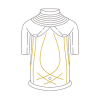
Iwu
Facial and Body Markings
1 annotation


Odigba
Coral beaded collar
1 annotation


Uki
Moon
1 annotation


Ebe Amẹ
Water Fern
1 annotation

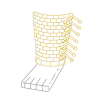
Iviawẹ
Stacked Beaded Anklet
1 annotation

Related oral histories
1
interviews

Provenance
8
events
Institution data
Denver Art Museum
The data was transferred directly by the institution.
Last updated: 2025-10-23
Language: english
| Institution field | Value |
|---|---|
Object ID object id | 1955.317 |
Description description | |
Medium material | bronze |
Dimension dimensions | H: 20 1/4 in, W: 14 1/8 in |
Object Name (Lexicon) object type | plaque |
Date date made | 1550-1650 |
AllMaker production place | Benin |
Country production place | Nigeria |
Provenance Research provenance | From the catalogue card: "One of the bronze relief plaques which decorated the wooden columns of the courtyards of the Royal Palace in Benin. The nail holes in the plaque are pulled through towards the back as they should have been when the Beninites ripped it off its column in 1691 during the Civil War in that city. This plaque along with many others was in the underground storerooms when the Dutch explorer Van Nyendall visited Benin in 1702. It was found by British Marines in 1847 when Benin was conquered, looted, and razed by the British. It was included in the British Admiralty sale of 1898 or 99 and went into a private collection from whence it was obtained by Carlebach." |
Provenance provenance | Commissioned from the Igun Eronmwon; by descent to Oba Ovonramwen (Ovonramwen Nogbaisi), c. 1857-1914; r. 1888-97, Royal Palace, Benin City; sent to England by Sir Ralph Moor following the Siege of Benin, 1897; collection of the British Foreign Service Office [1]; collection of Sir Claud Frederick William Russell [1871-1959] [2]; (Sotheby's), London, Sale of Egyptian, Greek and Roman Antiquities, Oriental and ethnographic art, December 6, 1954, Lot 190, Property of Sir Claud Russell; purchase, Carlebach Gallery, New York, 1954; purchase, Denver Art Museum, 1955. [1] Reed/Sir Ralph Moor No. 60. [2] British diplomat served in the Foreign office and British embassies/legations; held posts of Envoy Extraordinary and Minister Plenipotentiary to Ethiopia, 1920-1925; to the Swiss Confederation, 1928-1931; to the Portuguese Republic, 1931-1935 |
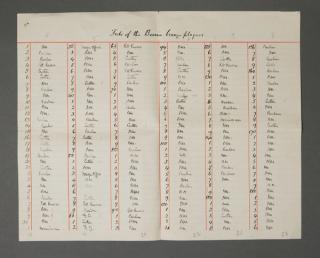
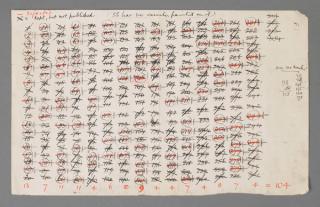
Notes notes | Cole A+, Pictured on display at the British museum at the below link: http://www.britishmuseum.org/research/collection_online/collection_object_details.aspx?objectId=1406619&partId=1&searchText=Benin+bronze+photographic+print&page=1, Pertinent information summarized from the object file: In 1897 the British Museum requested that some of the objects being reported in the press as having been found in Benin during the Punitive Expedition be sent home for study. The Foreign office agreed and Sir Ralph Moor duly sent back a shipment of plaques some time in March or April. In a later list, Read (Charles Hercules Read (later Sir) was the keeper of the department of British and Medieval Antiquities) noted 305 plaques that he was able to select from, although there appears to be others at the foreign office as Read mentions plaques in officials offices...[t]he 305 plaques were displayed for 3 months at the museum from September 1897 and a report appeared in The Times. The British Museum were able to keep around 200 of the original plaques...[t]he remainder of the plaques all bore the large white numbers such as is on yours, as did the museum's collection. They are Foreign Office numbers, we call them Read's numbers, Bon Lushan called them Sir Ralph Moor numbers. Read gained permission to handle the sale of the remainder and duly offered various plaques to museums around England and Europe, the results were listed on a document called "Fate of the Benin Bronzes" which uses Foreign office numbers." |
Gallery label text: description | This plaque is one of thousands looted by British soldiers who invaded and destroyed the royal palace of the Oba (king) of Benin in 1897. The Denver Art Museum purchased this plaque in 1955 without knowing its history. The museum removed (deaccessioned) the plaque from its collection in 2022 based on newly accessible documentation linking it to that British expedition . The Nigerian Commission for Museums and Monuments (NCMM) later reclaimed ownership on behalf of the Oba. It is now on loan to us in Denver to showcase the rich beauty of Benin’s artistic practice and the significant impact of looting on Benin’s heritage, past and present. |
Denver Art Museum
The data was transferred directly by the institution.
Last updated: 2021-09-14
Language: english
| Institution field | Value |
|---|---|
Object ID object id | 1955.317 |
Description description | |
Medium material | bronze |
Dimension dimensions | H: 20 1/4 in, W: 14 1/8 in |
Object Name (Lexicon) object type | plaque |
Date date made | 1550-1650 |
AllMaker production place | Benin |
Country production place | Nigeria |
Provenance Research provenance | From the catalogue card: "One of the bronze relief plaques which decorated the wooden columns of the courtyards of the Royal Palace in Benin. The nail holes in the plaque are pulled through towards the back as they should have been when the Beninites ripped it off its column in 1691 during the Civil War in that city. This plaque along with many others was in the underground storerooms when the Dutch explorer Van Nyendall visited Benin in 1702. It was found by British Marines in 1847 when Benin was conquered, looted, and razed by the British. It was included in the British Admiralty sale of 1898 or 99 and went into a private collection from whence it was obtained by Carlebach." |
Provenance Statement provenance | Taken by (Sir Ralph Moor) from the Kingdom of Benin in 1897; sent to the British Foreign Service office collection in 1897 [Reed/Sir Ralph Moor No. 60]. Purchased from (Carlebach Gallery, New York) in 1955; Collection of Denver Art Museum. |
Notes notes | Cole A+, Pictured on display at the British museum at the below link: http://www.britishmuseum.org/research/collection_online/collection_object_details.aspx?objectId=1406619&partId=1&searchText=Benin+bronze+photographic+print&page=1, Pertinent information summarized from the object file: In 1897 the British Museum requested that some of the objects being reported in the press as having been found in Benin during the Punitive Expedition be sent home for study. The Foreign office agreed and Sir Ralph Moor duly sent back a shipment of plaques some time in March or April. In a later list, Read (Charles Hercules Read (later Sir) was the keeper of the department of British and Medieval Antiquities) noted 305 plaques that he was able to select from, although there appears to be others at the foreign office as Read mentions plaques in officials offices...[t]he 305 plaques were displayed for 3 months at the museum from September 1897 and a report appeared in The Times. The British Museum were able to keep around 200 of the original plaques...[t]he remainder of the plaques all bore the large white numbers such as is on yours, as did the museum's collection. They are Foreign Office numbers, we call them Read's numbers, Bon Lushan called them Sir Ralph Moor numbers. Read gained permission to handle the sale of the remainder and duly offered various plaques to museums around England and Europe, the results were listed on a document called "Fate of the Benin Bronzes" which uses Foreign office numbers." |
Sections
About
Other
Sensitive content
Sensitive Content Digital Benin includes colonial material that may contain inaccurate, derogatory or harmful language relating to African and African diasporic communities. Such language may appear in catalogue records, transcriptions, and book, exhibition or museum titles. We recognize that this material may cause distress. Sensitive-content warnings are being implemented across the collection, but this process is ongoing. The language does not reflect Digital Benin’s views; we take an anti-colonial and anti-racist position and are committed to centring the humanity of historically marginalised communities.