Loading...












Reg. No.
1900.01.0002
Institution
Omo n'Oba n'Edo Uku Akpolokpolo, Ọba of Benin & National Commission for Museums and Monuments, Nigeria Restituted
Previously owned by Statens museer för världskultur
Edo designations

English designations
Categories
Institution Location
1 Adesogbe (Plymouth) Road, P.M.B. 1115, Benin City , Edo State
Reg. No.
1900.01.0002
Institution
Omo n'Oba n'Edo Uku Akpolokpolo, Ọba of Benin & National Commission for Museums and Monuments, Nigeria Restituted
Previously owned by Statens museer för världskultur
Edo designations
English designations
Relief Plaque
Categories
Palace Architecture & Ornamentation
Institution Location
1 Adesogbe (Plymouth) Road, P.M.B. 1115, Benin City , Edo State
Iconographies
7
annotations

Ẹrhu
Headwear
1 annotation


Odigba
Coral beaded collar
1 annotation


Igan
Feather
1 annotation


Akọn Ẹkpen
Leopard Teeth Neck Ornament
1 annotation

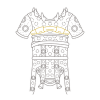
Uko ugbo-ohamwen
Fortified chest band
1 annotation


Ẹbẹn
Ceremonial Sword
1 annotation


Ebe Amẹ
Water Fern
1 annotation

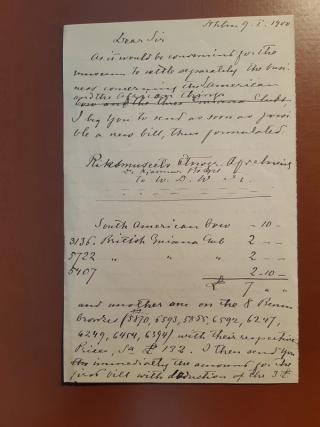
Provenance
6
events
Institution data
Statens museer för världskultur
The data was transferred directly by the institution.
Last updated: 2021-07-07
Language: english
| Institution field | Value |
|---|---|
Additional IDs object id | 21.171 |
Reg. No. object id | 1900.01.0002 |
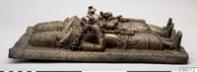
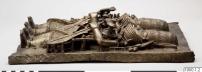
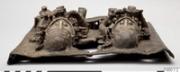
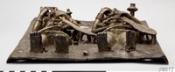
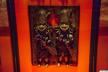
Object name and description designation description | Relief plaque depicting two warrior chiefs. Cast copper alloy. |
Dimensions dimensions | H. 44,5 cm W. 34 cm |
Collector/previous owner prior source | William Downing Webster |
Acquisition details provenance | Donated by Åke Sjögren |
Institution department and institution | NMWC-Sweden |
Institution acquisition date accession date | 1900 |
Comments notes | British Military Expedition to Benin City 1897 |
Statens museer för världskultur
The data was transferred directly by the institution.
Last updated: 2022-06-21
Language: swedish
| Institution field | Value |
|---|---|
Inventarienummer object id | 1900.01.0002 |
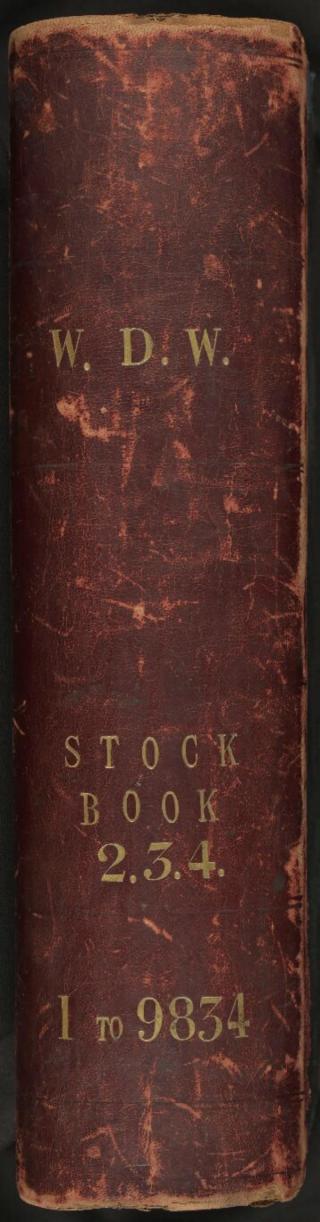
Inventarienummer, tidigare object id | 21.171 [gen.kat.nr]; 6592 [Webster] |
Lokalt namn edo designation | |
Sakord designation object type | platta |
Beskrivning description | Bronsplatta med två krigare. (generalkatalogen) Beskrivning - engelska Plaque showing two warrior chiefs wearing basketry caps, coral-bead collars, ceremonial swords and an attire with attributes indicating high rank. ; two warrior chiefs |
Beskrivning - engelska description | |
Object-Description description | Bronsplatta med två krigare. (generalkatalogen) |
Publicerad text description | Utställningstext STADEN (kopplat till föremålet): Två krigshövdingar med korgflätade hattar, korallkrage, ceremonisvärd och dräkter med attribut som visar på hög rang. Sent 1600-tal. Utställningstext STADEN 1998, Benin City: "DÄR KUNGEN AV NÅD RÅDER ÖVER LIV OCH DÖD" Kungariket Benin ligger i den tropiska regnskogen i södra Nigeria. Majoriteten av dess befolkning är kända som edo, men också grupper av ibo, ijaw, yoruba och itsekiri bor inom rikets gränser. Kungarikets hjärta är dess huvudstad, som förr hette Edo men idag kallas Benin City. Utanför huvudstaden lever det jordbrukande folket i flera hundra byar under sina äldstes ledarskap. Benins kulrurrikedomar blev kända för västvärlden 1897 genom brittisk straffexpedition riktad mot Benin City, då tusentals konstverk från det kungliga palatset beslagtogs och senare spreds till museer och privatsamlingar över hela världen. Det är en kunglig konst som skapats för att förhärliga den gudomlige kungen, Oba, och hans föregångare. Också idag sitter en gudomlig kung, Oba Erediauwa, på tronen i Benin och styr över ett hängivet hov, över storslagna palatsritualer och över livaktiga konstnärsskrån. Detta sammantaget gör Benin City till ett religiöst och rituellt centrum och i kraft av kungamakten till en stad av gudomlig inspiration. "HÖGSÄTET FÖR OBA - HIMLENS UTVALDE" Benin City, i dagens Nigeria hem för omkring 200 000 människor, har alltid varit kungariket Benins administrativa och religiösa centrum, något som också avspeglar sig i dess uppbyggnad. Stadens kärna omges av en dikerad lerjordsmur som enligt traditionen skall ha anlagts av den sittande Oban vid mitten av 1400-talet. Området inom denna ringmur delas i två sektioner av en bred gata, där den mindre sektionen i sydväst inrymmer kungliga palatset och de olika palatssällskapens och palatschefernas hem, medan den större sektionen nordöst om skiljegatan bebos av stadscheferna och alla yrkesspecialister som arbetar för kungen, såsom de olika konstnärsskråna. Bortom denna inre mur sträcker sig en yttre mur, som inringar det område där kungens många rituella funktionärer bor. Inom den yttre muren ligger också de byar som styrs av Uzama, de mest uppburna hövdingarna i Benin med ansvar för de ritualer som skall trygga hela rikets välbefinnande. Just utanför den yttre muren ligger sedan drottningmoderns och tronföljarens båda palats. Så åskådliggör stadens själva planläggnning den gudomlige kungens centrala position, liksom motsatsförhållandet mellan palatschefer och stadschefer och Uzamas speciella ställning. Det kungliga palatset, en vidsträckt anhopning av byggnader och gårdar, är rikets och stadens hjärtpunkt, varifrån den andliga kraft emanerar som är så avgörande för hela rikets hälsa och välgång. Där i centrum av centrum förvaras också de kungliga förfadersaltarna med sina bronshuvuden, utsirade elefanbetar, klockor och andra föremål, som alla har en roll att spela i tillbedjan av de kungliga förfäderna och den jord i vilken de är begravda. |
Publicerad text- engelska description | Two warrior chiefs wearing basketry caps, coral-bead collars, ceremonial swords and an attire with attributes indicating high rank. Late 17th century. (Staden-Benin) |
Material - tillverkning material | brons; mässing |
Material- engelska - tillverkning material | bronze; brass |
Materialkategori material | metall |
Bredd dimensions | 34 cm |
Diameter dimensions | |
Djup dimensions | |
Höjd dimensions | 44,5 cm |
Längd dimensions | |
Tjocklek dimensions | 10 cm |
Klassifikation, OCM (bred) object type | Bearbetning av råämnen (320) |
Klassifikation, OCM (smal) object type | Bildkonst (532); Hovstat (644); Metallurgi och metallografi (325) |
Motivord iconography | |
Motivord, engelska iconography | |
Tidpunkt - tillverkning, tidigast date made | 1680-1700 [?] |
Teknik - tillverkning production technique | gjutet |
Geografiskt namn - annat production place | Västafrika |
Land - ursprung production place | Nigeria : Afrika |
Land- engelska - ursprung production place | |
Ort - ursprung production place | Benin City |
Region - ursprung production place | Edo state |
Sakord, engelska production place | bronze plaque; relief plaque |
Sökord production place | Google Art; Kungadömet Benin; Royal Benin |
Belongs to Samling provenance | 1900.01 :: Sjögren, Åke |
Namn - byte från provenance | |
Namn - förvärvat från/0 provenance | Sjögren, Åke (1866-08-03 - 1931-08-16), ingenjör Beskrivning Tor Åke Johan Sjögren, född 3 augusti 1866, död 16 augusti 1931, ingenjör och godsägare. Åke Sjögren var son till Carl Anton Hjalmar Sjögren som var bergmästare i Bergslagen och Kristina Sofia Petersson, född 1829 i Ålem. Redan som fjortonåring gick han till sjöss men fick sedan genom fadern plats på Avesta Jernverk och Filipstads Bergsskola. Han utexaminerades som bergsskoleingenjör 1888. Efter examen reste han till USA och Costa Rica och här väcktes hans intresse för arkeologi. I Costa Rica träffade han även bland annat General Antonio Maceo Grajales från Kuba. 1895 var han tillbaka i Sverige och träffade då Mary Nobel, f. Landzert (1865-1928), änka och arvtagerska efter industrimannen Carl Ludvig Nobel, brorson till Alfred Nobel. De gifte sig och Mary medförde en stor förmögenhet. Efter Alfred Nobels död fick Sjögren, i egenskap av förmyndare för hustrun Marys döttrar, tillgång till ytterligare en stor penningsumma. Paret köpte Mälsåkers slott 1898 och Åke lät bygga ett tegelbruk, ett tiotal egnahemshus på Selaön och anlägga en barockträdgård. Han startade en jägarskola, köpte en kaffeplantage i Nairobi, Kenya, och sponsrade Carl Vilhelm Hartmans arkeologiska expedition er till Latinamerika. Han blev medlem i Kungliga Vitterhetsakademin 1903. Godset inhägnades med viltstängsel och en rik fauna planterades in. Kungligheter kom på besök för att jaga, bland annat prins Karl 1908. Marys tre döttrar krävde snart att deras arvdel skulle inlösas vilket tvingade Åke och Mary att sälja godset. I september 1916 ordnades en auktion då målningar, möbler, jakttroféer och annat gick under klubban, och samma år såldes slottet för nära en och en halv miljon kronor. Istället flyttade de in till en våning på Blasieholmen i Stockholm. 1920 deltog Åke i Prins Wilhelms expedition till Centralamerika. Mary dog 1928 och Åke Sjögren tre år senare. Deras gravsten på Lidingö kyrkogård är inristad med ett citat som knyter an till deras händelserika liv: "Tired and smiling we leave our toys like children, when play is over." |
Namn - insamlare provenance | Webster, William Downing (1868-05-11 - 1913-02-14), konsthandlare, samlare Beskrivning William Downing Webster, född 11 maj 1868, död 14 januari 1913, engelsk samlare och antikvitetshandlare, särskilt etnografika, Oxford House, Bicester, Oxon. Han var särskilt känd för handel med Benin-bronser. |
Namn - ägare provenance | |
Händelse - var närvarande vid event | |
Etnisk grupp - ursprung ethnic attribution | edo |
Tidpunkt - förvärv till museet accession date | 1900 |
Förvärvsomständigheter - i fält accession method | |
Förvärvsomständigheter - till museet accession method | |
Anmärkning notes | utst i Staden-Benin m6 199809 - 2009-06-04 [Mag] |
Utlån - planerat exhibition history | |
Utlån - tidigare exhibition history | |
Utställning - ingår i exhibition history | Med världen i Kappsäcken 2002-10-26, 2009-11-06, 2009-05-19 |
Utställning - planerad exhibition history | Skolprogram: Forna kulturer |
Utställning - tidigare exhibition history | redacted konst 1953-03-12 - 1953-04 Nyförvärv från Amerika, Afrika och Asien samt ett antal föremål från Lappland 1913-03-20 - 1913-04 Permanenta utställningar under 1970-talet 1970 [?] - 1975 Staden - speglingar av kosmos 1998-09-10 Utställning af arkeologiska och etnografiska samlingar från Centralamerika 1900-11-12 |
Utställning, del av - ingår i exhibition history | Med världen i kappsäcken 11, Vem tillhör föremålen? Konstskatter från kungariket Benin |
Utställning, del av - planerad exhibition history | Forna kulturer: Afrika |
Utställning, monterdel - planerad exhibition history | Forna kulturer: Afrika - Kungariket Benin |
Utställning- del av - tidigare exhibition history | Staden Benin |
Källor bibliography | |
Referens - publicerad i bibliography | |
Tillståndsbedömning condition | |
Tillståndsbedömning - Lista condition | |
Delar | |
Image/byline | Barkman, Lars-Erik; Blomberg, Anton; Lundquist, Amanda; Okänd; Petersson, Thomas; Sandin, Tony; Sjögren, Åke; Uppgift om fotograf saknas; Uppgift om upphovsman saknas; Westling, Rose-Marie; Winther Åshaug, Ina Marie |
Image/copyright license | Statens museer för världskultur; Utgången upphovsrätt |
Image/mediaLicenseUrl license | http://creativecommons.org/licenses/by/2.5/; http://creativecommons.org/licenses/by-nc-nd/2.5/; http://creativecommons.org/publicdomain/mark/1.0/ |
Inlån - aktuellt | |
Inventeringsstatus | |
Månad - Månadens föremål | |
Namn - förvärvat från/1 provenance | |
Namn - förvärvat från/2 provenance | |
OWC - ursprung | FF1; FF3; FF21 |
Object-Title | 1900.01.0002 :: platta |
Specialbenämning | |
URL weblink | https://collections.smvk.se/carlotta-em/web/object/1238910 |
Ursprungsdatabas | Etno |
Vecka - Veckans föremål | |
Världsdel - ursprung production place | Afrika |
Världsdel- engelska - ursprung production place | Africa |
Sections
About
Other
Sensitive content
Sensitive Content Digital Benin includes colonial material that may contain inaccurate, derogatory or harmful language relating to African and African diasporic communities. Such language may appear in catalogue records, transcriptions, and book, exhibition or museum titles. We recognize that this material may cause distress. Sensitive-content warnings are being implemented across the collection, but this process is ongoing. The language does not reflect Digital Benin’s views; we take an anti-colonial and anti-racist position and are committed to centring the humanity of historically marginalised communities.