Loading...

Inventarnummer
1710-0004-00
Institution
Städtisches Museum Braunschweig Edo designations

English designations
Categories
Institution Location
Steintorwall 14, 38100 Braunschweig, Germany
Inventarnummer
1710-0004-00
Institution
Städtisches Museum Braunschweig Edo designations
English designations
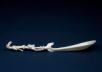
Spoon
Categories
Contextual Objects: Benin-Portuguese Ivories
Institution Location
Steintorwall 14, 38100 Braunschweig, Germany
Iconographies
1
annotations

Ahianmwẹ-Ọrọ
Bird of Prophecy
1 annotation

Provenance
4
events
Institution data
Städtisches Museum Braunschweig
The data was transferred directly by the institution.
Last updated: 2021-03-31
Language: german
| Institution field | Value |
|---|---|
Inventarnummer object id | 1710-0004-00 |
Material material | > Zahn > Zahn, tierisch > Elfenbein |
Maße dimensions | Länge: 25.50 cm |
Titel object type | Elfenbeinlöffel, afro-portugiesisch Westafrika, Sierra Leone |
Datierungen date made | |
Provenienz/Zugang von prior source | |
Objektgeschichte provenance | Herzogliche Kunstkammer, seit 1906 im Austausch mit dem HAUM im Städtischen Museum (Ringtausch) Ethnografie 1710-0004-00 |
Provenienz/Zugangsdatum accession date | |
Provenienz/Zugangsart accession method | |
Standort display status | > Braunschweig > Städtisches Museum Braunschweig als Dauerleihgabe im HAUM |
Bemerkungen bibliography | |
Geonames-Link weblink | http://www.geonames.org/2403846 |
Alte Inventarnummern / andere Nummern object id | A III c 775 Vw 7.1-63/3 (Hecht-Nr.) |
Beschreibung intern (deutsch) description | Löffel aus Elfenbein geschnitzt. Der Stil besteht aus einer Vogelfigur, die auf einem Tier, vielleicht einem Hund, sitzt. Früher als "Benin" eingeschätzt |
Georeferenzierter Ort (international) production place | Sierra Leone (Herstellungsort) (Westafrika, Sapi-Portugiesisch, Afro- Portugiesisch) |
Sections
About
Other
Sensitive content
Sensitive Content Digital Benin includes colonial material that may contain inaccurate, derogatory or harmful language relating to African and African diasporic communities. Such language may appear in catalogue records, transcriptions, and book, exhibition or museum titles. We recognize that this material may cause distress. Sensitive-content warnings are being implemented across the collection, but this process is ongoing. The language does not reflect Digital Benin’s views; we take an anti-colonial and anti-racist position and are committed to centring the humanity of historically marginalised communities.