


Iconographies








Provenance
Institution data
| Institution field | Value |
|---|---|
ID_NUMBER object id | 99.225 |
ITEM_NAME designation | plaque (ritual & belief: representations) |
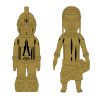
DESCRIPTION description | Bronze plaque depicting Oba Orhogbua holding a staff, representing authority and power. On this plaque, Oba Orhogbua is wearing a heavily embroidered brocade wrapper with a frill, overlaid by a waist band sash with tassels. Iwu (royal tatoo) adorn his body. Iwu are a mark of Benin citizenship. Before 1929, a Benin man without body markings was not qualified to become a chief. Water leaf olokun motifs form the background of the plaque. At the corners are crocodile heads. Crocodiles are servants of Olokun, hermaphrodite god of the seas and wealth, and child of Osanobua, who guards the waters. |
MATERIALS material | bronze |
MEASUREMENTS dimensions | overall: 410 mm x 370 mm x 55 mm |
DATE_MADE date made | |
PLACE_MADE production place | Benin City, Nigeria, West Africa, Africa |
CULTURE ethnic attribution | Bini |
CATEGORY1 | Anthropology: Ethnography |
| Institution field | Value |
|---|---|
identifier/accession number object id | 99.225 |
name/object name (local) edo designation | |
name/common name designation | |
name/object name designation | plaques (ritual & belief: representations) |
name/object name (Horniman Ethno) designation | plaque (ritual & belief: representations) |
name/object name (unclassified) designation | |
name/object name AAT designation | |
title/display designation | |
description description description | |
description/1 description description | |
description/catalogue description description | Bronze plaque depicting Oba Orhogbua holding a staff, representing authority and power. On this plaque, Oba Orhogbua is wearing a heavily embroidered brocade wrapper with a frill, overlaid by a waist band sash with tassels. Iwu (royal tatoo) adorn his body. Iwu are a mark of Benin citizenship. Before 1929, a Benin man without body markings was not qualified to become a chief. Water leaf olokun motifs form the background of the plaque. At the corners are crocodile heads. Crocodiles are servants of Olokun, hermaphrodite god of the seas and wealth, and child of Osanobua, who guards the waters. |
description/highlight online description description | |
description/historical/1/commentary description description | |
description/historical/1/date description | 1999-02-14 |
description/historical/1/object description description | BENIN BRONZE PLAQUE |
description/historical/1/source description | Horniman Museum. Conservation Section |
description/historical/2/date description | |
description/historical/2/note description | |
description/historical/2/object description | |
description/historical/2/online description | |
description/historical/2/source description | |
description/historical/3/date description | |
description/historical/3/object description | |
description/historical/3/source description | |
description/historical/4/date description | |
description/historical/4/object description | |
description/historical/4/source description | |
description/historical/5/date description | |
description/historical/5/object description | |
description/historical/5/source description | |
description/historical/date description | |
description/historical/label text description | |
description/historical/object description | Coiled grass basket with lid attached by a leather strap. The pattern is created by adding dye to sections of the object's surface. |
description/historical/online description | |
description/historical/source description | |
description/object/1/commentary description | |
description/object/1/date description | |
description/object/1/description description | |
description/object/2/description description | |
description/object/2/source description | |
description/object/commentary description | |
description/object/date description | 2001-02-27 |
description/object/description description | |
description/online description | Bronze plaque depicting Oba Orhogbua holding a staff, representing authority and power. On this plaque, Oba Orhogbua is wearing a heavily embroidered brocade wrapper with a frill, overlaid by a waist band sash with tassels. Iwu (royal tatoo) adorn his body. Iwu are a mark of Benin citizenship. Before 1929, a Benin man without body markings was not qualified to become a chief. Water leaf olokun motifs form the background of the plaque. At the corners are crocodile heads. Crocodiles are servants of Olokun, hermaphrodite god of the seas and wealth, and child of Osanobua, who guards the waters. |
description/online/source description | African Worlds: Horniman Museum Exhibition Text. |
description/original description | |
options/use description | |
materials/1/component material | overall |
materials/1/material material | bronze |
materials/1/note material | |
materials/2/component material | |
materials/2/material material | |
materials/2/technique material | |
materials/3/component material | |
materials/3/material material | |
materials/catalogue material | bronze |
measurements/dimensions/catalogue dimensions | overall: 410 mm x 370 mm x 55 mm |
measurements/display dimensions | overall: 410 mm x 370 mm x 55 mm |
name/catalogue object type | plaque (ritual & belief: representations) |
objects/summary title object type | votive container |
objects/summary title/1 object type | |
objects/summary title/2 object type | |
summary title object type | plaque (ritual & belief: representations) |
title object type | Oba Orhogbua |
title/1 object type | |
title/catalogue object type | Oba Orhogbua |
title/historical object type | |
title/historical/1 object type | |
measurements/count object count | 1 |
options/item count object count | 1 |
inscription/description inscriptions | |
inscription/location inscriptions | |
inscription/transcription inscriptions | |
lifecycle/creation/date/date made inscriptions | |
lifecycle/creation/date date made | |
cultures/maker or user producer | Edo |
lifecycle/creation/maker producer | |
lifecycle/creation/places/made or collected production place | Benin City |
lifecycle/creation/places/place/catalogue production place | Benin City, Nigeria, West Africa, Africa |
lifecycle/ownership/owner/1/date provenance | |
lifecycle/ownership/owner/1/vendor provenance | |
lifecycle/ownership/owner/date provenance | 1899-10 |
lifecycle/ownership/owner/donor provenance | |
lifecycle/ownership/owner/previous owner provenance | |
lifecycle/ownership/owner/vendor provenance | Tingley, J. |
lifecycle/collection/date collected date collected | |
cultures/catalogue culture ethnic attribution | Bini |
note/catalogue notes | |
exhibitions/1/catalogue/catalogued exhibition history | N |
exhibitions/1/summary title exhibition history | Being Human |
exhibitions/1/theme/section exhibition history | Encounters |
exhibitions/1/theme/sub1 exhibition history | Africa |
exhibitions/1/theme/sub2 exhibition history | Nigeria |
exhibitions/2/catalogue/catalogued exhibition history | |
exhibitions/2/summary title exhibition history | |
exhibitions/2/theme/section exhibition history | |
exhibitions/2/theme/sub1 exhibition history | |
exhibitions/3/catalogue/catalogued exhibition history | |
exhibitions/3/summary title exhibition history | |
exhibitions/3/theme/section exhibition history | |
exhibitions/3/theme/sub1 exhibition history | |
exhibitions/3/theme/sub2 exhibition history | |
exhibitions/catalogue/catalogued exhibition history | Y |
exhibitions/summary title exhibition history | African Worlds |
exhibitions/theme/section exhibition history | |
exhibitions/theme/sub1 exhibition history | |
exhibitions/theme/sub2 exhibition history | |
locations/public location display status | On display: Horniman Museum > World Gallery > Africa > Nigeria - Benin |
publications/illustration bibliography | |
publications/pages bibliography | |
publications/role bibliography | |
publications/summary title bibliography | |
legal/status legal status | permanent collection |
condition condition | 1: good |
condition/date condition | 2016-04-28 |
multimedia/1/large/format images | jpeg |
multimedia/1/large/location images | 521/52/large_99_225__002_PS.jpg |
multimedia/1/large/measurements/dimensions/height images | 775 pixels |
multimedia/1/large/measurements/dimensions/width images | 750 pixels |
multimedia/1/large/modified images | 1501769023806 |
multimedia/1/large/type images | image |
multimedia/1/portion images | whole |
multimedia/1/role images | image of object |
multimedia/1/source/caption images | Rear view of whole of Horniman Museum object no 99.225 |
multimedia/1/type/base images | media |
multimedia/1/type/type images | image |
multimedia/2/large/format images | jpeg |
multimedia/2/large/location images | 495/545/9_225__001_RS.jpg |
multimedia/2/large/measurements/dimensions/height images | 1000 pixels |
multimedia/2/large/measurements/dimensions/width images | 743 pixels |
multimedia/2/large/modified images | 1461922166000 |
multimedia/2/large/type images | image |
multimedia/2/portion images | whole |
multimedia/2/role images | image of object |
multimedia/2/source/caption images | General view of whole of Horniman Museum object no 9.225 |
multimedia/2/type/base images | media |
multimedia/2/type/type images | image |
multimedia/3/large/format images | jpeg |
multimedia/3/large/location images | 63/775/IMG0085.JPG |
multimedia/3/large/measurements/dimensions/height images | 800 pixels |
multimedia/3/large/measurements/dimensions/width images | 533 pixels |
multimedia/3/large/modified images | 927898214000 |
multimedia/3/large/type images | image |
multimedia/3/portion images | |
multimedia/3/role images | image of object |
multimedia/3/source/caption images | |
multimedia/3/type/base images | media |
multimedia/3/type/type images | image |
multimedia/4/large/format images | |
multimedia/4/large/location images | |
multimedia/4/large/measurements/dimensions/height images | |
multimedia/4/large/measurements/dimensions/width images | |
multimedia/4/large/modified images | |
multimedia/4/large/type images | |
multimedia/4/portion images | |
multimedia/4/role images | |
multimedia/4/source/caption images | |
multimedia/4/type/base images | |
multimedia/4/type/type images | |
multimedia/5/large/format images | |
multimedia/5/large/location images | |
multimedia/5/large/measurements/dimensions/height images | |
multimedia/5/large/measurements/dimensions/width images | |
multimedia/5/large/modified images | |
multimedia/5/role images | |
multimedia/5/source/caption images | |
multimedia/6/large/measurements/dimensions/height images | |
multimedia/6/large/measurements/dimensions/width images | |
multimedia/6/large/modified images | |
multimedia/6/role images | |
multimedia/6/source/caption images | |
multimedia/6/type/base images | |
multimedia/6/type/type images | |
multimedia/7/large/format images | |
multimedia/7/large/location images | |
multimedia/7/large/measurements/dimensions/height images | |
multimedia/7/large/measurements/dimensions/width images | |
multimedia/7/large/modified images | |
multimedia/7/large/type images | |
multimedia/7/portion images | |
multimedia/7/role images | |
multimedia/7/source/caption images | |
multimedia/7/source/legal/credit line images | |
multimedia/7/type/base images | |
multimedia/7/type/type images | |
multimedia/8/large/format images | |
multimedia/8/large/location images | |
multimedia/8/large/measurements/dimensions/height images | |
multimedia/8/large/measurements/dimensions/width images | |
multimedia/8/large/modified images | |
multimedia/8/large/type images | |
multimedia/8/portion images | |
multimedia/8/role images | |
multimedia/8/source/caption images | |
multimedia/8/type/base images | |
multimedia/9/large/location images | |
multimedia/9/large/measurements/dimensions/height images | |
multimedia/9/large/measurements/dimensions/width images | |
multimedia/9/large/modified images | |
multimedia/9/large/type images | |
multimedia/9/portion images | |
multimedia/9/role images | |
multimedia/9/source/caption images | |
multimedia/9/type/base images | |
multimedia/9/type/type images | |
multimedia/large/format images | jpeg |
multimedia/large/location images | 521/47/large_99_225__003_PS.jpg |
multimedia/large/measurements/dimensions/height images | 775 pixels |
multimedia/large/measurements/dimensions/width images | 750 pixels |
multimedia/large/modified images | 1501768998346 |
multimedia/large/type images | image |
multimedia/portion images | whole |
multimedia/role images | image of object |
multimedia/source/caption images | Frontal view of whole of Horniman Museum object no 99.225 |
multimedia/type/base images | media |
multimedia/type/type images | image |
agents/role | |
agents/summary title | |
categorie | Anthropology: Ethnography |
collection | Anthropology |
cultures/source | |
description/historical/old | |
description/object/1/source | |
description/object/source | |
description/original/date | |
description/orignal/source | |
description/use | |
events/summary title | Igue |
exhibitions/location | |
facilities/summary title | World Gallery |
hornbostelSachs/classified as | |
identifier/Horniman laboratory number | |
identifier/Horniman laboratory number (Anthro index cards) | |
identifier/Horniman laboratory number (Combined Lab. Numbers) | |
identifier/Horniman laboratory number (Horniman Museum object label) | |
identifier/Horniman laboratory number (Lab book database) | 915 |
identifier/Horniman laboratory number (Old object card) | |
identifier/Horniman temporary museum number (documentation with object) | |
identifier/alternative Horniman record identifier | |
identifier/auction number (Sothebys) | |
identifier/correct Horniman museum number | |
identifier/correct Horniman museum number (accession registers) | |
identifier/exhibition number (accession registers) | 2 |
identifier/external number (Lab book database) | |
identifier/external number (Ralph Appelbaum Associates) | |
identifier/note | |
identifier/old 1-3 code | |
identifier/old 4 code | |
identifier/old Horniman accession number | |
identifier/old Horniman accession number (Horniman Accessions Register) | |
identifier/old Horniman accession number (accession registers) | 9.225 |
identifier/old Horniman laboratory number (object labels) | |
identifier/old Horniman location number (object labels) | |
identifier/unknown | |
identifier/unknown (Lab book database) | |
identifier/unknown (accession registers) | |
identifier/wrong Horniman museum number | 9.225 |
identifier/wrong Horniman museum number (Old object card) | |
identifier/wrong Horniman museum number (accession registers) | |
language | eng |
lifecycle/appraisal/source | catalogue |
lifecycle/collection/collector | |
lifecycle/collection/date/catalogue | |
lifecycle/creation/date/catalogue | |
lifecycle/creation/maker/catalogue | |
lifecycle/creation/places/locale | |
locations/current location | HMG - Forest Hill |
materials/1/technique | |
measurements/note | |
multimedia/1/source/legal/credit line; copyright | Horniman Museum and Gardens |
multimedia/2/source/legal/credit line; copyright | Horniman Museum and Gardens |
multimedia/3/source/legal/credit line; copyright | |
multimedia/4/source/legal/credit line; copyright | |
multimedia/5/large/type | |
multimedia/5/portion | |
multimedia/5/source/legal/credit line; copyright | |
multimedia/5/type/base | |
multimedia/5/type/type | |
multimedia/6/large/format | |
multimedia/6/large/location | |
multimedia/6/large/type | |
multimedia/6/portion | |
multimedia/6/source/legal/credit line; copyright | |
multimedia/8/source/legal/credit line; copyright | |
multimedia/8/type/type | |
multimedia/9/large/format | |
multimedia/9/source/legal/credit line; copyright | |
multimedia/source/legal/credit line; copyright | Horniman Museum and Gardens |
name/object name (unclassified)/source | |
object scope | WHOLE |
objects/part of the same set | |
options/number1 | |
options/option4 | CollectionsPeopleStories; DigitalBenin |
options/option6 | |
parent/summary title | |
physicalDescriptors/component | |
physicalDescriptors/descriptor | |
physicalDescriptors/material | |
physicalDescriptors/note | |
places/represents | |
projects | CollectionsPeopleStories |
projects/1 | DigitalBenin |
projects/2 | |
projects/3 | |
subjects/part of project | |
subjects/role | |
subjects/summary title | |
subjects/theme | |
subjects/theme 2 | |
title/classified as |
Digital Benin collates digital material from institutions, and some of this material is inherently colonial and contains words, terms and phrases that are inaccurate, derogatory and harmful towards African and African diasporic communities. Catalogue transcriptions, book titles, exhibition titles and museum titles may contain harmful terms. We recognise the potential for the material to cause physical and mental distress as well as evoke strong emotions. Owing to the scale of the collection’s data, a process to implement sensitive-content warnings in the displayed data is still incomplete. The material within the catalogue does not represent Digital Benin’s views. Digital Benin maintains a strong anti-colonial, anti-racist position and affirms its support for centring the humanity of historically marginalised and disenfranchised communities. Read more about the background of this statement here