


Iconographies



Provenance
Institution data
| Institution field | Value |
|---|---|
ID object id | 212531 |
Sachbegriff designation | Sachbegriff: Vorhängeschloss |
Titel designation | Titel: |
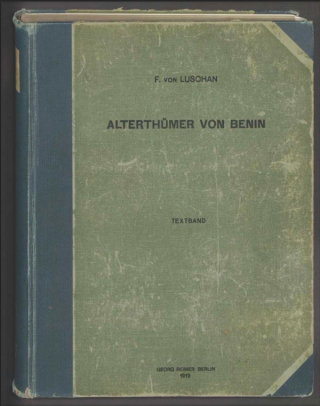
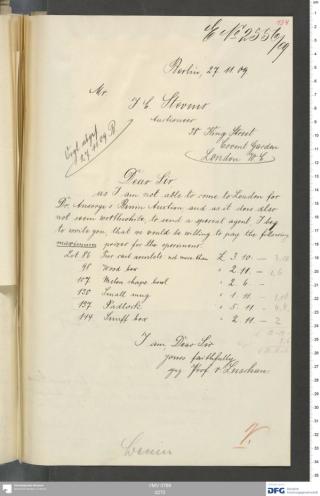
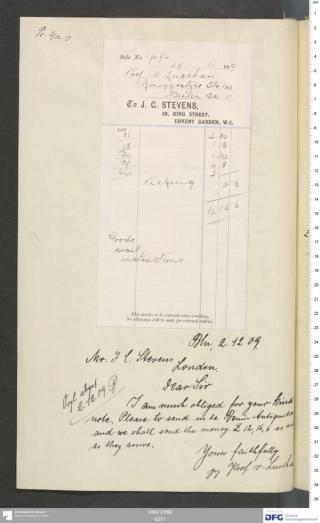
Objektref. description | III C 23973, Vorhängeschloß; E 2556/1909, Erwerbung: III/7/1910: III C 23971-23976, Ethnogr., Bronzen, Ankauf [aus der Sammlung] Dr. W.J. Ansorge (Stevens) -- Inhalt: Druckwerk: a catalouge of African Curios&Trophies Benin Bronzes, Ivory Carvings ec. ec. - the collection of Dr. W.J. Ansorge, Auction by Mr. J.C. Stevens 38, King Street, Covent Garden W.C., Thesday, the 30th of November 1909, at 12.30 o´clock: Liste mit den Objektbeschreibungen und Losnummern, sowie einigen Objektabbildungen -- Korrespondenz v. Luschan - Stevens - Liste der ersteigerten Objekte - Inv. Vermerk -Abbrechnung, 1909, J.C. Stevens (1899) |
Texte Online description | Online Beschreibung, Vorhängeschloss aus dem Palast des Königs von BeninDie kunstvollen Bronzeschlüssel dienten zum Versperren jener Palasträume, in denen wertvolle Objekte wie Elfenbeinschnitzereien, Stäbe und Bronzeobjekte oder die Insignien des Königs aufbewahrt wurden. Um die großen Türen aus Holz zu öffnen, wurde an deren Rückseite mit dem Schlüssel eine Angel aus ihrer Falle gehoben und so der Riegel gelöst. Die Schlüsselhaken funktionieren ähnlich wie die Schlüssel.Katalog zur Benin-Ausstellung (2008) [Benin_Königreich] |
Material / Technik material | Material: Messing; Material (engl.): copper alloy; Technik: Guss; Technik (engl.): casting; Ausgabe: Messing, Guss; Ausgabe (engl.): Brass; copper alloy; casting |
Material / Technik // Alle material | Messing, Guss, Brass; copper alloy; casting, Messing, copper alloy, Guss, casting |
Maße dimensions | 10,30 x 5,30 x 3,80 cm |
Objekttyp object type | Allgemein |
Sachbegr. Ausgabe object type | Vorhängeschloss |
Anzahl Teile object count | 1 |
Datierung date made | 18. Jh - 19. Jh. |
Geogr. Bezüge production place | Nigeria ( Land ); Benin ( Königreich ) |
Geogr. Bezüge // Alle production place | Nigeria, Benin |
Beteiligte prior source | William John Ansorge (1909), Sammler; J.C. Stevens (1899), Auktionator |
Beteiligte // (Name, Sortierung=kleinste) prior source | Ansorge, William John |
Veräußerer prior source | null |
Erwerb. Notiz provenance | Erwerbung von: Stevens, J.C.; Notiz: Rückführung Leipzig; Ausgabe: Auftrag bei der Messinggießergilde Igun Eronmwon im Königreich Benin im 18. oder 19. Jh.; vermutlich geplündert im Zusammenhang mit der britischen Eroberung von Benin, 1897; in unbekanntem Besitz nach Feb. 1897; erworben in einem Dorf in der Nähe von Benin City von W.J. Ansorge vor 1905; versteigert von J.C. Stevens, 1909. |
Verw. Institution department and institution | Ethnologisches Museum, Staatliche Museen zu Berlin |
Erwerb. Datum accession date | 1910 |
Besitzart accession method | |
Erwerbungsart accession method | Auktion |
Digital Assets images | III C 23973.JPG, Repro Digitalisat; Vorlage |
Erwerb. Nr. | III/7/1910 |
Ident. Nr. | III C 23973 |
Ident. Nr. // (Sortiernr.) | 0003 C 23973 |
Obj. Status | vorhanden |
| Institution field | Value |
|---|---|
id_in_md_subset object id | 19551 |
object_inventory_number object id | III C 23973 |
object_name designation | Vorhängeschloss |
object_description description | Vorhängeschloss aus dem Palast des Königs von Benin Die kunstvollen Bronzeschlüssel dienten zum Versperren jener Palasträume, in denen wertvolle Objekte wie Elfenbeinschnitzereien, Stäbe und Bronzeobjekte oder die Insignien des Königs aufbewahrt wurden. Um die großen Türen aus Holz zu öffnen, wurde an deren Rückseite mit dem Schlüssel eine Angel aus ihrer Falle gehoben und so der Riegel gelöst. Die Schlüsselhaken funktionieren ähnlich wie die Schlüssel. Katalog zur Benin-Ausstellung (2008) Sammler: Ansorge, William John |
object_material_technique material production technique | Messing, Guss |
object_dimensions dimensions | Objektmaß: 10,3 x 5,3 x 3,8 cm |
object_type object type | Vorhängeschloss |
object_events/0/time/time_end date made | 1900 |
object_events/0/time/time_name date made date made | 18.-19. Jahrhundert |
object_events/0/time/time_start date made date made | 1701 |
object_events/1/time/time_end date made | 1900 |
object_events/1/time/time_name date made | 18.-19. Jahrhundert |
object_events/1/time/time_start date made | 1701 |
object_events/0/place/place_name production place | Nigeria |
object_events/0/place/place_note production place production place | "Nigeria [niˈgeːʁi̯a] (amtlich englisch Federal Republic of Nigeria [naɪ̯ˈdʒɪ(ə)ɹɪ̯ə] – Bundesrepublik Nigeria) ist ein Bundesstaat in Westafrika, der an den Atlantik und die Länder Benin, Niger, Tschad und Kamerun grenzt. Es ist mit über 200 Millionen Einwohnern (2018) mit Abstand das bevölkerungsreichste Land Afrikas und weltweit das Land mit der siebtgrößten Bevölkerung. Im Zeitraum von 1989 bis 2019 hat sich die Bevölkerungszahl des Landes verdoppelt. Nigerias Hauptstadt ist Abuja, seine mit Abstand größte Stadt ist Lagos mit rund 18 Millionen Einwohnern; weitere Millionenstädte sind Ibadan, Benin-Stadt, Kano, Port Harcourt und Kaduna." - (de.wikipedia.org 22.10.2019) |
object_events/1/place/place_latitude production place | 8.833333015441895 |
object_events/1/place/place_longitude production place | 2.183333396911621 |
object_events/1/place/place_name production place production place | Benin |
object_events/1/place/place_note production place production place | "Benin [beˈniːn] (französisch Bénin [beˈnɛ̃]) ist ein Staat in Westafrika. Er grenzt im Westen an Togo, im Norden an Burkina Faso und Niger, im Osten an Nigeria und im Süden an den Golf von Guinea, genauer die Bucht von Benin. Bis 1975 hieß das Land Dahomey. Die Bezeichnung steht in Tradition zum historischen Königreich Dahomey, das bis zur Eroberung durch die Franzosen Ende des 19. Jahrhunderts den südlichen Teil des modernen Staates und des Nachbarstaates Togo umfasste. Von 1975 bis 1990 hieß es Volksrepublik Benin." - (de.wikipedia.org 20.10.2019) |
object_events/2/people/displayname provenance | William John Ansorge (1850-1913) |
object_events/2/people/people_display_name provenance | William John Ansorge (1850-1913) |
object_events/2/people/people_name provenance | Ansorge, William John |
object_events/2/people/people_short_description provenance | "William John Ansorge (6 April 1850 – 31 October 1913 at Luanda) was a physician who worked in Angola and Uganda and is known for exploring the fauna of the African region. He was posted as a medical officer in Uganda from 1895 to 1898. Several species of animals were named after him by museum taxonomists chiefly in Britain; these include Ansorge´s Cusimanse, Crossarchus ansorgei, Ansorge´s Greenbul Andropadus ansorgei, and many fishes (Polypterus ansorgii, Microctenopoma ansorgii, Phractura ansorgii, Thysochromis ansorgii, Enneacampus ansorgii, Neolebias ansorgii, and Epiplatys ansorgii).[10] Also, three species of African reptiles were named after him: Afrogecko ansorgii, Hemidactylus ansorgii, and Psammophis ansorgii. Ansorge´s ancestors came from Silesia, but William was born in Chapra, Bengal, to Rev. Paul Gotthold Ansorge (who worked in Krishnaghar, Bengal, and later at Mauritius, preaching in Bengali and Hindi in India) in 1850 and studied at the Royal College in Mauritius and then at Pembroke College, Cambridge. He worked briefly at St Bartholomew´s Hospital in London. He then became a professor at the Royal College in Mauritius (1872–1880) and senior professor from 1880 to 1886. He was also District Medical Officer in Uganda and in Southern Nigeria. He travelled across Africa (northern Angola, Benguella, Mossamedes, Portuguese Guinea) and wrote Under the African Sun in 1899. Ernst Hartert noted that Ansorge was a very valuable collector and contributor to the bird collection of Walter Rothschild at Tring. Hartert noted that Ansorge´s knowledge of the species collected was limited and that he lacked a training in zoology. His early collections made from 1892 in Uganda were of poor quality and he received training from Hartert. Hartert notes that he died in Angola at just 64, although giving the appearance of an older man with his white beard. Ansorge married Mary Matilda, daughter of G.E. Ely of Edinburgh, in 1881. They had two sons and a daughter. He received two medals with clasps for his service in Uganda 1897–1898 and for his role in the Aro Expedition of 1901–1902." - (Wikipedia (en) 22.10.2019) |
object_institution/institution_name department and institution | Ethnologisches Museum |
licence/metadata_rights_holder legal status | Ethnologisches Museum |
licence/metadata_rights_status license license | CC BY-NC-SA |
object_images/creator license | Fotograf unbekannt, Dietmar Gunne |
object_images/owner license | Ethnologisches Museum, Staatliche Museen zu Berlin |
object_images/rights license | CC BY-NC-SA |
object_images/preview images | 200w_29230633243.jpg |
object_images/quell_id images | 675673 |
object_images/subset images | smb |
object_images/subset_id images | 23018 |
object_images/type images | image |
object_links/0/link_text weblink | http://www.smb-digital.de/eMuseumPlus?service=ExternalInterface&module=collection&objectId=212531 |
inst_subset_id | 11 |
langs | de |
md_subset | smb |
object_collection/collection_id | 3918 |
object_collection/collection_name | Afrika |
object_events/0/event_id | 1068864 |
object_events/0/event_people_certain | j |
object_events/0/event_place_certain | j |
object_events/0/event_time_certain | j |
object_events/0/event_type | 1 |
object_events/0/event_type_name | Hergestellt |
object_events/0/people/displayname | |
object_events/0/people/people_display_name | |
object_events/0/people/people_id | |
object_events/0/people/people_name | |
object_events/0/people/people_short_description | |
object_events/0/people_id | 0 |
object_events/0/place/place_geonames | 2328926 |
object_events/0/place/place_id | 5374 |
object_events/0/place/place_latitude | 9 |
object_events/0/place/place_longitude | 8 |
object_events/0/place/place_tgn | 1000182 |
object_events/0/place/place_zoom | 9 |
object_events/0/place_id | 5374 |
object_events/0/time_id | 10888 |
object_events/1/event_id | 1068866 |
object_events/1/event_people_certain | j |
object_events/1/event_place_certain | j |
object_events/1/event_time_certain | j |
object_events/1/event_type | 1 |
object_events/1/event_type_name | Hergestellt |
object_events/1/people/displayname | |
object_events/1/people/people_display_name | |
object_events/1/people/people_id | |
object_events/1/people/people_name | |
object_events/1/people/people_short_description | |
object_events/1/people_id | 0 |
object_events/1/place/place_geonames | 2395170 |
object_events/1/place/place_id | 13037 |
object_events/1/place/place_tgn | 1000160 |
object_events/1/place/place_zoom | 9 |
object_events/1/place_id | 13037 |
object_events/1/time_id | 10888 |
object_events/2/event_id | 1068865 |
object_events/2/event_people_certain | j |
object_events/2/event_place_certain | j |
object_events/2/event_time_certain | j |
object_events/2/event_type | 8 |
object_events/2/event_type_name | Gesammelt |
object_events/2/people/people_id | 44788 |
object_events/2/people_id | 44788 |
object_events/2/place/place_id | |
object_events/2/place/place_latitude | |
object_events/2/place/place_longitude | |
object_events/2/place/place_name | |
object_events/2/place/place_zoom | |
object_events/2/place_id | 0 |
object_events/2/time/time_end | |
object_events/2/time/time_name | |
object_events/2/time/time_start | |
object_events/2/time_id | 0 |
object_events/3/event_id | |
object_events/3/event_people_certain | |
object_events/3/event_place_certain | |
object_events/3/event_time_certain | |
object_events/3/event_type | |
object_events/3/event_type_name | |
object_events/3/people/displayname | |
object_events/3/people/people_display_name | |
object_events/3/people/people_id | |
object_events/3/people/people_name | |
object_events/3/people/people_short_description | |
object_events/3/people_id | |
object_events/3/place_id | |
object_events/3/time_id | |
object_id | 489915 |
object_images/filename_loc | http://www.smb-digital.de/eMuseumPlus?service=ImageAsset&module=collection&objectId=212531&resolution=superImageResolution#524984 |
object_images/folder | resources/images/201806 |
object_images/intern | n |
object_images/is_main | j |
object_images/name | http://www.smb-digital.de/eMuseumPlus?service=ImageAsset&module=collection&objectId=212531&resolution=superImageResolution#524984 |
object_images/order | 0 |
object_institution/institution_id | 583 |
object_last_updated | 2021-01-30 03:09:44 |
object_links/0/link_added_on | 2018-06-29 23:06:32 |
object_links/0/link_display | Das Objekt bei SMB-digital |
object_links/1/link_added_on | |
object_links/1/link_display | |
object_links/1/link_text | |
object_tags/0/tag_id | |
object_tags/0/tag_name | |
object_tags/1/tag_id | |
object_tags/1/tag_name | |
objekt_socialmedia | 1 |
Digital Benin collates digital material from institutions, and some of this material is inherently colonial and contains words, terms and phrases that are inaccurate, derogatory and harmful towards African and African diasporic communities. Catalogue transcriptions, book titles, exhibition titles and museum titles may contain harmful terms. We recognise the potential for the material to cause physical and mental distress as well as evoke strong emotions. Owing to the scale of the collection’s data, a process to implement sensitive-content warnings in the displayed data is still incomplete. The material within the catalogue does not represent Digital Benin’s views. Digital Benin maintains a strong anti-colonial, anti-racist position and affirms its support for centring the humanity of historically marginalised and disenfranchised communities. Read more about the background of this statement here