

ObjectNumber_Original
VO_64723
Institution
Weltmuseum Wien
Edo designations
English designations
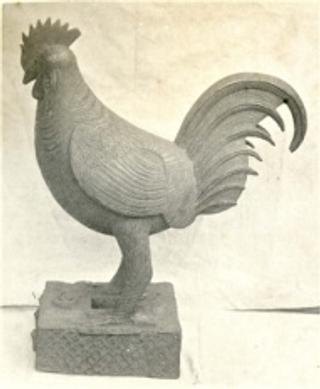
Rooster Figure
Categories
Altar & Shrine Objects
Figures
Location
Heldenplatz, 1010 Wien, Austria
Loading...
Rooster Figure
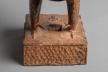
Rooster Figure
Rooster Figure

Iconographies

4 annotations
cattle (dwarf mutu cow)
Ẹmila
Cattle (dwarf mutu cow)

Ẹmila are used mainly for social functions. Although, they maybe used by some affluent chiefs and the royal palace for ceremonial purposes

1 annotation
Ẹmila
Uman-ague
Equal-armed cross

Uman-ague is a badge in the form of an equal-armed cross. The cross with straight-sided arms is known as the “Greek cross,” while the type with V-shaped arms, narrowing toward the centre, is known as the “Maltese cross.”

Uman-ague is usually worn around the neck by members of the Ewua or by the Ohensa ( ). The equal-armed cross has various meanings: as a symbol of cosmic order, it represents the number four and references the “four cardinal points established by the High God Osanobua when he created the world” (Girshick Ben-Amos 1999, p. 64), as well as the “crossroads or junction that serves as the point of connection between the natural and spiritual worlds” ( ). Paula Girshick Ben-Amos ( ) also argues that when used on the Aken'ni Elao (altar tusk), the cross, together with the Ivie okpagbaru (royal bead), constitutes an “emblematic reference” to Ọba Ẹsigie.

The cross also references the Portuguese missionaries who brought Christianity to the Kingdom during the reign of Ọba Ẹsigie, although the symbol was already in use before the arrival of Europeans ( ). The Maltese cross is thought to have been introduced by Ọba Eresonyẹn as part of his efforts to encourage the worship of the High God Osanobua during his reign ( ; ). Regardless, Uman-ague is often associated with Ọba Ẹsigie.

1 annotation
Uman-ague
Ubanu'hi / Obanu'hi
Ubanu'hi / Obanu'hi
Inifinity Symbol

The Ubanu'hi (infinity symbol) is a kind of guilloche or interlaced strapwork motif that can be angular or rounded. It was used by Edo artists in the decoration of many Emwin Arhe (royal treasures) and is ubiquitous in Benin royal arts. Ubanu'hi is a shortened form of “uba no Ọba ya de agbon ke ehimwin yi”, which means “the rope with which the Ọba ties the heaven and earth together” (pers. comm. Chief John Igbineweka Inneh n’Igbesawman, 2022). Similarly, Paula Ben-Amos Girshick (in Plankensteiner 2007, pp. 339, 341) described this as “Ọba n’iri agbon”, or the “rope of the world” pattern.

According to Ọbabanmu Ineh (in Blackmun 1984, p. 51), the use of this motif indicates that objects were carved by members of the Igbesanmwan. However, the motif is found on all types of Emwin Arhe (royal treasures), not only those made of ivory or wood. On the flanges of the Ama (relief plaques) alone, Kathryn Gunsch (2018, pp. 75–77) identified three different versions of the Ubanu'hi and, through her analysis of over 850 plaques, found that these different Ubanu'hi forms align with other characteristics, such as dimensions, the prevalence of ornamental motifs, and stylistic qualities. Together, these provide evidence, she argues, of different production groups among the plaque makers .

Kate Ezra (1992, pp. 209, 264) went on to argue that the use of these motifs indicates that certain objects were used in a “royal context” and were associated with “royal patronage”.

1 annotation
Ubanu'hi / Obanu'hi
Ọkporhu
Rooster

Bronze cock which did not come into existence until after the introduction of the Iy’ọba title by Ọba Esigie. The first Iy’Ọba was Idia, and the Iy’ọba title is considered to be the greatest achievement of a Benin woman. It has spiritual significance and is placed at the altar of the Iy’ọba after her death. The Iy’ọba is referred to Ọkpa n’ Uselu (Ọkpa being a shortened version of Ọkporhu).

1 annotation
Ọkporhu

Provenance

5 events
Production
unknown to February 22, 1897 (day approximate)
The object was produced by Unknown member(s) of the Igun-Ẹrọnmwọn guild in Benin City.
Looted
February 22, 1897 (day approximate) to June 1899 (year approximate)
The object was looted by Unknown member of the British colonial military campaign on Benin - February 1897 from Benin Kingdom.
Unknown
February 22, 1897 (day approximate) to 1899
The object is known to have come into contact with William Downing Webster, later in Bicester.
Purchase
1899
The object was purchased by Georg Haas from William Downing Webster from Bicester to Mostov.
Purchase
1899
The object was purchased by the Weltmuseum Wien from Georg Haas from London to Vienna.

Related archival documents

2 documents
See all
An archival document representing a Inventories of 1 page(s)
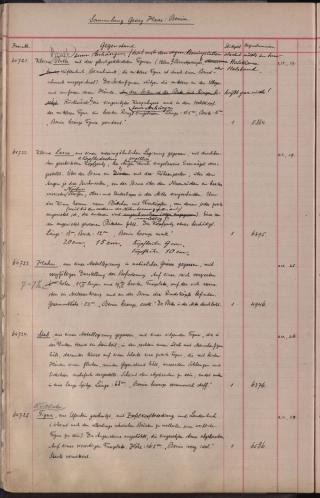
InventoryAccession Record
Weltmuseum Wien
Inventory book - objects
An archival document representing a Photograph Album of 2 page(s)
Photograph Album
British Museum
W. D. Webster photograph album
Date
January 1, 1898 to December 31, 1899

Institution data

Weltmuseum Wien
The data was transferred directly by the institution.
Last updated: 2022-05-24
Languages: german, english
Institution fieldValue
ObjectNumber_Original
object id
VO_64723
NativeTitle
edo designation
TextEntry
description
Dieser Hahn ist Teil der historischen Sammlungen aus dem Königreich Benin im heutigen Nigeria. 1897 wurde das Königreich erobert und dessen Oba (König) Ovonramwen ins Exil verbannt. Die aus dem Königspalast geraubten Kunstschätze wurden anschließend über
Medium
material
Gelbguss
Medium_en
material
Brass
ObjectName
object type
Hahn
ObjectName_en
object type
Rooster
DateBegin
date made
1600
DateEnd
date made
1800
Dated
date made
17./18. Jahrhundert
Dated_en
date made
17th/18th century
Period
date made
Term
production place
Afrika südlich der Sahara
Term2
production place
West-Afrika
Term3
production place
Nigeria
Term4
production place
Benin
Thesaurus
production place
Afrika südlich der Sahara/West-Afrika/Nigeria/Benin
Provenance
provenance
W.D.Webster, Nr. 4946
Role_person
provenance
Künstler/in-Artist-Unbekannter Meister der Bronzegießergilde, Königtum Benin|Sammlung-Collection-William Downing Webster|Zugang über-Accession via-Georg Haas|
Culture
ethnic attribution
Edo, Benin Königreich
Culture_en
ethnic attribution
Edo, Benin Kingdom
CreditLine
department and institution
Weltmuseum Wien
Department
department and institution
MVK Objekte - Afrika südlich der Sahara
Zugangsdatum
accession date
1899
LocationString
display status
Raum Me.40
FileName
images
VO_64723_1.jpg|VO_64723det_1.jpg|VO_64723det_2.jpg|
PrimaryImage
images
VO_64723_1.jpg
Classification
||
DepartmentID
35
Department_cut
Afrika südlich der Sahara
DisplayOrder
|
Last_Modified
2021-12-06 08:15:34
LocationID
75091
ObjectID
441005
ObjectNumber
64723
PublicAccess
1
SortNumber
VO 64723
TextDate_en
|
TextEntryHTML
Dieser Hahn ist Teil der historischen Sammlungen aus dem Königreich Benin im heutigen Nigeria. 1897 wurde das Königreich erobert und dessen Oba (König) Ovonramwen ins Exil verbannt. Die aus dem Königspalast geraubten Kunstschätze wurden anschließend über
TextEntryHTML_en
This Rooster is part of the historical collections from the Benin Kingdom, in present-day Nigeria. In 1897, the kingdom was conquered and Oba (king) Ovonramwen banned into exile. The loot from the royal palace was then sold through the art market to finan
TextEntry_en
This Rooster is part of the historical collections from the Benin Kingdom, in present-day Nigeria. In 1897, the kingdom was conquered and Oba (king) Ovonramwen banned into exile. The loot from the royal palace was then sold through the art market to finan
cxrDisplayOrder
1|
Sensitive Content

Digital Benin collates digital material from institutions, and some of this material is inherently colonial and contains words, terms and phrases that are inaccurate, derogatory and harmful towards African and African diasporic communities. Catalogue transcriptions, book titles, exhibition titles and museum titles may contain harmful terms. We recognise the potential for the material to cause physical and mental distress as well as evoke strong emotions. Owing to the scale of the collection’s data, a process to implement sensitive-content warnings in the displayed data is still incomplete. The material within the catalogue does not represent Digital Benin’s views. Digital Benin maintains a strong anti-colonial, anti-racist position and affirms its support for centring the humanity of historically marginalised and disenfranchised communities. Read more about the background of this statement here