


ObjectNumber_Original
VO_64680
Institution
Weltmuseum Wien
Edo designations
English designations
Relief Plaque
Categories
Palace Architecture & Ornamentation
Location
Heldenplatz, 1010 Wien, Austria
Loading...
Relief Plaque
Relief Plaque
Relief Plaque
Relief Plaque
Relief Plaque
Relief Plaque

Iconographies

7 annotations
Colar Bead
Odigba
Coral beaded collar

Odigba (coral-beaded collar) is a rigid neck collar made of coral beads, worn as part of ceremonial attire only by senior princes who have been made Enigie (Inneh 2007, p. 107). Although Ibafe (2007, p. 43) argued that the Odigba was introduced during the Ogiso period (c. 900–c. 1170 AD) by Ogiso Ere, along with other symbolically important Emwin Arhe, such as the Ada (ceremonial sword) and the Ẹbẹn (ceremonial sword), this seems unlikely, as coral was only introduced in the late 15th century through trade with Portuguese merchants.

1 annotation
Odigba
Abuwa
Hand of Wealth

Abuwa ornaments are made from red ododo cloth and are a symbol of wealth (Inneh 2007, pp. 110–111). ‘Abuwa’ is understood to translate directly as “hand of wealth” (Ezra 1992, p. 313). The Abuwa is worn at the waist by high-ranking chiefs as part of their ‘pangolin skin’ ceremonial regalia (Inneh 2007, p. 110) and continues to be worn today.

1 annotation
Abuwa
Water fern
Ebe Amẹ
Water Fern

Ebe Amẹ refers to a wide variety of plants, particularly the leaves of the water fern or river leaf, found in riverine areas of southern Nigeria ( ). Artists from the Igun-Ẹrọnmwọn used these as a decorative motif in the background of most Ama-Ẹrọnmwọn (bronze relief plaques). The petals of the Ebe Amẹ, like the points of the ἀghàdàgháda (crossroads), represent the four cardinal directions: north, east, south, and west. The number four plays a foundational role in the Edo calendar, which is structured around four market days ( ).

1 annotation
Ebe Amẹ
Ẹrhu
Headwear

Many different kinds of Ẹrhu (headwear) are worn by the various figures depicted in the imagery of Benin royal artefacts. Through comparisons with ceremonial regalia still worn by chiefs and members of the royal court, including the Ọba himself, some Ẹrhu have been used to identify the different figures depicted. For example, the conical hat worn by high-ranking town chiefs as part of the pangolin regalia, still worn at ceremonies, is also visible on figures on some Ama-Ẹrọnmwọn (bronze relief plaques) ( ). Other examples include the distinctive bell-shaped helmet associated with the Iyasẹ ( ). Figures who wear a shallow-brimmed hat and a cross have been identified as Ewua or Ohensa priests ( ).

Different kinds of helmets and headwear were worn by warriors, reflecting the many different ranks and roles in the army at any given time, as well as developing trends that were in turn represented on Emwin Arhe created at different points in time. Warrior figures wearing helmets covered in cowrie shells were carved on the Aken'ni Elao (carved tusks) (Blackmun 1984, p. 330), yet on the brass Ama, warriors are sometimes depicted wearing helmets made from crocodile hide or horsehair with a front plate (Osadolor in Plankensteiner 2007, cat. no. 238, p. 457). Helmets made from horsehair with a front plate are one of the more common types represented on the Ama-Ẹrọnmwọn, and the demand for black horse tails was noted by both Portuguese and British traders during the late 17th and 18th centuries (Osadolor in Plankensteiner 2007, cat. no. 238, p. 457). Other warriors depicted on Ama-Ẹrọnmwọn wear helmets with a rounded top, chinstrap, and sometimes also a feather tucked into the left side. These types of headwear are known as Ẹrhu Iyokuo.

Attire worn for battle also differed from that worn for ceremonial occasions, such as the pointed headwear worn in combination with an ornate leopard-head tunic by war chiefs. Depictions of figures wearing this attire on brass Ama-Ẹrọnmwọn (bronze relief plaques) have been interpreted as representing the war chiefs’ participation in the war-ritual Isiokuo festival (Osadolor in Plankensteiner 2007, cat. no. 238, p. 457).

Another distinctive form of headwear is that worn by figures identified as leopard hunters on the brass Ama-Ẹrọnmwọn (relief plaques). These large helmets cover almost all of the leopard hunters’ faces except for their noses, eyes, and upper lips, and are made of an unusual material that remains unidentifiable (Plankensteiner 2007, cat. nos. 68–69, p. 322).

European figures are also portrayed with distinctive hats, such as Portuguese three-cornered hats. These depictions reflect the artists’ keen observation and highlight the impact of European trade and military assistance (Ezra 1992).

1 annotation
Ẹrhu
tribal marks
Iwu
Facial and Body Markings

Iwu are facial and body markings (scarifications) that were historically worn by Edo men and women. However, since the 1960s, the practice has been nearly extinct (Aisien 2011). In the past, Iwu were used as a way of proving that one was an Edo citizen, and the ceremony of having Iwu completed was an important rite of passage for men and women. The Osiwu, who also practised circumcision and other surgical procedures, would carry out the procedure of adding Iwu. There are different types of Iwu: ‘blades’ worn on the torso (Iwu-eko), and those worn on the face, such as Ikharo (three or four markings above the eyebrows), Irho (two narrow ‘blades’ worn on each cheek), Ovbihue (nasal ‘blades’), Ovbi-agbanmwen (chin ‘blade’), and Igho-okpa/Ukpgho (three forehead ‘blades’) (Aisien 2011, p. 22).

The number of Iwu also varied depending on the identity of the person wearing them. For example, royal men would wear six ‘blades’ on their torso, whilst men who were not royal would wear seven ‘blades’. Meanwhile, the Ọba’s female children would wear fifteen ‘blades’, and all other women would wear sixteen (Aisien 2011).

1 annotation
Iwu
Ukpọn
Wrapper

Ukpọn is the Edo term for cloth (Aigbe 1985, p. 55; Ọbazee 2025, p. 542) and is used here to refer to the wrappers or kilts worn by many of the figures depicted on the Emwin Arre (royal treasures). The cloth worn around the waist may be plain, but it is more commonly richly decorated with motifs associated with the monarchy, power, and wealth, such as the Ọba'nui (infinity symbol) and Uhunme Ikpotoki (Portuguese heads).

The Benin Kingdom was renowned for its textile production, both for local use and for trade ( ). Within the royal court, members of the Owina n’Ido produced ukhuen cloth for the Ọba and other members of the court, who wore it as wrappers during festivals and ceremonies ( ).

Alongside locally produced textiles, imported cloth was also an important commodity in the Benin Kingdom’s trade networks. Textiles were exchanged with neighbouring production centres, particularly Ijebu ( ), while European traders brought silks, woollens, linens, and cotton from Europe and Asia from the 15th century onwards ( ).

1 annotation
Ukpọn
Iviawẹ
Stacked Beaded Anklet

Ọba gha ye Ivie gie ọwan, ẹ ghi tama rẹn ehe nọ gha bae yi (When the Ọba gifts you a bead, he doesn’t tell you how to wear it) (Daniel Inneh, pers. comm., 27 September 2025).

Iviawẹ (also spelled ĺvîowẹ) are coral-beaded anklets, often worn stacked together (Aigbe 1985, p. 28; Okpokunu, Agbontaen-Eghafona & Ojo 2005, p. 162; Ọbazee 2025, p. 279). Many of the figures depicted on the Emwin Arhe (royal treasures) in brass, bronze, ivory, and wood are shown wearing these. According to Daniel Inneh (pers. comm., 27 September 2025), beads were sent to people whom the Ọba wished to honour, although there was no directive on how to wear them.

Mostly, people who wear Iviawẹ are identified as palace chiefs or priests and priestesses. However, today anyone can wear them as cultural identifiers or fashion pieces.

1 annotation
Iviawẹ

Provenance

6 events
Production
1504 (approximate) to 1550 (approximate)
The object was produced by Unknown member(s) of the Igun-Ẹrọnmwọn guild in Benin City.
Looted
February 22, 1897 (day approximate) to June 1899 (year approximate)
The object was looted by Ralph Denham Rayment Moor from Benin Kingdom.
Transfer
March 19, 1897 (day approximate)
The object was transferred from Ralph Denham Rayment Moor to British Foreign Office from Benin City to London.
Loan
September 7, 1897 to January 1898 (month approximate)
The object was loaned by British Foreign Office to the British Museum through Crown Agents for the Colonies in London.
Purchase
1898
The object was purchased by Eva Amarantha Webster (born Cutter) from British Foreign Office in London.
Purchase
1899
The object was purchased by the Weltmuseum Wien from Eva Amarantha Webster (born Cutter) and William Downing Webster through Georg Haas from London to Vienna.

Related archival documents

1 documents
See all

Institution data

Weltmuseum Wien
The data was transferred directly by the institution.
Last updated: 2022-05-24
Languages: german, english
Institution fieldValue
ObjectNumber_Original
object id
VO_64680
NativeTitle
edo designation
TextEntry
description
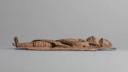
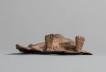
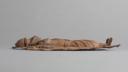
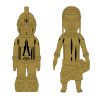
Diese Reliefplatte: Würdenträger mit rechteckigem Objekt ist Teil der historischen Sammlungen aus dem Königreich Benin im heutigen Nigeria. 1897 wurde das Königreich erobert und dessen Oba (König) Ovonramwen ins Exil verbannt. Die aus dem Königspalast ger
Medium
material
Gelbguss
Medium_en
material
Brass
ObjectName
object type
Reliefplatte: Würdenträger mit rechteckigem Objekt
ObjectName_en
object type
Relief Plaque: Dignitary with Rectangular Object
DateBegin
date made
DateEnd
date made
Dated
date made
Dated_en
date made
Period
date made
Term
production place
Afrika südlich der Sahara
Term2
production place
West-Afrika
Term3
production place
Nigeria
Term4
production place
Benin
Thesaurus
production place
Afrika südlich der Sahara/West-Afrika/Nigeria/Benin
Provenance
provenance
Role_person
provenance
Zugang über-Accession via-Georg Haas|
Culture
ethnic attribution
Edo, Benin Königreich
Culture_en
ethnic attribution
Edo, Benin Kingdom
CreditLine
department and institution
Weltmuseum Wien
Department
department and institution
MVK Objekte - Afrika südlich der Sahara
Zugangsdatum
accession date
1899
LocationString
display status
FileName
images
VO_64680_201902.jpg|
PrimaryImage
images
VO_64680_201902.jpg
Classification
||
DepartmentID
35
Department_cut
Afrika südlich der Sahara
DisplayOrder
|
Last_Modified
2021-12-06 08:15:34
LocationID
ObjectID
440964
ObjectNumber
64680
PublicAccess
1
SortNumber
VO 64680
TextDate_en
|
TextEntryHTML
Diese Reliefplatte: Würdenträger mit rechteckigem Objekt ist Teil der historischen Sammlungen aus dem Königreich Benin im heutigen Nigeria. 1897 wurde das Königreich erobert und dessen Oba (König) Ovonramwen ins Exil verbannt. Die aus dem Königspalast ger
TextEntryHTML_en
This Relief Plaque: Dignitary with Rectangular Object is part of the historical collections from the Benin Kingdom, in present-day Nigeria. In 1897, the kingdom was conquered and Oba (king) Ovonramwen banned into exile. The loot from the royal palace was
TextEntry_en
This Relief Plaque: Dignitary with Rectangular Object is part of the historical collections from the Benin Kingdom, in present-day Nigeria. In 1897, the kingdom was conquered and Oba (king) Ovonramwen banned into exile. The loot from the royal palace was
cxrDisplayOrder
1|
Sensitive Content

Digital Benin collates digital material from institutions, and some of this material is inherently colonial and contains words, terms and phrases that are inaccurate, derogatory and harmful towards African and African diasporic communities. Catalogue transcriptions, book titles, exhibition titles and museum titles may contain harmful terms. We recognise the potential for the material to cause physical and mental distress as well as evoke strong emotions. Owing to the scale of the collection’s data, a process to implement sensitive-content warnings in the displayed data is still incomplete. The material within the catalogue does not represent Digital Benin’s views. Digital Benin maintains a strong anti-colonial, anti-racist position and affirms its support for centring the humanity of historically marginalised and disenfranchised communities. Read more about the background of this statement here