
Iconographies







Provenance
Institution data
| Institution field | Value |
|---|---|
idno object id | E 1905.536 |
local edo designation | |
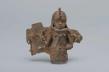
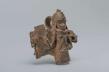
Physical description/0 description | Catalogue card reads: "Three small ancient shield shaped pendents (imperfect) of bronze, bearing standing human figures in relief. Two male (one with helmet) and one female, (head missing)." Added in different handwriting "E 1905.536 represents a warrior wearing a helmet." |
Physical description/1 description | |
Physical description/2 description | |
Physical description/3 description | |
Physical description/4 description | |
d_Description Name description | A small ancient shield shaped pendant of bronze, bearing a standing human figure in relief. The male figure is shown with a helmet representing a warrior. |
height dimensions | 100 mm |
length dimensions | 44 mm |
width dimensions | 103 mm |
weight weight | 0.2466 kg |
Inscription inscriptions | |
Labels - Markings/0 inscriptions | The number '11617' has been written on the back of the object. The number '668' is a Webster Lot number written on the label. |
Labels - Markings/1 inscriptions | Label attached to object reads: 'E 1905.536. Bronze pendant. Benin. Bt Websters Sale, Nov. 30th 1904. Lot 668. Purchased 1905.' |
Labels - Markings/2 inscriptions | |
Labels - Markings/3 inscriptions | |
Labels - Markings/4 inscriptions | |
Labels - Markings/5 inscriptions | |
period date made | 14th - 19th century |
maker producer | |
d_Place production place | Africa; West Africa; Nigeria; [Kingdom of Benin]; Edo State; Benin City; Oba's Palace |
Other owners prior source | |
source prior source | Benin Expedition [collector]; Webster, William Downing [vendor] |
Collection or Excavation Year date collected | |
culture group ethnic attribution | Edo |
source date accession date | 1905 |
Amendments - updates/0 notes | Photograph attached to rear of catalogue card. |
Amendments - updates/1 notes | |
Amendments - updates/2 notes | |
Amendments - updates/3 notes | |
Amendments - updates/4 notes | |
Exhibition/0 exhibition history | |
Exhibition/1 exhibition history | |
Reference Numbers bibliography | E 1905.536 MAA: AR 1905.544 Other: 11617 [Webster no.]; 688 [Webster Sale number]; 668 [Webster Lot number on object label] |
References/0 bibliography | |
References/0 2 bibliography | |
References/1 bibliography | |
Related Documents/0 bibliography | replacement catalogue card reads, in black biro: "1905 E 536-538 | AFRICA | WEST AFRICA / NIGERIA / Three small ancient shield-shaped PENDANTS (imperfect) of bronze, bearing standing human figures in relief: Two male (one with helmet) and one female (head missing). / Benin / Purchased / Webster's Sale 1904. | R. 1906.544-546." In second hand, blue biro: "1905 E 536. represent a warrior wearing a helmet. / 1905 E 537 represents a pot-bellied figure holding a [diagram]-shaped object (drum?) / 1905 E 378 represents a woman." Red circular sticker in bottom right of card. |
Related Documents/1 bibliography | |
Related Documents/2 bibliography | |
Related Documents/3 bibliography | |
Related Documents/4 bibliography | |
Related Documents/5 bibliography | |
Related Documents/6 bibliography | |
Acquisition Details/0 | |
Acquisition Details/1 | |
Acquisition Details/2 | |
Analysis/0 | In January 2017, Prof. Marcos Martinon-Torres and Agnese Benzonelli, UCL Institute of Archaeology, tested this idno using a portable XRF as part of a programme of base metal analysis of Benin material. |
Analysis/1 | cf very similar to 1950.273 A |
Archaeology | |
Auction - Sale/0 | Catalogue card reads "Purchased Webster Sale 1904" |
Auction - Sale/1 | Purchased from William Downing Webster's sale at J.C. Stevens, King Street, Covent Garden, on Wednesday 30 November 1904, lot 668. |
CMS Context/0 | |
CMS Description | |
Catalogue | |
Display/0 | |
Display/1 | |
Display/2 | |
Display/3 | |
Field_collection/0 | |
Field_collection/1 | |
Found_together - assemblage | |
Freezing | |
Online Only | |
Other/0 | |
Other/1 | |
Production - use | |
Remedial/0 | |
Remedial/1 | |
Surface Clean | |
unknown |
Digital Benin collates digital material from institutions, and some of this material is inherently colonial and contains words, terms and phrases that are inaccurate, derogatory and harmful towards African and African diasporic communities. Catalogue transcriptions, book titles, exhibition titles and museum titles may contain harmful terms. We recognise the potential for the material to cause physical and mental distress as well as evoke strong emotions. Owing to the scale of the collection’s data, a process to implement sensitive-content warnings in the displayed data is still incomplete. The material within the catalogue does not represent Digital Benin’s views. Digital Benin maintains a strong anti-colonial, anti-racist position and affirms its support for centring the humanity of historically marginalised and disenfranchised communities. Read more about the background of this statement here