
idno
1950.272
Edo designations
English designations
Relief Plaque
Categories
Palace Architecture & Ornamentation
Location
1 Adesogbe (Plymouth) Road, P.M.B. 1115, Benin City , Edo State
Loading...
Relief Plaque
Relief Plaque

Iconographies

5 annotations
Ukpọn
Wrapper

Ukpọn is the Edo term for cloth (Aigbe 1985, p. 55; Ọbazee 2025, p. 542) and is used here to refer to the wrappers or kilts worn by many of the figures depicted on the Emwin Arre (royal treasures). The cloth worn around the waist may be plain, but it is more commonly richly decorated with motifs associated with the monarchy, power, and wealth, such as the Ọba'nui (infinity symbol) and Uhunme Ikpotoki (Portuguese heads).

The Benin Kingdom was renowned for its textile production, both for local use and for trade ( ). Within the royal court, members of the Owina n’Ido produced ukhuen cloth for the Ọba and other members of the court, who wore it as wrappers during festivals and ceremonies ( ).

Alongside locally produced textiles, imported cloth was also an important commodity in the Benin Kingdom’s trade networks. Textiles were exchanged with neighbouring production centres, particularly Ijebu ( ), while European traders brought silks, woollens, linens, and cotton from Europe and Asia from the 15th century onwards ( ).

1 annotation
Ukpọn
Udahae
Beaded forehead band

The Udahae is a forehead band made from coral beads and worn by chiefs. Sometimes a white Igan (feather) from the Oɛɣohɔ (vulturine fish eagle) is tucked into the left side of the Udahae. According to Benin oral tradition, the Udahae was introduced by Ọba Ezoti, the first son of Ọba Ewuare I. During his coronation, Ezoti was shot in the forehead with a poisoned arrow. To stop the bleeding, a band of red beads was wrapped around his forehead while he made public appearances. Fourteen days later, he died from his wound. Since then, Benin chiefs have worn the red-beaded Udahae around their foreheads to commemorate the cap used by Ezoti to stop the bleeding (Egharevba 1968, p. 21).

1 annotation
Udahae
Colar Bead
Odigba
Coral beaded collar

Odigba (coral-beaded collar) is a rigid neck collar made of coral beads, worn as part of ceremonial attire only by senior princes who have been made Enigie (Inneh 2007, p. 107). Although Ibafe (2007, p. 43) argued that the Odigba was introduced during the Ogiso period (c. 900–c. 1170 AD) by Ogiso Ere, along with other symbolically important Emwin Arhe, such as the Ada (ceremonial sword) and the Ẹbẹn (ceremonial sword), this seems unlikely, as coral was only introduced in the late 15th century through trade with Portuguese merchants.

1 annotation
Odigba
Water fern
Ebe Amẹ
Water Fern

Ebe Amẹ refers to a wide variety of plants, particularly the leaves of the water fern or river leaf, found in riverine areas of southern Nigeria ( ). Artists from the Igun-Ẹrọnmwọn used these as a decorative motif in the background of most Ama-Ẹrọnmwọn (bronze relief plaques). The petals of the Ebe Amẹ, like the points of the ἀghàdàgháda (crossroads), represent the four cardinal directions: north, east, south, and west. The number four plays a foundational role in the Edo calendar, which is structured around four market days ( ).

1 annotation
Ebe Amẹ
Ikoro
Armcuff

Ikoro (armcuffs) are made from different materials using different techniques, including brass sheet, cast bronze, and ivory. They were crafted by different guilds depending on the material used: artists of the Igun-Ẹrọnmwọn cast them in brass or hammered and incised them from brass sheet, whereas artists of the Igbesamwan carved ivory Ikoro. Ikoro were made in different qualities, from rather simple examples with abstract geometric decoration to finely carved ivory examples with brass or copper inlays. Ikoro are worn in pairs on both forearms by chiefs and the Ọba during ceremonies and festivals. Figures depicted on the Emwin Arhe (royal treasures) are often shown wearing such pairs.

1 annotation
Ikoro

Provenance

6 events
Production
1504 (approximate) to 1550 (approximate)
The object was produced by Unknown member(s) of the Igun-Ẹrọnmwọn guild in Benin City.
Looted
February 22, 1897 (day approximate) to June 1899 (year approximate)
The object was looted by Unknown member of the British colonial military campaign on Benin - February 1897 from Benin Kingdom.
Unknown
February 22, 1897 (day approximate) to 1901
The object is known to have come into contact with William Downing Webster, later in Bicester.
Purchase
February 22, 1897 (day approximate) to 1901
The object was purchased by Frederick William Green from William Downing Webster from Bicester to Cambridge.
Bequest
1950
The object was bequeathed by Frederick William Green to the Museum of Archaeology and Anthropology, University of Cambridge in Cambridge.
Restitution
February 8, 2026
The object was restituted by the Museum of Archaeology and Anthropology, University of Cambridge to the Omo n'Oba n'Edo Uku Akpolokpolo, Ọba of Benin & National Commission for Museums and Monuments, Nigeria from Cambridge to Nigeria.

Related archival documents

2 documents
See all
An archival document representing a Inventories of 404 page(s)
Inventory
Museum of New Zealand Te Papa Tongarewa
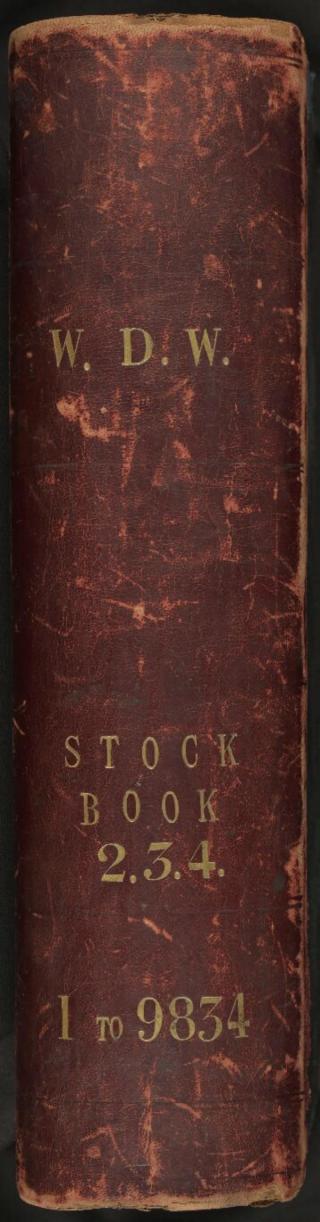
Stock books
Date
January 18, 1897 to March 26, 1900
An archival document representing a Photograph Album of 2 page(s)
Photograph Album
British Museum
W. D. Webster photograph album
Date
January 1, 1898 to December 31, 1899

Institution data

Museum of Archaeology and Anthropology, University of Cambridge
The data was transferred directly by the institution.
Last updated: 2022-07-18
Language: english
Institution fieldValue
idno
object id
1950.272
local
edo designation
Physical description/0
description
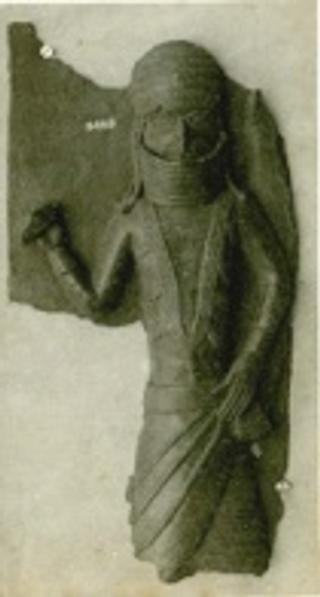
Catalogue card notes: "Bronze plaque with warrior in high relief, wearing helmet. Much of background and legs missing." Added in second hand: "+ 8 ringed necklace"
Physical description/1
description
Physical description/2
description
Physical description/3
description
Physical description/4
description
d_Description Name
description
Fragment of a bronze plaque with warrior in high relief.
height
dimensions
48 mm
length
dimensions
335 mm
width
dimensions
190 mm
weight
weight
2.5 kg
Inscription
inscriptions
Labels - Markings/0
inscriptions
The number '9469' has been written on the object. A possible ?Webster number.
Labels - Markings/1
inscriptions
Labels - Markings/2
inscriptions
Labels - Markings/3
inscriptions
Labels - Markings/4
inscriptions
Labels - Markings/5
inscriptions
period
date made
16th century
maker
producer
d_Place
production place
Africa; West Africa; Nigeria; [Kingdom of Benin]; Edo State; Benin City
Other owners
prior source
source
prior source
Benin [collector]; Green, Frederick William [donor]; Webster, William [vendor]
Collection or Excavation Year
date collected
culture group
ethnic attribution
Edo
source date
accession date
1950
Amendments - updates/0
notes
Unclear on catalogue card whether Edo is the province or language group, and whether Benin refers to the city of Benin. [T.Cotterill]
Amendments - updates/1
notes
Photograph attached to rear of catalogue card.
Amendments - updates/2
notes
Given by Frederick William Green, Honorary Keeper of Antiquities at the Fitzwilliam Museum, Cambridge (1908–1949). The majority of 'bronze' items such as these in museum collections were collected on the 1897 Punitive to Benin. This is likely to be the origin of this work but there is no documentation on Green's acquisition. The Webster sale number suggests it was sold by Bicester dealer William Webster at some stage probably between 1898- 1901, but the number has not yet been connected to a specific auction
Amendments - updates/3
notes
Amendments - updates/4
notes
Exhibition/0
exhibition history
Exhibition/1
exhibition history
Reference Numbers
bibliography
1950.272 Other: 9469 [written on object; ?Webster no.]
References/0
bibliography
References/0 2
bibliography
References/1
bibliography
Related Documents/0
bibliography
Catalogue card reads, in blue ink: "50.272 | Africa | Nigeria / Bronze plaque with warrior in high relief, wearing helmet. Much of back-ground + legs missing. / Benin. / F.W. Green bequest." In second hand and black biro, after "helmet": "+8-ringed helmet" Red circular sticker on bottom right of card.
Related Documents/1
bibliography
Related Documents/2
bibliography
Related Documents/3
bibliography
Related Documents/4
bibliography
Related Documents/5
bibliography
Related Documents/6
bibliography
Acquisition Details/0
Acquisition Details/1
Acquisition Details/2
Analysis/0
In January 2017, Prof. Marcos Martinon-Torres and Agnese Benzonelli, UCL Institute of Archaeology, tested this idno using a portable XRF as part of a programme of base metal analysis of Benin material. The object was tested twice and the results are as follows: 1) Cu: 72.31%; Zn: 9.02%; Sn: 0.64%; Pb: 15.75%. 2) Cu: 74.38%; Zn: 10.08%; Sn: 0.66%; Pb: 12.93%. It was noted that most plaques are thought to be cast 1550-1610, Riederer alloy D2? At the higher end of the Pb spectrum.
Analysis/1
Archaeology
Auction - Sale/0
Auction - Sale/1
CMS Context/0
CMS Description
Catalogue
Display/0
Display/1
Display/2
Display/3
Field_collection/0
?Collected on the 1897 Punitive .
Field_collection/1
Found_together - assemblage
Freezing
Online Only
Other/0
Other/1
Production - use
Remedial/0
CON.2017.3698 | Remedial
Remedial/1
Surface Clean
unknown
Sensitive Content

Digital Benin collates digital material from institutions, and some of this material is inherently colonial and contains words, terms and phrases that are inaccurate, derogatory and harmful towards African and African diasporic communities. Catalogue transcriptions, book titles, exhibition titles and museum titles may contain harmful terms. We recognise the potential for the material to cause physical and mental distress as well as evoke strong emotions. Owing to the scale of the collection’s data, a process to implement sensitive-content warnings in the displayed data is still incomplete. The material within the catalogue does not represent Digital Benin’s views. Digital Benin maintains a strong anti-colonial, anti-racist position and affirms its support for centring the humanity of historically marginalised and disenfranchised communities. Read more about the background of this statement here