


Iconographies



Provenance
Institution data
| Institution field | Value |
|---|---|
Identifikationsnummer object id | 37.8:1 |
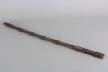
Titel designation | Rasselstab (ukhurhe) mit Elefantendarstellung |
Materialien material | ORGANISCH/ PFLANZLICH/Holz |
Heutiges Staatsgebiet des Herstellungsortes production place | Afrika/Westafrika/Nigeria/Benin-Reich |
Provenienz/Name prior source provenance | Umlauff |
Provenienz Objektitinerar Akteure Orte Daten provenance | J.F.G. Umlauff |
Provenienz/Affiliation provenance | J.F.G. Umlauff |
Provenienz/Country provenance | Germany |
Provenienz/Date of Birth provenance | 1833 |
Provenienz/Date of Death provenance | 1889 |
Provenienz/First Name provenance | Johann Gustav Friederich |
Provenienz/No provenance | 38 |
Provenienz/Place of Birth provenance | |
Provenienz/Place of Death provenance | |
Provenienz/Profession provenance | Ethnographica dealer |
Provenienz/Role-Function/0 provenance | Consignor |
Provenienz/Role-Function/1 provenance | Intermediary |
Provenienz/Sex provenance | male |
Provenienz/Short Biography provenance | J.F.G. Umlauff was a well-known Hamburg family business founded by Johann Gustav Friederich Umlauff (1833–1889) in 1869 and continued by his son Heinrich Umlauff (1868–1925). Initially run as a natural produce shop and shellfish factory, it later added ethnographic shows and the trade in ethnographic objects to its business portfolio. The acquisition of objects for resale took place (presumably also through intermediaries) via the port of Hamburg. Between 1900 and 1937, the museum acquired a total of six objects from the Kingdom of Benin from the Umlauff company, first by purchase, then later by exchange. |
Provenienz/Street provenance | |
Provenienz/Town provenance | Hamburg |
Hersteller kulturhist. Herkunftsgesellschaft ethnic attribution | --/Edo |
Heutiger Aufbewahrungsort Sammlung department and institution | Museum am Rothenbaum. Kulturen und Künste der Welt (MARKK) |
Akquisitionsdatum accession date | 11.1.1937 |
Alte Inventarnummer | |
Inventurdatum | 23.07.2015 |
Label Text (deu) | Rasselstab Ukhurhe mit Elefantendarstellung Unbekannte Werkstatt der Holzschnitzergilde Igbesanmwan / Königreich Benin, Nigeria, 19. Jh. / Holz / Durch Tausch erworben von J.F.G. Umlauff, 1937, Inv. Nr. 37.8:1 Rasselstäbe gehören zur Grundausstattung von Ahnenaltären in Benin. Es ist Aufgabe des ältesten Sohnes, nach dem Ableben des Vaters einen solchen Stab schnitzen zu lassen und diesen unter die anderen, an die Rückwand des Ahnenaltars gelehnten Rasselstäbe einzureihen. Auf diese Weise wird der Verstorbene gleichsam mit der Gemeinschaft der Ahnen verbunden. Der bewegliche Teil im Hohlkörper des Stabes erzeugt beim Aufschlagen ein rasselndes Geräusch, wodurch Kontakt mit der spirituellen Sphäre aufgenommen wird. |
Label Text (eng) | Rattle Staff Ukhurhe with Elephant Unidentified workshop of the Wood Carvers Guild Igbesanmwan / Benin Kingdom, Nigeria, 19th century / Wood / Acquired through exchange with J.F.G. Umlauff, 1937, Inv. no. 37.8:1 Rattle staffs are the basic furnishing of ancestor altars in Benin. It is the duty of the eldest son to have such a staff carved after his father’s death and to place it among the other rattle staffs leaning against the back wall of the ancestral altar. With this, the deceased is able to join the community of ancestors. The loose part in the hollow body of the staff produces a rattling sound when struck, thus establishing contact with the spiritual sphere. |
Maße | Breite: 5,20 cm; Tiefe: 4,40 cm; Länge: 146,00 cm |
Digital Benin collates digital material from institutions, and some of this material is inherently colonial and contains words, terms and phrases that are inaccurate, derogatory and harmful towards African and African diasporic communities. Catalogue transcriptions, book titles, exhibition titles and museum titles may contain harmful terms. We recognise the potential for the material to cause physical and mental distress as well as evoke strong emotions. Owing to the scale of the collection’s data, a process to implement sensitive-content warnings in the displayed data is still incomplete. The material within the catalogue does not represent Digital Benin’s views. Digital Benin maintains a strong anti-colonial, anti-racist position and affirms its support for centring the humanity of historically marginalised and disenfranchised communities. Read more about the background of this statement here