



Iconographies






Provenance
Institution data
| Institution field | Value |
|---|---|
Identifikationsnummer object id | 1048:05 |
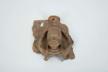
Titel designation | Reliefbronzeplatte (Bruchstück), Schachtelträger |
Materialien material | ANORGANISCH/Metall/Gelbguß |
Heutiges Staatsgebiet des Herstellungsortes production place | Afrika/Westafrika/Nigeria/Benin-Reich |
Provenienz/Name prior source provenance | Lembcke |
Provenienz Objektitinerar Akteure Orte Daten provenance | John Lembcke |
Provenienz/Affiliation provenance | L. Pagenstecher & Co. |
Provenienz/Country provenance | Germany |
Provenienz/Date of Birth provenance | 19.03.1873 |
Provenienz/Date of Death provenance | unknown |
Provenienz/First Name provenance | John |
Provenienz/No provenance | 25 |
Provenienz/Place of Birth provenance | |
Provenienz/Place of Death provenance | unknown |
Provenienz/Profession provenance | Merchant |
Provenienz/Role-Function/0 provenance | Consignor |
Provenienz/Role-Function/1 provenance | |
Provenienz/Sex provenance | male |
Provenienz/Short Biography provenance | John Lembcke (1873-?) originally came from Mecklenburg and was a Hamburg merchant. He worked as an agent for the trading company L. Pagenstecher & Co. in southern Nigeria. The company maintained several branches in Cameroon and Nigeria and traded raw rubber, among other things.Lembcke was probably employed at a branch of the firm in Warri, from where he went to nearby Benin City. There, he found objects which he eventually brought to Hamburg. Between 1899 and 1905, he sold 40 objects from the Kingdom of Benin to the museum. |
Provenienz/Street provenance | Hammmerlandstr. 75 II (Address Mrs. C. Lembcke, widow) |
Provenienz/Town provenance | Hamburg |
Hersteller kulturhist. Herkunftsgesellschaft ethnic attribution | --/Edo |
Heutiger Aufbewahrungsort Sammlung department and institution | Museum am Rothenbaum. Kulturen und Künste der Welt (MARKK) |
Akquisitionsdatum accession date | 1905 |
Alte Inventarnummer | |
Inventurdatum | 23.07.2009 |
Label Text (deu) | Reliefplatte (Bruchstück) mit Schachtelträger Unbekannte Werkstatt der Bronzegießergilde Igun Eronmwon / Königreich Benin, Nigeria, 16./17. Jh. / Gelbguss / Ankauf von John Lembcke, 1905, Inv. Nr. 1048:05 Der dargestellte Höfling trägt eine hohe Schachtel in der für Benin charakteristischen Spulenform. In solchen Behältnissen wurden bei zeremoniellen Auftritten Geschenke überbracht oder auch Nachrichten in Gestalt von symbolträchtigen Objekten weitergeleitet. EkpokinSchachteln bestehen aus zwei zylindrischen Teilen mit Deckplatte, die ineinandergesteckt werden. Sie wurden aus Leder, aus Messsingblech oder in Gelbguss gefertigt. |
Label Text (eng) | Relief Plaque (Fragment): Courtier Carrying a Box Unidentified workshop of the Bronze Casters Guild Igun Eronmwon / Benin Kingdom, Nigeria, 16th/17th century / Brass / Acquired from John Lembcke, 1905, Inv. no. 1048:05 The courtier is carrying a tall box in the characteristic spool shape typical for Benin. Such containers were used to carry gifts during ceremonies or to convey messages in the form of symbolic objects they contained. Ekpokin boxes consist of two cylindrical parts with a cover plate, which are inserted into each other. They were made of leather, brass sheet or casted in brass. |
Maße | Breite: 18,00 cm; Höhe: 21,00 cm; Tiefe: 7,00 cm |
Digital Benin collates digital material from institutions, and some of this material is inherently colonial and contains words, terms and phrases that are inaccurate, derogatory and harmful towards African and African diasporic communities. Catalogue transcriptions, book titles, exhibition titles and museum titles may contain harmful terms. We recognise the potential for the material to cause physical and mental distress as well as evoke strong emotions. Owing to the scale of the collection’s data, a process to implement sensitive-content warnings in the displayed data is still incomplete. The material within the catalogue does not represent Digital Benin’s views. Digital Benin maintains a strong anti-colonial, anti-racist position and affirms its support for centring the humanity of historically marginalised and disenfranchised communities. Read more about the background of this statement here