

ObjectNumber_Original
VO_64717
Institution
Weltmuseum Wien
Edo designations
English designations
Relief Plaque
Categories
Palace Architecture & Ornamentation
Location
Heldenplatz, 1010 Wien, Austria
Loading...
Relief Plaque
Relief Plaque

Iconographies

10 annotations
leopard teeth
Akọn Ẹkpen
Leopard Teeth Neck Ornament

Akọn Ẹkpẹn are necklaces or neck ornaments made of strung leopard’s teeth. They are worn by figures to signify their high rank and military prowess, as well as by their leaders, the Ezọmọ or Iyasẹ. They are often worn alongside quadrangular Ẹroro (bells) and Ohian Ẹkpẹn (leopard tunics).

The Akọn Ẹkpẹn is clearly and profoundly related to the symbolism of the Ẹkpẹn (leopard) and its association with the Ọba (king), who is metaphorically referred to as ‘ẹkpẹn ne owa’, the ‘leopard of the home’. On the other hand, the Ẹkpẹn is often referred to as the ‘king of the bush’, embodying ferocity, aggression, strength, and leadership—qualities attributed to the Ọba (Nevadomsky 1988). This intricate link between the leopard, the monarch, and his military leaders reinforces the complex hierarchy and spiritual authority central to Benin’s courtly art.

1 annotation
Akọn Ẹkpen
Ẹroro
Bell

Ẹroro (bells) frequently appear as ornaments worn by figures depicted on the Emwin Arhe, particularly on Ama-Eronmwon (bronze relief plaques) and Aken’ni Elao (carved tusks). These Ẹroro are most commonly quadrangular in form or, less commonly, cylindrical with rounded tops. Quadrangular Ẹroro worn around the neck are often part of the attire that indicates that figures can be interpreted as warriors, alongside the Akọn Ẹkpẹn (leopard tooth neck ornament) and the Ohian Ẹkpẹn (leopard tunics).

1 annotation
Ẹroro
Ẹgogo
Gong

Ẹgogo (gongs) hold significant importance in Benin art and ritual, serving as powerful instruments with both practical and symbolic roles. Ivory gongs, especially “double-bell” types, were highly prized and reserved for the royal court, particularly those made entirely of ivory, which were used exclusively by the Ọba. The whiteness of ivory Ẹgogo symbolises purity and peace and is linked to sacred Orhue (white kaolin chalk) and the deity Olokun (Blackmun 2007, cat. no. 60, p. 315).

When depicted in the imagery of the Emwin Arhe (royal treasures), Ẹgogo are usually held by figures such as the Ọba or high-ranking chiefs, illustrating their historical and ongoing use as idiophones during ceremonies and festivals. The Ọba dances with an ornately carved ivory Ẹgogo during the Emobo festival, which takes place three days after the Iguẹ festival (Ben-Amos 1995, p. 108).

1 annotation
Ẹgogo
Asoro
Spears

Asoro (spears) were used as weapons in battle and for hunting ( ; Ọbazee 2025, p. 37). According to , there were two types: long and short. Figures holding Asoro are often depicted on Ama-Ẹrọnmwọn (bronze relief plaques), sometimes in battle scenes and at ceremonies and festivals.

1 annotation
Asoro
Colar Bead
Odigba
Coral beaded collar

Odigba (coral-beaded collar) is a rigid neck collar made of coral beads, worn as part of ceremonial attire only by senior princes who have been made Enigie (Inneh 2007, p. 107). Although Ibafe (2007, p. 43) argued that the Odigba was introduced during the Ogiso period (c. 900–c. 1170 AD) by Ogiso Ere, along with other symbolically important Emwin Arhe, such as the Ada (ceremonial sword) and the Ẹbẹn (ceremonial sword), this seems unlikely, as coral was only introduced in the late 15th century through trade with Portuguese merchants.

1 annotation
Odigba
Ẹbẹn
Ceremonial Sword

Ẹbẹn are a type of ceremonial sword of significant importance in the Benin Kingdom. During ceremonies, titled chiefs would hold them or toss them during dances, thereby paying homage to the Ọba at these public events, particularly when a chief receives a certain status. It is forbidden for Ẹbẹn to touch the ground, so the chief must take extra precautions to avoid dropping the Ẹbẹn during the dance. Therefore, the Okae-Odionmwan (head of executioners) dances with the Umozo (warfare or executioner’s sword) behind the dancing chief.

There are two central ceremonial swords used in the royal court of the Benin Kingdom, one of which is the Ẹbẹn, along with the Ada (ceremonial swords). They are distinguished by their blades: the Ẹbẹn blade reflects the shape of a leaf or an oar. Sometimes, it is decorated with openwork designs and/or brass inlays, most commonly shaped as small Ẹbẹn and Ẹkpẹn (leopards). The handle of the Ẹbẹn also has an unusual ring-shaped form, which further differentiates it from the Ada.

1 annotation
Ẹbẹn
Uko ugbo-ohamwen
Fortified chest band

Uko ugbo-ohamwen is a chest band often worn around the chests of warriors depicted on the Ama-Ẹrọnmwọn (relief plaques) and is fortified with charms. The band was worn to increase the strength and endurance of warriors ( ). This fortified chest band has also been referred to as ukugba olila (Ine n’Igun in Bradbury 1959, B.S. 245; ; ).

1 annotation
Uko ugbo-ohamwen
Asa
Shield

Asa (shields) are a crucial attribute of warriors and warrior chiefs, forming part of their ceremonial and battle attire as represented on the Emwin Arhe (royal treasures). Asa were usually made from elephant or crocodile skin and used by warriors for protection during hand-to-hand combat (Osadolor 2001, p. 102). Interestingly, the form of Asa depicted on historic royal artefacts differs from those found in museum collections today, reflecting changes in shield shapes and designs over time.

1 annotation
Asa
Oko/Akohẹn
Horn/Flute

Akohẹn, or ivory horns, are played by members of the Ikpakoen (guild of ivory hornblowers), while Oko, or flutes, are played by members of the Ikpeziken (guild of royal flute players). Among the Emwin Arhe (royal treasures), Oko and Akohẹn are usually depicted being played by brass-cast figures representing members of these guilds, and also appear on Ama-Ẹrọnmwọn (bronze relief plaques), Aken'ni Elao (carved altar tusks), and Urhotọ (altar tableau).

Today in Benin City, when a public procession leaves the palace, a court official may sound side-blown horns made from ivory. Historically, these instruments were also used during warfare, where they were played alongside Ema (drums) and Ẹroro (bells), producing a “cacophony of sound” whose “[t]he psychological effect of the barrage of noise magnified the size of Benin’s forces” ( ).

Some Oko/Akohẹn were also cast in brass by members of the Igun-Ẹrọnmwọn. However, these brass examples are understood not to have been functional instruments and could not have been blown like their ivory counterparts ( ).

1 annotation
Oko/Akohẹn
Water fern
Ebe Amẹ
Water Fern

Ebe Amẹ refers to a wide variety of plants, particularly the leaves of the water fern or river leaf, found in riverine areas of southern Nigeria ( ). Artists from the Igun-Ẹrọnmwọn used these as a decorative motif in the background of most Ama-Ẹrọnmwọn (bronze relief plaques). The petals of the Ebe Amẹ, like the points of the ἀghàdàgháda (crossroads), represent the four cardinal directions: north, east, south, and west. The number four plays a foundational role in the Edo calendar, which is structured around four market days ( ).

1 annotation
Ebe Amẹ

Provenance

5 events
Production
1504 (approximate) to 1550 (approximate)
The object was produced by Unknown member(s) of the Igun-Ẹrọnmwọn guild in Benin City.
Looted
February 22, 1897 (day approximate) to June 1899 (year approximate)
The object was looted by Unknown member of the British colonial military campaign on Benin - February 1897 from Benin Kingdom.
Unknown
February 22, 1897 (day approximate) to 1899
The object is known to have come into contact with William Downing Webster, later in Bicester.
Purchase
1899
The object was purchased by Georg Haas from William Downing Webster from Bicester to Mostov.
Purchase
1899
The object was purchased by the Weltmuseum Wien from Georg Haas from London to Vienna.

Related archival documents

2 documents
See all
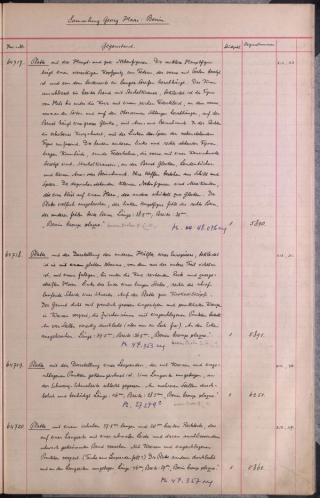
Museum Catalogue
Staatsbibliothek zu Berlin
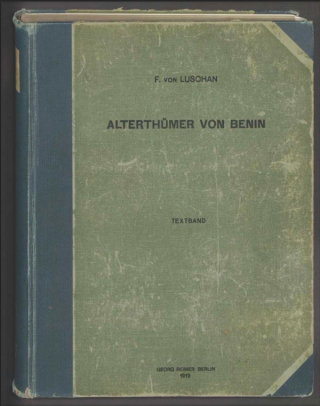
Die Altertümer von Benin
Date
January 1, 1919 at 12:00:00 AM
An archival document representing a Inventories of 1 page(s)
InventoryAccession Record
Weltmuseum Wien
Inventory book - objects

Institution data

Weltmuseum Wien
The data was transferred directly by the institution.
Last updated: 2022-05-24
Languages: german, english
Institution fieldValue
ObjectNumber_Original
object id
VO_64717
NativeTitle
edo designation
TextEntry
description
Diese Reliefplatte: Oba Ozolua mit vier Begleitern ist Teil der historischen Sammlungen aus dem Königreich Benin im heutigen Nigeria. 1897 wurde das Königreich erobert und dessen Oba (König) Ovonramwen ins Exil verbannt. Die aus dem Königspalast geraubte
Medium
material
Gelbguss
Medium_en
material
Brass
ObjectName
object type
Reliefplatte: Oba Ozolua mit vier Begleitern
ObjectName_en
object type
Relief Plaque: Oba Ozolua with Four Attendants
DateBegin
date made
1500
DateEnd
date made
1700
Dated
date made
16./17. Jahrhundert
Dated_en
date made
16th/17th century
Period
date made
Term
production place
Afrika südlich der Sahara
Term2
production place
West-Afrika
Term3
production place
Nigeria
Term4
production place
Benin
Thesaurus
production place
Afrika südlich der Sahara/West-Afrika/Nigeria/Benin
Provenance
provenance
W.D. Webster, Nr. 5890
Role_person
provenance
Sammlung-Collection-William Downing Webster|Zugang über-Accession via-Georg Haas|
Culture
ethnic attribution
Edo, Benin Königreich
Culture_en
ethnic attribution
Edo, Benin Kingdom
CreditLine
department and institution
Weltmuseum Wien
Department
department and institution
MVK Objekte - Afrika südlich der Sahara
Zugangsdatum
accession date
1899
LocationString
display status
Raum Me.40
FileName
images
VO_64717_1.jpg|
PrimaryImage
images
VO_64717_1.jpg
Classification
||
DepartmentID
35
Department_cut
Afrika südlich der Sahara
DisplayOrder
|
Last_Modified
2021-12-06 08:15:34
LocationID
75091
ObjectID
440999
ObjectNumber
64717
PublicAccess
1
SortNumber
VO 64717
TextDate_en
|
TextEntryHTML
Diese Reliefplatte: Oba Ozolua mit vier Begleitern ist Teil der historischen Sammlungen aus dem Königreich Benin im heutigen Nigeria. 1897 wurde das Königreich erobert und dessen Oba (König) Ovonramwen ins Exil verbannt. Die aus dem Königspalast geraubte
TextEntryHTML_en
This Relief Plaque: Oba Ozolua with four Retainers is part of the historical collections from the Benin Kingdom, in present-day Nigeria. In 1897, the kingdom was conquered and Oba (king) Ovonramwen banned into exile. The loot from the royal palace was th
TextEntry_en
This Relief Plaque: Oba Ozolua with four Retainers is part of the historical collections from the Benin Kingdom, in present-day Nigeria. In 1897, the kingdom was conquered and Oba (king) Ovonramwen banned into exile. The loot from the royal palace was th
cxrDisplayOrder
1|
Sensitive Content

Digital Benin collates digital material from institutions, and some of this material is inherently colonial and contains words, terms and phrases that are inaccurate, derogatory and harmful towards African and African diasporic communities. Catalogue transcriptions, book titles, exhibition titles and museum titles may contain harmful terms. We recognise the potential for the material to cause physical and mental distress as well as evoke strong emotions. Owing to the scale of the collection’s data, a process to implement sensitive-content warnings in the displayed data is still incomplete. The material within the catalogue does not represent Digital Benin’s views. Digital Benin maintains a strong anti-colonial, anti-racist position and affirms its support for centring the humanity of historically marginalised and disenfranchised communities. Read more about the background of this statement here