
Iconographies






Provenance
Institution data
| Institution field | Value |
|---|---|
INV_NR object id | 16155 |
OBJEKTE_ID object id | 1713170 |
KURZTITEL designation | Altarkopf uhunmwun-elao |
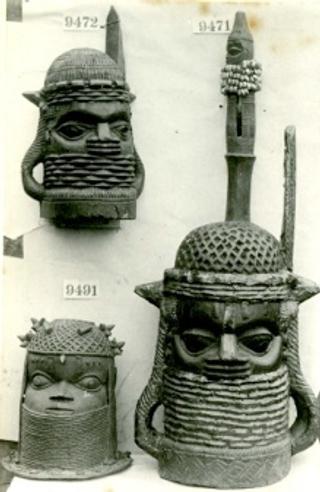
Object-name-and-materials designation material | Altarkopf (uhunmwun-elao) Holz, Messingblech, Kupfer |
TITEL designation | Altarkopf (uhunmwun-elao);Kopf aus Holz |
INTERNETKOMMENTAR description notes | Die Nutzung von Ton oder Holz für rituelle Gegenstände war auch der Dorf- oder Stadtbevölkerung im Benin-Reich erlaubt. Dieser zur Hälfte mit Messingblech überzogene Holzkopf stellt bewusst Nähe zu den aus Messing oder Bronze gegossenen Altarköpfen der königlichen Ahnen her. Größe, Gewicht und aufwendige Gestaltung lassen vermuten, dass er mit Erlaubnis des Oba für einen hochrangigen Titelträger oder für ein besonders loyales Oberhaupt gefertigt wurde. (MVD, S. D.) |
KATALOGTEXT description | |
MATERIAL material | Holz;Kupfer;Messing;Blech |
MASSEBEMERKUNG dimensions | 57,5 x 29 x 29 cm |(mit Holzteilen) (lt. Karteikarte) |
MASSETABANGABE dimensions | |
MASSETABBEMERKUNG dimensions | |
MASSETABBREITE dimensions | |
MASSETABDURCHMESSER dimensions | |
MASSETABEINHEITLAENGE dimensions | |
MASSETABEINHEITLAENGE_IDS dimensions | |
MASSETABHOEHE dimensions | |
MASSETABTIEFE dimensions | |
Dimensions_weight weight | H: 57,5 cm W: 29 x 29 cm (not certified) |
MASSETABEINHEITGEWICHT weight | |
MASSETABEINHEITGEWICHT_ID weight | |
MASSETABGEWICHT weight | |
OBJEKTBEZ object type | Plastik |
KONVOLUT provenance object count | Sammlung Arthur Baessler; SES Benin-Objekte; SES Dossier Benin-Objekte, Überlieferung an die Kontaktstelle für Sammlungsgut aus kolonialen Kontexten |
ORT_DATUM_BIS date made | 1897;1900 |
ORT_DATUM_KONKRET date made | ';' |
ORT_DATUM_VON date made | 1800; |
MATTECHBEMERKUNG production technique | Holz, teilweise gefärbt, Messingblech, teilweise ziseliert, Kupferblech |
TECHNIK production technique | geschnitzt;gefärbt;ziseliert |
ORTE production place | Federal Republic of Nigeria;Benin City |
ORTZEITBEMERKUNG production place | Königreich Benin, vor 1897 |
Ort_Zeit-Bemerkung production place | Königreich Benin, vor 1897 |
REGIONEN production place | Benin |
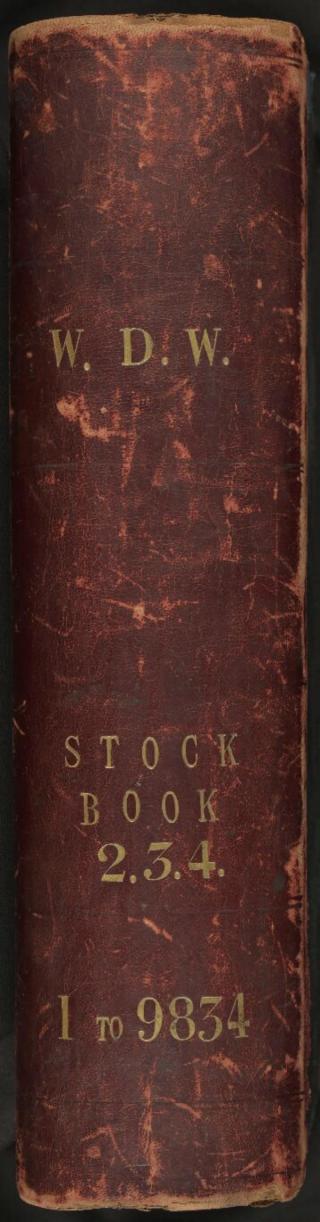
Collector/Previous-owner prior source | Arthur Baessler, Berlin, purchased from William D. Webster, London, in 1900 |
ERWERBUNG prior source | Schenkung 1900 von Arthur Baessler |
PERSON prior source | unbekannt;Webster, William Downing;Baessler, Arthur |
Acquisition-Details provenance | Donated by Arthur Baessler, Berlin |
EIGENTUEMER provenance | SES/Freistaat Sachsen |
PROVENIENZ provenance | Arthur Baessler 1900 von William Webster gekauft |
PROVENIENZSTATUS provenance | SKD-Eigentum |
EREIGNISSE event | Herstellung;Provenienz;Provenienz |
ETHNIEN ethnic attribution | Edo |
Institution department and institution | Staatliche Ethnographische Sammlungen Sachsen - Museum für Völkerkunde Dresden |
MUSEUM department and institution | MVD |
Institutional-acquisition-date accession date | 1900 |
Comments notes | Arthur Baessler, 1857-1907, German Ethnologist and Athropologist; William Downing Webster, 1868-1913, English Dealer and Collector of Ethnographica |
PRAESENZ display status | nicht ausgestellt |
BIBLIOGRAPHIE bibliography | Plankensteiner, Barbara (Hrsg.): Benin. Könige und Rituale. Höfische Kunst aus Nigeria [Ausst.Kat.]. Wien, 2007|S. Dolz: Schätze aus Afrika: Benin. Die Schenkung Baessler [Ausst.Kat.]. Dresden, 2006 |
ERWAEHNTIN bibliography | Dolz in Plankensteiner (Hrsg.), 2007, Kat. 187|MVD, 2006, S. 20 u. Abb. 13 |
LITERATUR bibliography | |
LIT_LITERATUR bibliography | Deimel 2006 [Schätze aus Afrika, ...];Plankensteiner 2007 |
BILDUNTERSCHRIFT images | Übernahme Altdaten|Region original: Großregion => Westafrika; Land => Nigeria; Gebiet => Benin|Ethnie original: kein Eintrag|Region bei Datenübergabe: Afrika>Westafrika>Nigeria>Benin |
ALTINVENTARE | |
AUTHENTIZITAETSZUSATZ | ;; |
AUTHZUSAETZE_IDS | ;; |
Additional-IDs | 9471 (original number) |
Dokumentname | 16155_2 |
EREIGNISSE_IDS | 12;15;15 |
ETHNIEN_IDS | 2796 |
ETH_AUTHZUSAETZE | |
ETH_AUTHZUSAETZE_IDS | |
ETH_EREIGNISSE | Sammelereignis |
ETH_EREIGNIS_IDS | 17 |
FERTIG | 1 |
FLAG | EXP |
FOTOFELD | ja|Neg.Nr. 1287, Neg.Tasche Nr. 327/47,48 u. 326/9,10 |
FUNKTION | Hersteller;Händler;Schenker |
GEAENDERT_AM | 14.06.2021 |
GLEICHRANGIG | |
GND_ID_OBEZ | 22955 |
GND_ID_SCHLAGWORT | 36712;75899;19029;22955;265724 |
GRUNDDATEN | 1 |
INTERNETFREIGABE | 1 |
INVENTURDATUM | |
INVNR_MERKMALE_IDS | 581 |
KONVOLUTE_IDS | 582;959;1409 |
KOORDINATEN | (10 8);(6,33504 5,62749) |
LEIHVERKEHR | |
LIT_ABBILDUNG | 13; |
LIT_BAND_SEITE | Seite 31;Seite 411 |
LIT_BEMERKUNG | farbig;farbig |
LIT_LITERATUR_IDS | 821;841 |
LIT_NUMMERE | ;Kat.-Nr. 187 |
LIT_STA_INETFREIGABE | 1;1 |
MAND_ID | 1 |
MATERIALIEN_IDS | 1230;1120;1074;2748 |
MERKMAL | Originalnummer |
MUSEEN_ID | 35 |
ORTE_IDS | 2328926;2347283 |
ORT_AUTHZUSAETZE | ; |
ORT_AUTHZUSAETZE_IDS | ; |
ORT_BEZUG | ; |
ORT_EREIGNISSE | Herstellung;Erwerbung |
ORT_EREIGNISSE_IDS | 12;9 |
PND_BEZUG | ;; |
PND_FUNKTIONEN_IDS | -2;645;133 |
PND_INETFREIGABE | 1;1;0 |
PND_PERSONEN_IDS | 12797488;12821279;12106249 |
PRAESENZEN_WERT_ID | -67 |
PROVSTATUS_WERT_ID | -43 |
REGIONEN_IDS | 612 |
REG_EREIGNISSE | Erwerbung |
REG_EREIGNIS_IDS | 9 |
SAMMLUNG | Afrika |
SAMMLUNGEN_ID | 535 |
SCHLAGWORT | Ahnenverehrung;Kopf;Kult;Plastik;Ritualobjekt |
TECHNIKEN_IDS | 91;2678;2709 |
UNTERGEORDNET | |
VORLAGEN | |
WEITERE_NUMMERN | 9471 |
WISSENSCHAFT | 1 |
XRAY | ### |
Digital Benin collates digital material from institutions, and some of this material is inherently colonial and contains words, terms and phrases that are inaccurate, derogatory and harmful towards African and African diasporic communities. Catalogue transcriptions, book titles, exhibition titles and museum titles may contain harmful terms. We recognise the potential for the material to cause physical and mental distress as well as evoke strong emotions. Owing to the scale of the collection’s data, a process to implement sensitive-content warnings in the displayed data is still incomplete. The material within the catalogue does not represent Digital Benin’s views. Digital Benin maintains a strong anti-colonial, anti-racist position and affirms its support for centring the humanity of historically marginalised and disenfranchised communities. Read more about the background of this statement here