
Iconographies



Provenance
Institution data
| Institution field | Value |
|---|---|
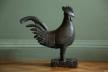
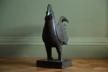
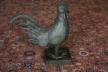
Title object id | Okukor, Benin Bronze Cockerel (Information from Jesus College, Cambridge University) |
Neville history and wider references description | George William Neville (1852-1929) • Neville was an agent of shipping firm Elder Dempster & Co, based in Bonny and Lagos, Nigeria from 1880. In 1891 founded Bank of British West Africa with Elder Dempster shipping magnate Sir Alfred Lewis Jones. Accompanied the British Expedition to Benin City in 1897 and acquired a significant collection; many of these objects were displayed in his home in Weybridge following his return to the UK. Only son and heir George John Ernest Neville (1886–1974), studied at Jesus College Cambridge • Probate: George William Neville Of Weylea Weybridge Surrey dies 23 Nov 1929 Probate London 28 Jan to the Royal Exchange Assurance. Effects 17704 pounds 17 s 10d. Resworn 23899 pounds 11s. • Neville’s collection was sold at Foster in London on 1 May 1930. The title page reads - A catalogue of the highly important bronzes, ivory and wood carvings from the walled city of Benin, West Africa. Forming the collection of the late G. W. Neville, Esq., of Weylea, Weybridge, a member of the Benin Punitive Expedition , who himself removed them after the capture of the City in 1897. • Coombes, Annie, Reinventing Africa Museums, Material Culture and Popular Imagination in Late Victorian and Edwardian England (Yale University Press. 1997), 31, refers to an interview with George Neville which was published in the Lagos Weekly Record , 27 Feb 1897 • See also an ivory Edo tusk from Benin in British Museum collected by Neville and Purchased from: Hale & Son (18 August 1897, Lot 40) BM Af1897,-.649. www.britishmuseum.org/collection/object/E_Af1897-649 Catalogue record notes ‘Objects of ivory and brass 'captured at the fall of Benin City' were auctioned by Hale & Son on 18 August 1897. This altar tusk corresponds to Lot 40 and was purchased for the Museum by Charles Hercules Read for £29. It was previously in the collection of George Neville.’ |
‘Benin treasures on a pre-1930 interior photo’ description | <brunoclaessens.com/2014/09/benin-treasures-on-a-pre-1930-interior-photo/#.Yvton-dKii4>, accessed 19 August 2022 A blog post Posted by admin on September 8, 2014 noted that the above photograph of the ‘above interior photo on a Brighton flea market. Talking about a room full of treasures. It appears to be a rare picture of the interior of George W. Neville’s house in Weybridge. Neville (1852-1929) worked for Elder Dempster, a shipping company, in Lagos. After his death, Neville’s collection (128 objects big) was sold by Foster in London on 1 May 1930, the auction was titled Highly Important Bronzes, Ivory & Wood Carvings from the Walled City of Benin, West Africa (G.W. Neville Collection from Benin Punitive Expedition of 1897. So, where are these objects now ? The pair of Benin bronze leopards are in the National Museum in Lagos, Nigera. They were bought by Charles Ratton in the 1930 auction. Louis Carré acquired them from Ratton after the famous exhibition at MOMA in New York in 1935 and in 1952 they were bought for the new National Museum in Lagos. The plaque with the two Portuguese soldiers is currently in the Musée du quai Branly (#70.2002.4.1) in Paris after passing through a number of hands (Ratton, Carré, Pleven) since Neville owned it. Lastly, the bronze altar between the leopards is in the Fowler Museum in Los Angeles (X65-9088), having been given to them by the Wellcome Institute. With thanks to Ben Hall, Tim Teuten, Hermione Waterfield and Susan Kloman for the excellent sleuthing – remember this picture came without any contextual information. Still unaccounted for are the big head on the windowsill on the left, the Benin plaque with the bird, the two hip ornaments on the chimney, the ivory tusk and the Yoruba stool |
Dimensions dimensions | Cockerel: 52cm high x 50 cm deep; Base: 41.5cm x 41cm x 16cm; Weight: 42.3kg |
Provenance provenance | Acquired on the British Punitive Expedition to Benin, February 1897 under the command of Admiral Sir Harry Rawson. Presented to Jesus College in 1905 by George William Neville, while his son was a student there. The Conclusions Book for 22 May 1905 reads: “Agreed gratefully to accept Mr GW Neville’s gift of the bronze figure of a cock which formed part of the spoil captured at Benin, West Africa and to thank Mr Neville for making this appropriate gift to the College.” The cockerel was adopted as a symbol of the College due to the three cockerels' heads on the College crest. It was mentioned in 1930 as standing on a windowsill in the Hall. Mounted on a wooden base with a plaque bearing a Latin inscription it was exhibited in the College dining hall until 2016. Condition: Good but with some corrosion |
Copyright | Chris Loades |
fileNames | 4X3A0269.jpg, 4X3A0291.jpg, 4X3A0285.jpg |
Digital Benin collates digital material from institutions, and some of this material is inherently colonial and contains words, terms and phrases that are inaccurate, derogatory and harmful towards African and African diasporic communities. Catalogue transcriptions, book titles, exhibition titles and museum titles may contain harmful terms. We recognise the potential for the material to cause physical and mental distress as well as evoke strong emotions. Owing to the scale of the collection’s data, a process to implement sensitive-content warnings in the displayed data is still incomplete. The material within the catalogue does not represent Digital Benin’s views. Digital Benin maintains a strong anti-colonial, anti-racist position and affirms its support for centring the humanity of historically marginalised and disenfranchised communities. Read more about the background of this statement here