


Iconographies



Provenance
Institution data
| Institution field | Value |
|---|---|
Identifikationsnummer object id | C 4041 |
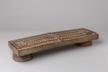
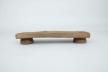
Titel designation | Spielbrett aus Bronze |
Materialien material | ANORGANISCH/Metall/Gelbguß |
Heutiges Staatsgebiet des Herstellungsortes production place | Afrika/Westafrika/Nigeria/Benin-Reich |
Provenienz/Name prior source provenance | Heemke |
Provenienz Objektitinerar Akteure Orte Daten provenance | Adolf Heemke |
Provenienz/Affiliation provenance | H. Bey & Co., Bey & Zimmer |
Provenienz/Country provenance | Germany |
Provenienz/Date of Birth provenance | 8.10.1874 |
Provenienz/Date of Death provenance | unknown |
Provenienz/First Name provenance | Adolf |
Provenienz/No provenance | 15 |
Provenienz/Place of Birth provenance | Geestemüde/Bremerhaven |
Provenienz/Place of Death provenance | unknown |
Provenienz/Profession provenance | Merchant |
Provenienz/Role-Function/0 provenance | Consignor |
Provenienz/Role-Function/1 provenance | |
Provenienz/Sex provenance | male |
Provenienz/Short Biography provenance | Adolf Heemke (1874-?)was an overseas merchant and active as an agent for the trading company Bey & Zimmer in Nigeria. Today, works of art Heemke brought from Benin to Europe are still in collections in Stuttgart and Freiburg. In 1904, he sold ten Benin objects to the MARKK. |
Provenienz/Street provenance | Große Bäckerstraße 24 |
Provenienz/Town provenance | Hamburg |
Hersteller kulturhist. Herkunftsgesellschaft ethnic attribution | --/Edo |
Heutiger Aufbewahrungsort Sammlung department and institution | Museum am Rothenbaum. Kulturen und Künste der Welt (MARKK) |
Akquisitionsdatum accession date | 1904 |
Alte Inventarnummer | |
Inventurdatum | 10.07.2009 |
Label Text (deu) | Spieltischchen Unbekannte Werkstatt der Bronzegießergilde Igun Eronmwon / Königreich Benin, Nigeria, 18. Jh. / Gelbguss / Ankauf von Adolf Heemke, 1904, Inv. Nr. C 4041 Spielbretter – Ise – gehörten zur Einrichtung des Königspalastes. Das Brett mit 183 Mulden und Rinnen diente vermutlich für ein strategisches Spiel, dessen Regeln und Verwendungskontext nicht mehr bekannt sind. Die becherförmigen Füße könnten nach Beendigung des Spiels zum Aufbewahren der Spielsteine gedient haben. |
Label Text (eng) | Game Board Unidentified workshop of the Bronze Casters Guild Igun Eronmwon / Benin Kingdom, Nigeria, 18th century / Brass / Acquired from Adolf Heemke, 1904, Inv. no. C 4041 Game boards – Ise – were part of the inventory of the royal palace. The board with 183 holes and channels was probably used for a strategic game, although the rules and context of use are no longer known. The cup-shaped feet could have served to store the game pieces when not in use. |
Maße | Höhe: 54,70 cm; Breite: 17,50 cm |
Digital Benin collates digital material from institutions, and some of this material is inherently colonial and contains words, terms and phrases that are inaccurate, derogatory and harmful towards African and African diasporic communities. Catalogue transcriptions, book titles, exhibition titles and museum titles may contain harmful terms. We recognise the potential for the material to cause physical and mental distress as well as evoke strong emotions. Owing to the scale of the collection’s data, a process to implement sensitive-content warnings in the displayed data is still incomplete. The material within the catalogue does not represent Digital Benin’s views. Digital Benin maintains a strong anti-colonial, anti-racist position and affirms its support for centring the humanity of historically marginalised and disenfranchised communities. Read more about the background of this statement here