


Provenance
Institution data
| Institution field | Value |
|---|---|
Identifikationsnummer object id | 1047:05 |
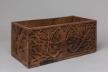
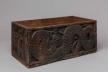
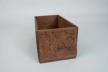
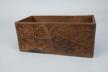
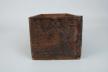
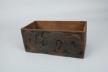
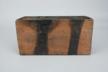
Titel designation | Holzkasten, beschnitzt |
Materialien material | ORGANISCH/ PFLANZLICH/Holz |
Heutiges Staatsgebiet des Herstellungsortes production place | Afrika/Westafrika/Nigeria/Benin-Reich |
Provenienz/Name prior source provenance | Lembcke |
Provenienz Objektitinerar Akteure Orte Daten provenance | John Lembcke |
Provenienz/Affiliation provenance | L. Pagenstecher & Co. |
Provenienz/Country provenance | Germany |
Provenienz/Date of Birth provenance | 19.03.1873 |
Provenienz/Date of Death provenance | unknown |
Provenienz/First Name provenance | John |
Provenienz/No provenance | 25 |
Provenienz/Place of Birth provenance | |
Provenienz/Place of Death provenance | unknown |
Provenienz/Profession provenance | Merchant |
Provenienz/Role-Function/0 provenance | Consignor |
Provenienz/Role-Function/1 provenance | |
Provenienz/Sex provenance | male |
Provenienz/Short Biography provenance | John Lembcke (1873-?) originally came from Mecklenburg and was a Hamburg merchant. He worked as an agent for the trading company L. Pagenstecher & Co. in southern Nigeria. The company maintained several branches in Cameroon and Nigeria and traded raw rubber, among other things.Lembcke was probably employed at a branch of the firm in Warri, from where he went to nearby Benin City. There, he found objects which he eventually brought to Hamburg. Between 1899 and 1905, he sold 40 objects from the Kingdom of Benin to the museum. |
Provenienz/Street provenance | Hammmerlandstr. 75 II (Address Mrs. C. Lembcke, widow) |
Provenienz/Town provenance | Hamburg |
Hersteller kulturhist. Herkunftsgesellschaft ethnic attribution | --/Edo |
Heutiger Aufbewahrungsort Sammlung department and institution | Museum am Rothenbaum. Kulturen und Künste der Welt (MARKK) |
Akquisitionsdatum accession date | 1905 |
Alte Inventarnummer | |
Inventurdatum | 10.11.2009 |
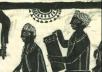
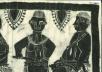
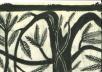
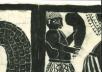
Label Text (deu) | Holzkasten mit Reliefschnitzerei Unbekannter Omada-Künstler, Königreich Benin, Nigeria, 19. Jh. / Holz / Ankauf von John Lembcke, 1905, Inv. Nr. C 1047:05 Neben einer übergroßen Schlange, und Pflanzen mit Vögeln ist auf der Kiste als zentrales Motiv ein Menschenopfer oder eine Exekution dargestellt. Gefesselte und geknebelte Geköpfte finden sich als wiederkehrendes Motiv auf unterschiedlichsten Benin- Werken. Einzig dem Oba stand es zu über Tod und Leben zu entscheiden. Nur der König durfte Gefangene oder Sklaven als menschliche Opfer zur Ehrung von Gottheiten und seiner Ahnen während wichtiger Zeremonien darbringen lassen. Ende des 19. Jhs. nutzte das British Empire gezielt vorgebliche Menschenopfer als Argument für die Kolonisierung Benins und maskierte damit eigene wirtschaftliche Interessen. |
Label Text (eng) | Wooden Box with Relief Carvings Unidentified Omada artist, Benin Kingdom, Nigeria, 19th century / Wood / Acquired from John Lembcke, 1905, Inv. no. 1047:05 The box is adorned with carvings of an oversized snake, plants with birds, and as central motif a human sacrifice or execution. Gagged and handcuffed, beheaded victims are a recurring motif on a variety of Benin works. Only the Oba owned the right to decide over life or death. It was a privilege of the king to have prisoners or slaves offered as human sacrifices to honour the gods and his ancestors during important ceremonies. In the late 19th century, the British Empire deliberately used alleged human sacrifices as an argument for overthrowing Benin, thereby masking their own economic interests. |
Maße | Breite: 57,00 cm; Höhe: 24,20 cm; Tiefe: 28,50 cm |
Digital Benin collates digital material from institutions, and some of this material is inherently colonial and contains words, terms and phrases that are inaccurate, derogatory and harmful towards African and African diasporic communities. Catalogue transcriptions, book titles, exhibition titles and museum titles may contain harmful terms. We recognise the potential for the material to cause physical and mental distress as well as evoke strong emotions. Owing to the scale of the collection’s data, a process to implement sensitive-content warnings in the displayed data is still incomplete. The material within the catalogue does not represent Digital Benin’s views. Digital Benin maintains a strong anti-colonial, anti-racist position and affirms its support for centring the humanity of historically marginalised and disenfranchised communities. Read more about the background of this statement here