TBC Neptune
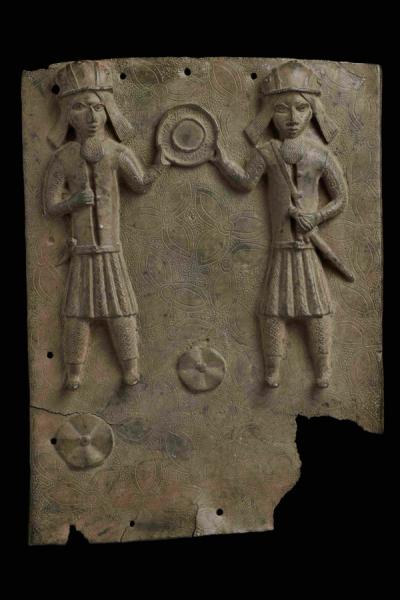
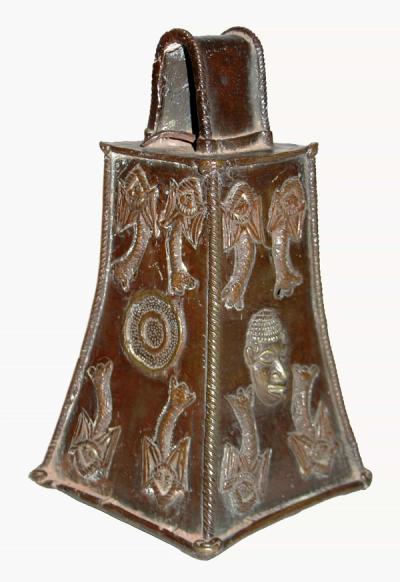
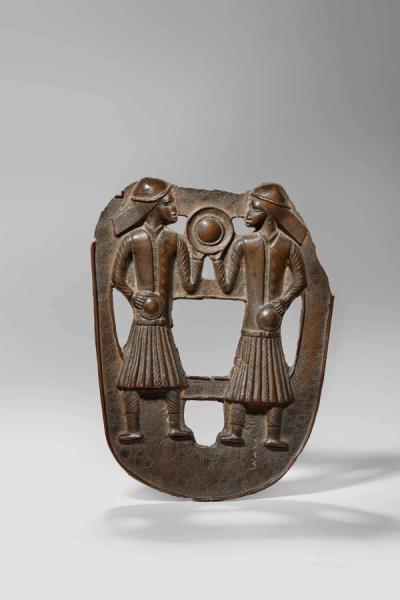
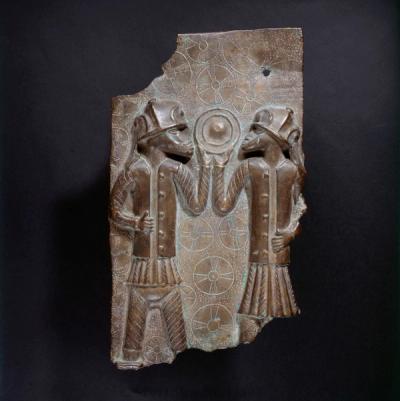
Neptunes are brass or copper pans that became a highly sought-after import item in Benin during the 18th century, eventually replacing Ugianran (manilla) as a primary exchange commodity (Ben Amos 1999; Eisenhofer in Plankensteiner 2007, cat. nos. 32–34, p. 296). Unlike most of the other bronze and brass objects shown on Digital Benin, these were not produced by artists from the Igun-Ẹrọnmwọn but were made as trade goods in southern Germany (Weichmann 2022, p. 89). Although they are not among the most frequent motifs, they are symbolically important, representing the wealth brought to the Edo Kingdom through Olokun’s realm—the ocean. Neptunes are usually depicted being held by European figures with long, straight hair.
Digital Benin collates digital material from institutions, and some of this material is inherently colonial and contains words, terms and phrases that are inaccurate, derogatory and harmful towards African and African diasporic communities. Catalogue transcriptions, book titles, exhibition titles and museum titles may contain harmful terms. We recognise the potential for the material to cause physical and mental distress as well as evoke strong emotions. Owing to the scale of the collection’s data, a process to implement sensitive-content warnings in the displayed data is still incomplete. The material within the catalogue does not represent Digital Benin’s views. Digital Benin maintains a strong anti-colonial, anti-racist position and affirms its support for centring the humanity of historically marginalised and disenfranchised communities. Read more about the background of this statement here