




Iconographies



Provenance
Institution data
| Institution field | Value |
|---|---|
Additional IDs object id | 1952.02 |
Reg. No. object id | 1973.34.0014 |
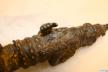
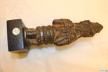
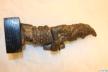
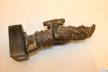
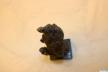
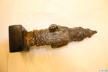
Object name and description designation description | Cast copper alloy sculpture of a standing figure. |
Dimensions dimensions | H. 17 cm |
Collector/previous owner prior source | Georg von Békésy |
Acquisition details provenance | Held at the Museum of Ethnography as a deposition from the Nobel Foundation (owner) via Nationalmuseum. |
Institution department and institution | NMWC-Sweden |
Institution acquisition date accession date | 1973 |
Comments notes | Details of history of acquisition to be confirmed |
| Institution field | Value |
|---|---|
Inventarienummer object id | 1973.34.0014 |
Inventarienummer, tidigare object id | 1952.02 |
Lokalt namn edo designation | |
Sakord designation object type | skulptur; bronsskulptur |
Beskrivning description | Brons figur. Benin. (generalkatalogen) |
Beskrivning - engelska description | |
Object-Description description | Brons figur. Benin. (generalkatalogen) |
Publicerad text description | |
Publicerad text- engelska description | |
Material - tillverkning material | brons |
Material- engelska - tillverkning material | bronze |
Materialkategori material | metall |
Bredd dimensions | 5,7 cm |
Diameter dimensions | |
Djup dimensions | 6,5 cm |
Höjd dimensions | 17 cm; 19,7 cm [inkl bottenplatta] |
Längd dimensions | |
Tjocklek dimensions | |
Klassifikation, OCM (bred) object type | |
Klassifikation, OCM (smal) object type | |
Motivord iconography | |
Motivord, engelska iconography | |
Tidpunkt - tillverkning, tidigast date made | |
Teknik - tillverkning production technique | gjutet |
Geografiskt namn - annat production place | |
Land - ursprung production place | Nigeria : Afrika |
Land- engelska - ursprung production place | Nigeria |
Ort - ursprung production place | Benin City |
Region - ursprung production place | Edo state |
Sakord, engelska production place | bronze sculpture; sculpture |
Sökord production place | Kungadömet Benin; Royal Benin; Bekesy; besökv47 |
Belongs to Samling provenance | 1973.34 :: Békésy, Georg von |
Namn - byte från provenance | |
Namn - förvärvat från/0 provenance | Nobelstiftelsen [Ägare] Beskrivning Nobelstiftelsen bildades år 1900 av bland andra Ragnar Sohlman, i enlighet med instruktionerna i Alfred Nobels testamente. Stiftelsen skall förvalta den förmögenhet som Nobel efterlämnade och som finansierar Nobelpriset. Stiftelsen ansvarar även för arrangemangen och informationen i samband med utdelandet av Nobelpriset. VD är sedan 2011 Lars Heikensten och styrelseordförande är Carl-Henrik Heldin. Bland ledamöterna finns representanter för de prisutdelande organen. Stiftelsens lokaler ligger på Sturegatan 14 vid Humlegården i centrala Stockholm. (Wikipedia, 2016) |
Namn - insamlare provenance | Békésy, Georg von Beskrivning Georg von Békésy (ungerska: Békésy György), född 3 juni 1899 i Budapest, död 13 juni 1972, var en ungersk biofysiker som tilldelades Nobelpriset i fysiologi eller medicin 1961. (wikipedia, 2011-01-24) |
Namn - ägare provenance | Nobelstiftelsen Beskrivning Nobelstiftelsen bildades år 1900 av bland andra Ragnar Sohlman, i enlighet med instruktionerna i Alfred Nobels testamente. Stiftelsen skall förvalta den förmögenhet som Nobel efterlämnade och som finansierar Nobelpriset. Stiftelsen ansvarar även för arrangemangen och informationen i samband med utdelandet av Nobelpriset. VD är sedan 2011 Lars Heikensten och styrelseordförande är Carl-Henrik Heldin. Bland ledamöterna finns representanter för de prisutdelande organen. Stiftelsens lokaler ligger på Sturegatan 14 vid Humlegården i centrala Stockholm. (Wikipedia, 2016) |
Händelse - var närvarande vid event | |
Etnisk grupp - ursprung ethnic attribution | edo |
Tidpunkt - förvärv till museet accession date | |
Förvärvsomständigheter - i fält accession method | |
Förvärvsomständigheter - till museet accession method | Deposition från Nobelstiftelsen 1973 |
Anmärkning notes | |
Utlån - planerat exhibition history | |
Utlån - tidigare exhibition history | |
Utställning - ingår i exhibition history | |
Utställning - planerad exhibition history | |
Utställning - tidigare exhibition history | |
Utställning, del av - ingår i exhibition history | |
Utställning, del av - planerad exhibition history | |
Utställning, monterdel - planerad exhibition history | |
Utställning- del av - tidigare exhibition history | |
Källor bibliography | |
Referens - publicerad i bibliography | |
Tillståndsbedömning condition | |
Tillståndsbedömning - Lista condition | |
Delar | |
Image/byline | Uppgift om fotograf saknas; Schlothauer, Andreas; Westling, Rose-Marie |
Image/copyright | Statens museer för världskultur; Utgången upphovsrätt |
Image/mediaLicenseUrl | http://creativecommons.org/licenses/by/2.5/; http://creativecommons.org/publicdomain/mark/1.0/; http://creativecommons.org/licenses/by-nc-nd/2.5/ |
Inlån - aktuellt | in-1973.0001 |
Inventeringsstatus | |
Månad - Månadens föremål | |
Namn - förvärvat från/1 | |
Namn - förvärvat från/2 | |
OWC - ursprung | FF1; FF3; FF21 |
Object-Title | 1973.34.0014 :: skulptur, bronsskulptur |
Specialbenämning | |
URL | https://collections.smvk.se/carlotta-em/web/object/1239323 |
Ursprungsdatabas | Etno |
Vecka - Veckans föremål | |
Världsdel - ursprung | Afrika |
Världsdel- engelska - ursprung | Africa |
Digital Benin collates digital material from institutions, and some of this material is inherently colonial and contains words, terms and phrases that are inaccurate, derogatory and harmful towards African and African diasporic communities. Catalogue transcriptions, book titles, exhibition titles and museum titles may contain harmful terms. We recognise the potential for the material to cause physical and mental distress as well as evoke strong emotions. Owing to the scale of the collection’s data, a process to implement sensitive-content warnings in the displayed data is still incomplete. The material within the catalogue does not represent Digital Benin’s views. Digital Benin maintains a strong anti-colonial, anti-racist position and affirms its support for centring the humanity of historically marginalised and disenfranchised communities. Read more about the background of this statement here